
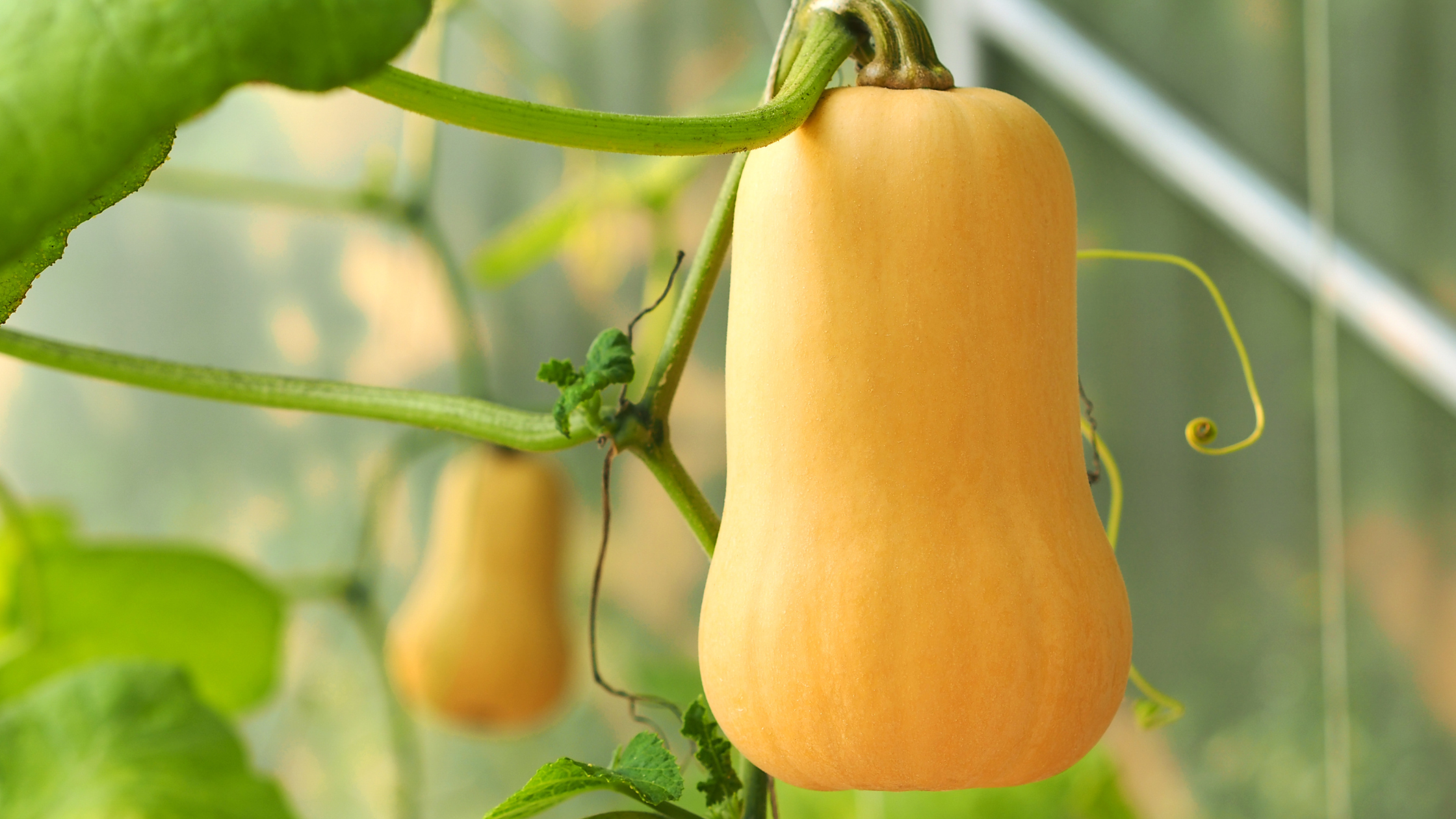
Butternut Squash
Butternut squash, with its vibrant orange hue and sweet, nutty flavor, has long been cherished as a culinary delight. Beyond its delectable taste, this versatile squash boasts a rich history, impressive nutritional profile, and a myriad of health benefits. From its origins in ancient civilizations to its modern-day applications in both Eastern and Western medicine, butternut squash continues to captivate palates and benefit health worldwide.
Butternut squash, scientifically known as Cucurbita moschata, is a species of winter squash. The history of butternut squash traces back thousands of years to Mesoamerican civilizations, where it was cultivated alongside other staple crops like maize and beans. This vegetable is part of the Cucurbitaceae family, which includes other squashes and pumpkins, such as Cucurbita pepo and Cucurbita maxima. The domestication of Cucurbita moschata is believed to have occurred in the Americas, with evidence suggesting a secondary center of origin in the India-Myanmar region, where it underwent diversification. The cultivation of butternut squash has expanded globally, particularly in regions with suitable climates, and it has gained popularity due to its sweet, nutty flavor and versatility in culinary applications.
The health benefits of butternut squash can be attributed to its rich array of nutrients, which include vitamins A and C, potassium, magnesium, and antioxidants such as beta-carotene. These compounds work synergistically to support various bodily functions, including immune health, vision, and skin integrity. Furthermore, the fiber content in butternut squash promotes digestive health by aiding in regular bowel movements and supporting gut microbiota. Its high vitamin C content strengthens the immune system, helping the body fend off infections and illnesses. Additionally, beta-carotene, a precursor to vitamin A that is abundant in butternut squash, supports eye health and may reduce the risk of age-related macular degeneration. The potassium and magnesium found in butternut squash contribute to maintaining healthy blood pressure levels and overall cardiovascular function. Moreover, the antioxidants present, such as beta-carotene, help neutralize free radicals, thereby reducing oxidative stress and inflammation in the body.
To prepare butternut squash, start by peeling the skin with a vegetable peeler and cutting off both ends. Slice it in half lengthwise and scoop out the seeds with a spoon. Then, chop the flesh into cubes or slices as needed for your recipe. Butternut squash can be roasted with olive oil and herbs, added to soups like creamy butternut squash soup, or tossed into salads for sweetness and texture. It’s also great mashed, puréed for sauces, or used in savory dishes like casseroles and stir-fries. Its naturally sweet flavor pairs well with spices like cinnamon, nutmeg, and sage.
While butternut squash is generally safe for consumption, individuals with certain conditions, such as diabetes, should monitor their intake due to its natural sugar content. Additionally, those with a history of allergies to squash or other members of the Cucurbitaceae family should exercise caution. While rare, excessive consumption of butternut squash may lead to bloating, gas, or gastrointestinal discomfort due to its fiber content. Additionally, individuals with certain gastrointestinal conditions may experience digestive issues when consuming large quantities of fibrous vegetables. There are no known interactions between butternut squash and medications. However, individuals taking medications for diabetes should monitor their blood sugar levels closely when incorporating butternut squash into their diet, as it contains natural sugars that may affect blood glucose levels.
In Eastern traditions, particularly within the framework of Traditional Chinese Medicine (TCM), butternut squash is believed to nourish the spleen and stomach meridians, thus enhancing digestion and overall vitality. It is commonly incorporated into soups and stews, often combined with other herbs and vegetables to create nourishing dishes that support the body’s qi, or vital energy. However, specific references supporting these claims about TCM practices related to butternut squash were not found in the provided references.
In contrast, Western nutrition has increasingly recognized butternut squash for its rich flavor and impressive nutritional profile. It is featured in a variety of culinary applications, ranging from comforting soups to savory side dishes, appealing to both health-conscious individuals and culinary enthusiasts alike. Nutritionists advocate for its inclusion in diets due to its health benefits, including its antioxidant properties and potential role in cancer prevention. The growing trend towards plant-based diets in the West has further propelled the popularity of butternut squash, as it aligns with the increasing consumer demand for nutrient-dense, minimally processed foods.
In conclusion, butternut squash stands as a shining example of nature’s bounty, offering both culinary delight and abundant health benefits. Whether enjoyed roasted, pureed, or sautéed, this golden gourd continues to captivate taste buds and nourish bodies around the world.
Agüero, M., et al. (2008). Thermal inactivation of peroxidase during blanching of butternut squash. LWT, 41(3), 401-407. https://doi.org/10.1016/j.lwt.2007.03.029
Ahn, H. and Kim, I. (2021). Color and antioxidant potential of seasoning with butternut squash (cucurbita moschata) powder. International Journal of Sciences, 10(04), 38-41. https://doi.org/10.18483/ijsci.2464
Álvarez, M., et al. (2014). The impact of biopreservatives and storage temperature in the quality and safety of minimally processed mixed vegetables for soup. Journal of the Science of Food and Agriculture, 95(5), 962-971. https://doi.org/10.1002/jsfa.6770
Ando, K., et al. (2009). Age-related resistance of diverse cucurbit fruit to infection by phytophthora capsici. Journal of the American Society for Horticultural Science, 134(2), 176-182. https://doi.org/10.21273/jashs.134.2.176
Armesto, J., et al. (2020). Nutritional characterization of butternut squash (cucurbita moschata d.): effect of variety (ariel vs. pluto) and farming type (conventional vs. organic). Food Research International, 132, 109052. https://doi.org/10.1016/j.foodres.2020.109052
Bahrami, S. (2024). The effect of sourdough, turnips, and butternut squash on the physicochemical and nutritional properties of doowina functional food during fermentation. Food Science & Nutrition, 12(3), 2131-2144. https://doi.org/10.1002/fsn3.3915
Cavanagh, A., et al. (2010). Buttercup squash provides a marketable alternative to blue hubbard as a trap crop for control of striped cucumber beetles (coleoptera: chrysomelidae). Environmental Entomology, 39(6), 1953-1960. https://doi.org/10.1603/en10056
Delgado-Nieblas, C., et al. (2016). Production of winter squash flours rich in bioactive compounds and high water absorption by means of a precooking-air-drying optimized process. Journal of Food Processing and Preservation, 41(2), e12809. https://doi.org/10.1111/jfpp.12809
Hernandez, C., et al. (2023). Characterization of the usda cucurbita pepo, c. moschata, and c. maxima germplasm collections. Frontiers in Plant Science, 14. https://doi.org/10.3389/fpls.2023.1130814
Hladun, K. R. and ADLER, L. S. (2009). Influence of leaf herbivory, root herbivory, and pollination on plant performance in cucurbita moschata. Ecological Entomology, 34(1), 144-152. https://doi.org/10.1111/j.1365-2311.2008.01060.x
Jeffery, J., et al. (2012). Carotenoid bioaccessibility from nine raw carotenoid‐storing fruits and vegetables using an in vitro model. Journal of the Science of Food and Agriculture, 92(13), 2603-2610. https://doi.org/10.1002/jsfa.5768
Kates, H. R. and Soltis, P. S. (2017). Evolutionary and domestication history of cucurbita (pumpkin and squash) species inferred from 44 nuclear loci. Molecular Phylogenetics and Evolution, 111, 98-109. https://doi.org/10.1016/j.ympev.2017.03.002
Kamiloglu, S. (2024). Bioaccessibility of carotenoids and polyphenols in organic butternut squash (cucurbita moschata): impact of industrial freezing process. Foods, 13(2), 239. https://doi.org/10.3390/foods13020239
Li, H. (2020). Evaluation of bioactivity of butternut squash (cucurbita moschata d.) seeds and skin. Food Science & Nutrition, 8(7), 3252-3261. https://doi.org/10.1002/fsn3.1602
Martínez, S., et al. (2021). Food hydrocolloids from butternut squash (cucurbita moschata) peel: rheological properties and their use in carica papaya jam. Acs Omega, 6(18), 12114-12123. https://doi.org/10.1021/acsomega.1c00822
Orgulloso-Bautista, S., et al.(2021). Design and application of from butternut squash (cucurbita moschata) epidermis as a food additive in mayonnaise-type sauces. Acs Omega, 6(8), 5499-5508. https://doi.org/10.1021/acsomega.0c05852
Roura, S., Valle, C., Agüero, L., & Davidovich, L. (2007). Changes in apparent viscosity and vitamin c retention during thermal treatment of butternut squash (cucurbita moschata duch) pulp: effect of ripening stage. Journal of Food Quality, 30(4), 538-551. https://doi.org/10.1111/j.1745-4557.2007.00141.x
Shah, M. and Feldman, S. R. (2022). Hand dermatitis secondary to exposure to butternut squash. Case Reports in Dermatology, 14(2), 123-126. https://doi.org/10.1159/000524930
Ya, Y. M. C., et al. (2023). Response of growth performance and yield of butternut squash(cucurbita moschata duch ex poir) cultivar waltham under differentdosages of bokashi application. Journal of Applied and Natural Science, 15(4), 1386-1391. https://doi.org/10.31018/jans.v15i4.5042
Záccari, F. and Galietta, G. (2015). Α-carotene and β-carotene content in raw and cooked pulp of three mature stage winter squash “type butternut”. Foods, 4(3), 477-486. https://doi.org/10.3390/foods4030477
MyFoodData. (n.d.). Nutrition facts for food item: WT1. Retrieved December 10, 2024, from https://tools.myfooddata.com/nutrition-facts/169295/wt1/1
Medical Disclaimer
The information provided in this document is intended for educational and informational purposes only and should not be construed as medical advice, diagnosis, or treatment. It is essential to consult a qualified healthcare professional for any medical concerns or conditions. The content herein does not substitute for professional medical advice, and individuals should not disregard or delay seeking medical advice based on the information provided.
The authors and publishers of this document do not assume any responsibility for any adverse effects or consequences resulting from the use or application of the information contained herein. The reader is encouraged to conduct their own research and consult with healthcare providers to make informed decisions regarding their health and treatment options. Furthermore, the information presented may not reflect the most current research or medical guidelines, as medical knowledge is continually evolving. Therefore, it is imperative to verify the information with up-to-date, peer-reviewed sources and consult with medical professionals for personalized advice.