
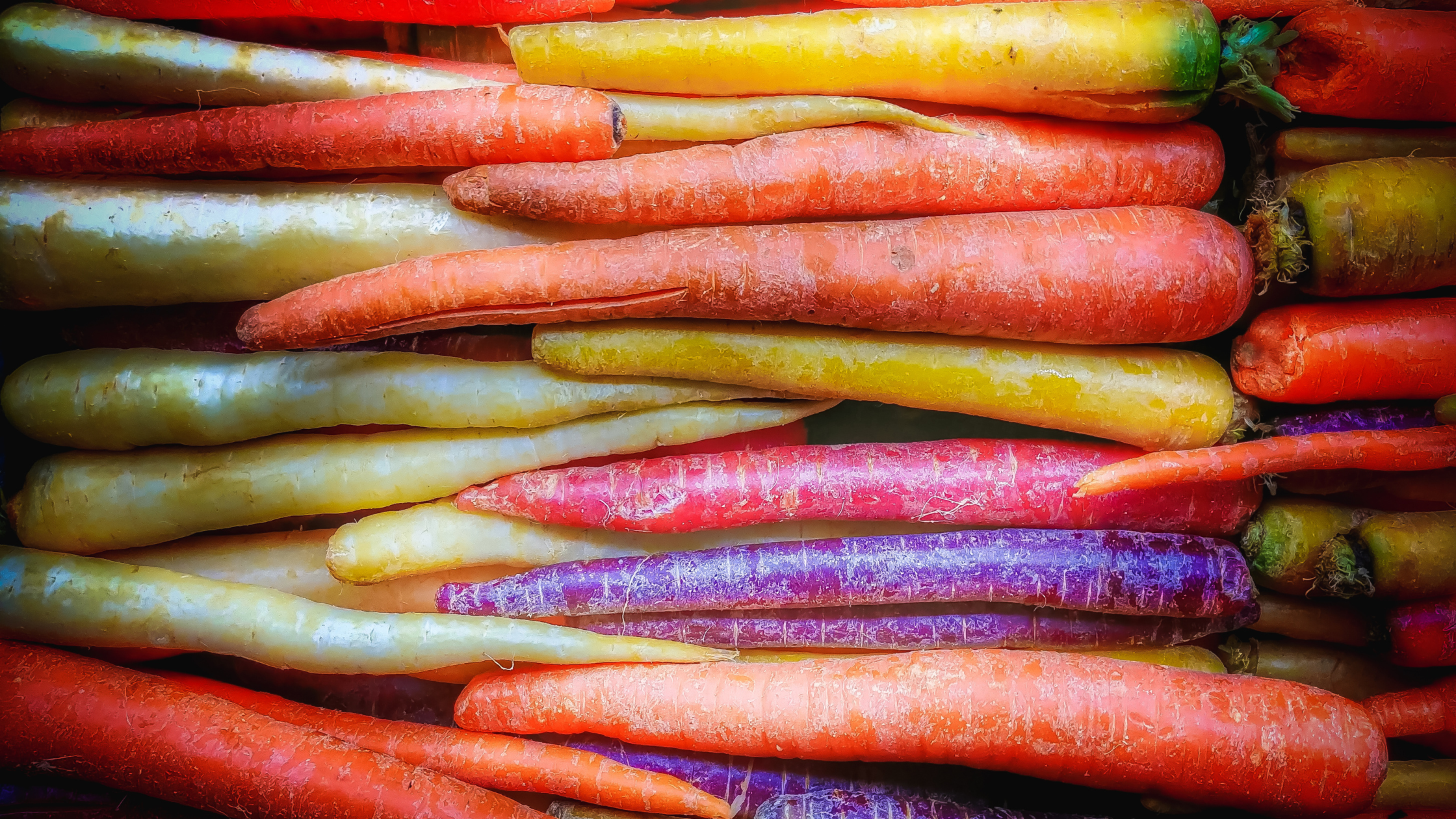
Carrots
Carrots, with their vibrant orange hue and crisp texture, are not only a staple in culinary creations but also boast an impressive array of health benefits. From their historical roots to their modern-day applications, carrots have been revered for their nutritional value and medicinal properties across various cultures.
Carrots have a rich history that spans centuries. Originating in Central Asia, carrots were initially cultivated for their aromatic leaves and seeds rather than their roots. The carrot’s domestication led to the development of the plump, orange root we recognize today, a transformation driven by selective breeding. Ancient civilizations, including the Greeks, Romans, and Egyptians, valued carrots not only as a food source but also for their medicinal properties. Carrots were believed to promote good eyesight, a notion that gained traction during World War II when the British government promoted carrot consumption to improve night vision among its citizens.
The health benefits of carrots can be attributed to their rich composition of vitamins, minerals, and phytochemicals. Beta-carotene, a precursor to vitamin A, is the compound responsible for carrots’ vibrant orange color and plays a crucial role in supporting vision, immune function, and skin health. Additionally, carrots contain antioxidants like lutein and zeaxanthin, which protect against oxidative stress and promote eye health. The fiber content in carrots aids digestion and helps maintain a healthy gut microbiome, while potassium supports cardiovascular health by regulating blood pressure. The potassium and fiber in carrots contribute to cardiovascular health by lowering cholesterol levels, improving blood pressure, and reducing the risk of heart disease. The dietary fiber in carrots promotes regular bowel movements, prevents constipation, and supports overall digestive health. Vitamin C and other antioxidants found in carrots boost immune function, helping the body fight off infections and illnesses.
Depending on your recipe, you can peel the carrots using a vegetable peeler, although leaving the skin on can retain additional nutrients and fiber. Once cleaned, carrots can be cut into various shapes—slices, sticks, or cubes—based on their intended use. They can be enjoyed raw in salads, as snacks, or cooked in a variety of dishes, including soups, stews, and stir-fries. Cooking methods such as steaming or roasting can enhance their natural sweetness while preserving their nutritional value, including antioxidants and vitamins. Carrots are versatile and can also be incorporated into smoothies, baked goods, and even juices.
While carrots are generally safe for consumption, individuals with certain health conditions should exercise caution. Those with a history of kidney stones should moderate their carrot intake due to the vegetable’s oxalate content, which can contribute to stone formation. Additionally, individuals with carrot allergies should avoid consumption to prevent allergic reactions. While rare, excessive consumption of carrots can lead to a condition called carotenemia, characterized by yellowish discoloration of the skin. This benign condition results from an accumulation of beta-carotene in the body and is typically reversible by reducing carrot intake. Carrots may interact with certain medications, particularly blood thinners like warfarin. Individuals taking these medications should consult their healthcare provider before significantly increasing their carrot consumption, as vitamin K in carrots can interfere with the medication’s efficacy.
Carrots have been integrated into traditional medicine practices in both Eastern and Western cultures. In Traditional Chinese Medicine (TCM), carrots are associated with the spleen, stomach, and lung meridians. They are believed to promote digestion, support respiratory health, and nourish the blood. Specifically, the spleen meridian is thought to aid in digestion and nutrient absorption, while the stomach meridian contributes to overall gastrointestinal health. Additionally, the lung meridian is believed to support respiratory function and may help alleviate coughs and other respiratory ailments.
In Western herbalism, carrots have been historically used to treat various ailments, including digestive issues, respiratory conditions, and skin disorders. Their rich nutrient profile makes them a staple in Western dietary recommendations for overall health and wellness.
From their humble origins to their modern-day recognition as a nutritional powerhouse, carrots have solidified their place as a versatile and beneficial vegetable. Whether consumed raw, cooked, or juiced, carrots offer an abundance of vitamins, minerals, and phytochemicals that support overall health and well-being. By incorporating carrots into a balanced diet, individuals can enjoy their myriad health benefits and savor their delicious flavor in various culinary creations.
Blando, F., et al. (2021). Bioactive compounds and antioxidant capacity in anthocyanin-rich carrots: a comparison between the black carrot and the apulian landrace “polignano” carrot. Plants, 10(3), 564. https://doi.org/10.3390/plants10030564
Gastélum-Estrada, A. (2023). Biofortified beverage with chlorogenic acid from stressed carrots: anti-obesogenic, antioxidant, and anti-inflammatory properties. Foods, 12(21), 3959. https://doi.org/10.3390/foods12213959
Najam, A., et al. (2023). Immune-adjuvant effect of vitamin a and probiotics supplementation on humoral response to cell culture rabies vaccine in rabbits. 3 Biotech, 13(7). https://doi.org/10.1007/s13205-023-03631-x
Singh, D., et al. (2022). Exploring the genetic diversity of carrot genotypes through phenotypically and genetically detailed germplasm collection. Agronomy, 12(8), 1921. https://doi.org/10.3390/agronomy12081921
Yusuf, E., et al. (2021). Nutritional, phytochemical characteristics and in vitro effect on α-amylase, α-glucosidase, lipase, and cholinesterase activities of 12 coloured carrot varieties. Foods, 10(4), 808. https://doi.org/10.3390/foods10040808
MyFoodData. (n.d.). Nutrition facts for food item 170393. Retrieved December 12, 2024, from https://tools.myfooddata.com/nutrition-facts/170393/wt4/1
Medical Disclaimer
The information provided in this document is intended for educational and informational purposes only and should not be construed as medical advice, diagnosis, or treatment. It is essential to consult a qualified healthcare professional for any medical concerns or conditions. The content herein does not substitute for professional medical advice, and individuals should not disregard or delay seeking medical advice based on the information provided.
The authors and publishers of this document do not assume any responsibility for any adverse effects or consequences resulting from the use or application of the information contained herein. The reader is encouraged to conduct their own research and consult with healthcare providers to make informed decisions regarding their health and treatment options. Furthermore, the information presented may not reflect the most current research or medical guidelines, as medical knowledge is continually evolving. Therefore, it is imperative to verify the information with up-to-date, peer-reviewed sources and consult with medical professionals for personalized advice.