
Ginger
Ginger, with its spicy, aromatic flavor and myriad health benefits, has been a staple in cuisines and traditional medicines around the world for centuries. This versatile root, botanically known as Zingiber officinale, not only adds a delightful kick to culinary dishes but also offers a plethora of therapeutic properties that have captured the interest of both Eastern and Western medicine practitioners.
The use of ginger dates back thousands of years, with its origins believed to lie in Southeast Asia. Ancient texts from China, India, and the Middle East document ginger’s medicinal properties and culinary uses. It was highly prized by the ancient Romans, who imported it from Arabia. Later, ginger became an important commodity in the spice trade routes, reaching Europe in the Middle Ages, where it was incorporated into various dishes and remedies.
The therapeutic effects of ginger (Zingiber officinale) can be attributed to its key bioactive compounds, including gingerol, shogaol, and paradol, which exhibit anti-inflammatory, antioxidant, and anti-nausea properties. Gingerols, in particular, are believed to mitigate inflammation by inhibiting specific enzymes and pathways associated with the inflammatory response. The health benefits of ginger are extensive and include its role as a digestive aid, alleviating gastrointestinal discomfort such as nausea, vomiting, and indigestion, while also promoting the production of digestive juices. Additionally, its anti-inflammatory effects are beneficial for managing conditions like arthritis, muscle soreness, and menstrual pain. Ginger also supports immune function, potentially reducing the risk of infections, and is widely recognized for its effectiveness in relieving nausea from motion sickness, morning sickness during pregnancy, and chemotherapy-induced nausea. Furthermore, some studies indicate that ginger may contribute to heart health by lowering blood pressure and cholesterol levels, thereby decreasing the risk of cardiovascular disease
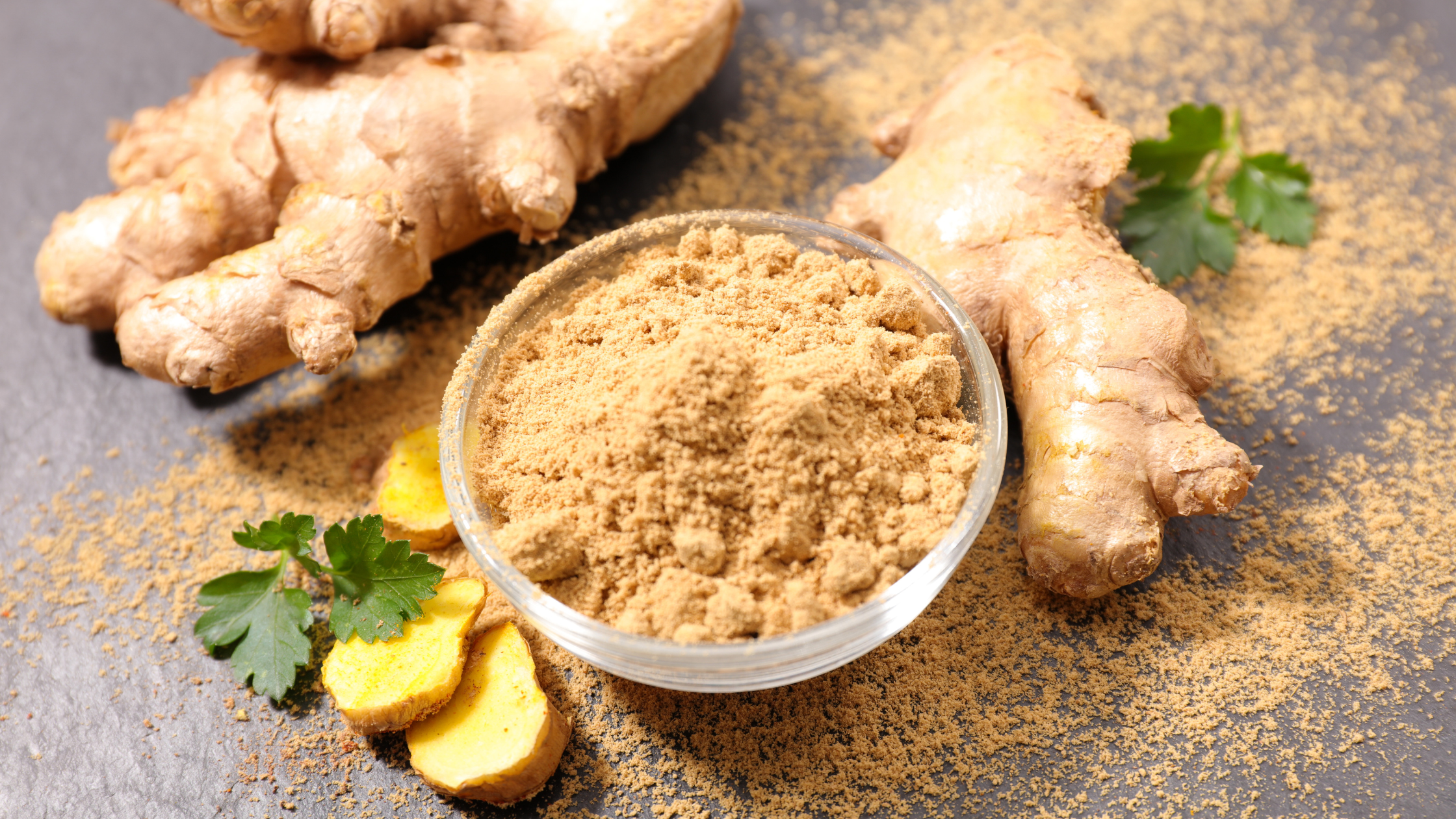
The preparation of ginger can take various forms, including fresh, dried, or as an essential oil, each offering distinct benefits. Fresh ginger is often used in cooking for its pungent flavor, while dried ginger is commonly employed in traditional medicine for its therapeutic properties, particularly in treating gastrointestinal issues and nausea. The extraction of ginger essential oil, typically achieved through steam distillation, enhances its antimicrobial and antioxidant properties, making it suitable for both culinary and pharmaceutical applications.
Ginger is widely regarded as safe for the general population when consumed in moderate amounts; however, it may not be appropriate for everyone. Individuals with specific health conditions, such as gallstones or bleeding disorders, should approach ginger consumption with caution. Pregnant women are advised to consult their healthcare provider prior to using ginger supplements to ensure safety. While ginger is typically well-tolerated, excessive intake can lead to mild side effects, including heartburn, gas, and bloating, and some individuals may experience allergic reactions. Therefore, moderation is key, and it is crucial to discontinue use if any adverse effects arise. Furthermore, ginger has the potential to interact with certain medications, including anticoagulants, antidiabetic drugs, and antihypertensive agents, necessitating consultation with a healthcare professional before initiating ginger supplementation, particularly for those on prescription medications.
In traditional Chinese medicine (TCM), ginger is believed to have a warming effect on the body and is used to treat conditions related to cold or dampness, such as digestive disorders and arthritis. It is often combined with other herbs in TCM formulas to enhance its therapeutic effects.
In Western herbal medicine, ginger is valued for its digestive and anti-inflammatory properties. It is commonly used to alleviate nausea, indigestion, and muscle pain.
In conclusion, ginger is a remarkable botanical with a rich history and diverse array of health benefits. Whether used in cooking, as a tea, or in supplement form, ginger offers a natural and effective way to support digestion, reduce inflammation, and promote overall well-being. However, it’s important to use ginger responsibly and consult with a healthcare professional, especially if you have any underlying health conditions or are taking medications.
Arcusa, R., et al. (2022). Potential role of ginger (zingiber officinale roscoe) in the prevention of neurodegenerative diseases. Frontiers in Nutrition, 9. https://doi.org/10.3389/fnut.2022.809621
Ballester, P., et al. (2022). Effect of ginger on inflammatory diseases. Molecules, 27(21), 7223. https://doi.org/10.3390/molecules27217223
Darekar, S. (2023). Review on ginger: chemical constituents & biological effects. Journal of Pharmacognosy and Phytochemistry, 12(6), 267-271. https://doi.org/10.22271/phyto.2023.v12.i6c.14792
Ishfaq, M., et al. (2022). A review of nutritional implications of bioactive compounds of ginger (zingiber officinale roscoe), their biological activities and nano-formulations. Italian Journal of Food Science, 34(3), 1-12. https://doi.org/10.15586/ijfs.v34i3.2212
Jing, W., et.al. (2017). Beneficial effects of ginger zingiber officinale roscoe on obesity and metabolic syndrome: a review. Annals of the New York Academy of Sciences, 1398(1), 83-98. https://doi.org/10.1111/nyas.13375
Liao, Y., et al. (2012). Anti-platelet aggregation and vasorelaxing effects of the constituents of the rhizomes of zingiber officinale. Molecules, 17(8), 8928-8937. https://doi.org/10.3390/molecules17088928
Mao, Q., et al. (2019). Bioactive compounds and bioactivities of ginger (zingiber officinale roscoe). Foods, 8(6), 185. https://doi.org/10.3390/foods8060185
Petersen, M. and Bergien, S. (2021). A systematic review of possible interactions for herbal medicines and dietary supplements used concomitantly with disease‐modifying or symptom‐alleviating multiple sclerosis drugs. Phytotherapy Research, 35(7), 3610-3631. https://doi.org/10.1002/ptr.7050
Teng, H., et al. (2019). Comparing the effects of microwave radiation on 6-gingerol and 6-shogaol from ginger rhizomes (zingiber officinale rosc). Plos One, 14(6), e0214893. https://doi.org/10.1371/journal.pone.0214893
Utama-ang, et al. (2021). Edible thai rice film incorporated with ginger extract by microwave extraction: optimization of bioactive compounds and functional properties for antimicrobials.. https://doi.org/10.21203/rs.3.rs-379250/v1
MyFoodData. (n.d.). Nutrition facts for ginger (Zingiber officinale). Retrieved December 15, 2024, from https://tools.myfooddata.com/nutrition-facts/169231/wt1/1
Medical Disclaimer
The information provided in this document is intended for educational and informational purposes only and should not be construed as medical advice, diagnosis, or treatment. It is essential to consult a qualified healthcare professional for any medical concerns or conditions. The content herein does not substitute for professional medical advice, and individuals should not disregard or delay seeking medical advice based on the information provided.
The authors and publishers of this document do not assume any responsibility for any adverse effects or consequences resulting from the use or application of the information contained herein. The reader is encouraged to conduct their own research and consult with healthcare providers to make informed decisions regarding their health and treatment options. Furthermore, the information presented may not reflect the most current research or medical guidelines, as medical knowledge is continually evolving. Therefore, it is imperative to verify the information with up-to-date, peer-reviewed sources and consult with medical professionals for personalized advice.