
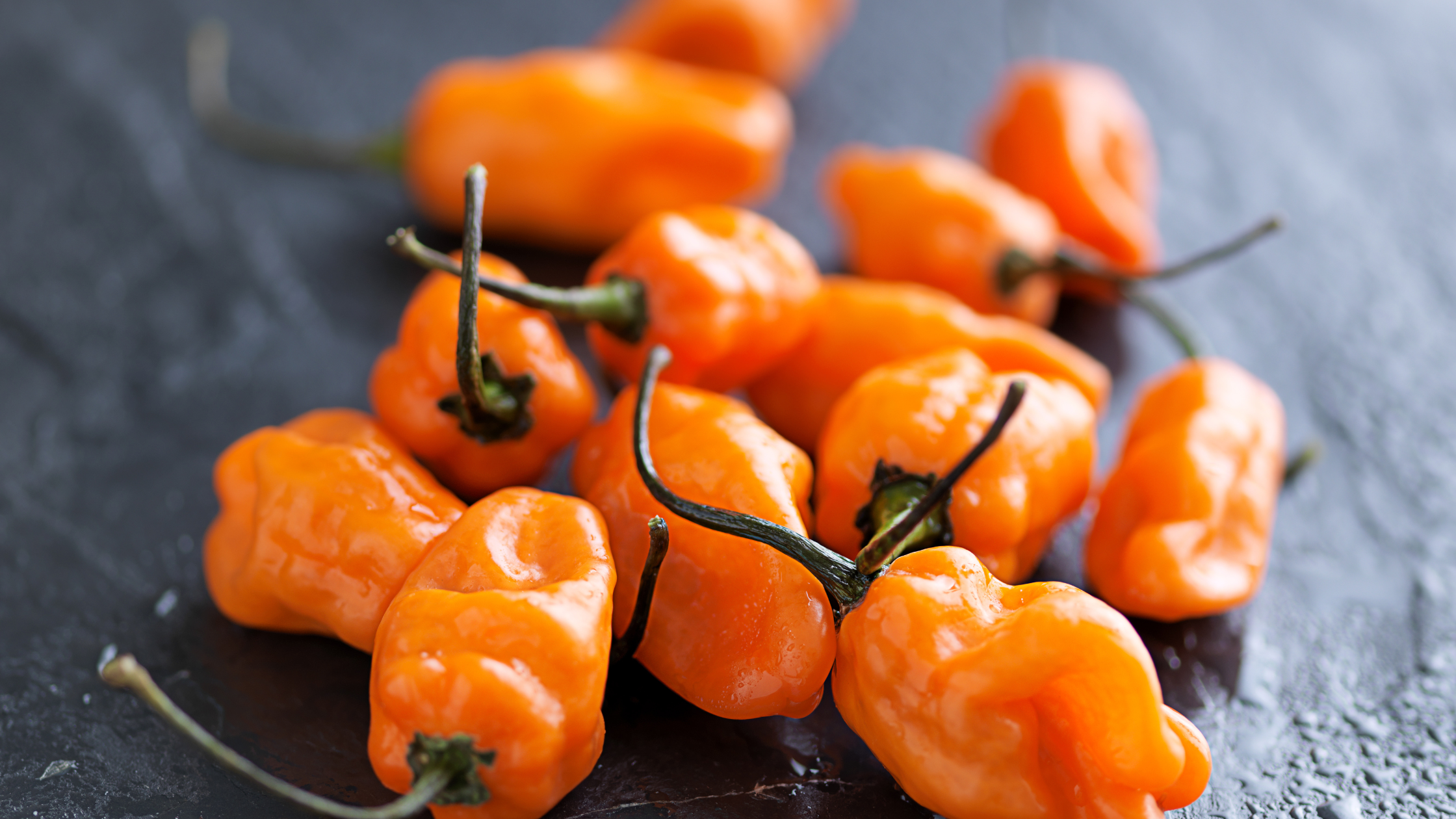
Habanero Pepper
The habanero pepper, revered for its fiery kick and vibrant hue, is a staple ingredient in cuisines worldwide. Its intense heat and distinct flavor profile have made it a beloved choice among spice enthusiasts. Beyond its culinary prowess, the habanero boasts a wealth of health benefits and cultural significance.
Native to the Amazon region and later cultivated in Central America, the habanero pepper a storied history dating back thousands of years. Indigenous peoples of the Americas utilized it both as a culinary ingredient and as a medicinal plant. Spanish explorers introduced the habanero to Europe and Asia in the 15th and 16th centuries, where it quickly gained popularity for its distinctive flavor and potent heat.
The intense heat of habanero peppers is primarily due to a compound called capsaicin, which activates sensory neurons in the mouth, resulting in the characteristic burning sensation. Beyond their fiery flavor, habaneros are recognized for several health benefits. Capsaicin exhibits analgesic properties, making it effective in topical applications for pain relief in conditions such as arthritis and neuropathy. Additionally, it may enhance metabolism, aiding in weight management and fat oxidation. Regular consumption of habanero peppers can also support cardiovascular health by potentially lowering blood pressure and cholesterol levels. Furthermore, their vibrant color indicates a high antioxidant content, which helps combat oxidative stress and inflammation in the body.
Habanero peppers are widely utilized in culinary preparations due to their intense heat and distinctive flavor. They are particularly popular in Mexican and Caribbean cuisines, where they are incorporated into a variety of dishes, including salsas, hot sauces, and marinades, enhancing the overall flavor profile with their pungency and aromatic qualities. The peppers are characterized by their vibrant orange color when ripe and are known for their high capsaicin content, which contributes to their extreme spiciness, often measured in Scoville Heat Units.
While habanero peppers are associated with various health benefits, they may not be suitable for everyone. Individuals with sensitive digestive systems, gastrointestinal disorders, or conditions such as acid reflux may experience discomfort or worsening of symptoms after consuming habaneros. Furthermore, those with allergies to peppers or capsaicin should refrain from eating them. Generally, moderate consumption of habanero peppers is safe for most people; however, excessive intake can lead to digestive issues, heartburn, or irritation of the mouth and throat. Capsaicin supplements or topical applications may also cause skin irritation or burning sensations, particularly in sensitive individuals. Additionally, habanero consumption may interact with certain medications or exacerbate existing health conditions, making it advisable to consult a healthcare professional before adding habaneros to one’s diet, especially for individuals with underlying medical concerns.
In Eastern medicine, particularly within the framework of Traditional Chinese Medicine (TCM), habanero peppers are recognized for their warming properties, which are believed to stimulate circulation, enhance digestion, and alleviate symptoms of cold. They are associated with the Fire element, corresponding to the Heart and Small Intestine meridians, and are thought to invigorate Qi (vital energy) while dispelling dampness and cold from the body.
Conversely, in Western cuisine, habanero peppers are celebrated for their intense flavor and heat, commonly incorporated into various dishes such as hot sauces, salsas, and marinades, particularly within Mexican and Caribbean culinary traditions, where they contribute a distinctive fiery kick.
The habanero pepper’s fiery allure extends far beyond its culinary applications, offering a plethora of health benefits and cultural significance. Whether you’re seeking to spice up your meals or harness its potential therapeutic properties, the habanero stands as a testament to the rich tapestry of flavor and health found in nature.
Dux, M., Stella, P., & Jancsó, G. (2003). Capsaicin‐sensitive neurogenic sensory vasodilatation in the dura mater of the rat. The Journal of Physiology, 552(3), 859-867. https://doi.org/10.1113/jphysiol.2003.050633
Mori, A., et al. (2006). Capsaicin, a component of red peppers, inhibits the growth of androgen-independent, p53 mutant prostate cancer cells. Cancer Research, 66(6), 3222-3229. https://doi.org/10.1158/0008-5472.can-05-0087
Ohanyan, V., et al. (2011). Endothelin-mediated in vivo pressor responses following trpv1 activation. Ajp Heart and Circulatory Physiology, 301(3), H1135-H1142. https://doi.org/10.1152/ajpheart.00082.2011
Olatunji, T., et al (2022). Capsaicin: a two-decade systematic review of global research output and recent advances against human cancer. Frontiers in Oncology, 12. https://doi.org/10.3389/fonc.2022.908487
Sánchez, B., et al. (2022). The natural chemotherapeutic capsaicin activates ampk through lkb1 kinase and trpv1 receptors in prostate cancer cells. Pharmaceutics, 14(2), 329. https://doi.org/10.3390/pharmaceutics14020329
Yong, Y., al. (2017). The effectiveness and safety of topical capsaicin in postherpetic neuralgia: a systematic review and meta-analysis. Frontiers in Pharmacology, 7. https://doi.org/10.3389/fphar.2016.00538
MyFoodData. (n.d.). Nutrition facts for Habanero pepper. Retrieved December 16, 2024, from https://tools.myfooddata.com/nutrition-facts/2612539/wt1/1
Medical Disclaimer
The information provided in this document is intended for educational and informational purposes only and should not be construed as medical advice, diagnosis, or treatment. It is essential to consult a qualified healthcare professional for any medical concerns or conditions. The content herein does not substitute for professional medical advice, and individuals should not disregard or delay seeking medical advice based on the information provided.
The authors and publishers of this document do not assume any responsibility for any adverse effects or consequences resulting from the use or application of the information contained herein. The reader is encouraged to conduct their own research and consult with healthcare providers to make informed decisions regarding their health and treatment options. Furthermore, the information presented may not reflect the most current research or medical guidelines, as medical knowledge is continually evolving. Therefore, it is imperative to verify the information with up-to-date, peer-reviewed sources and consult with medical professionals for personalized advice.