
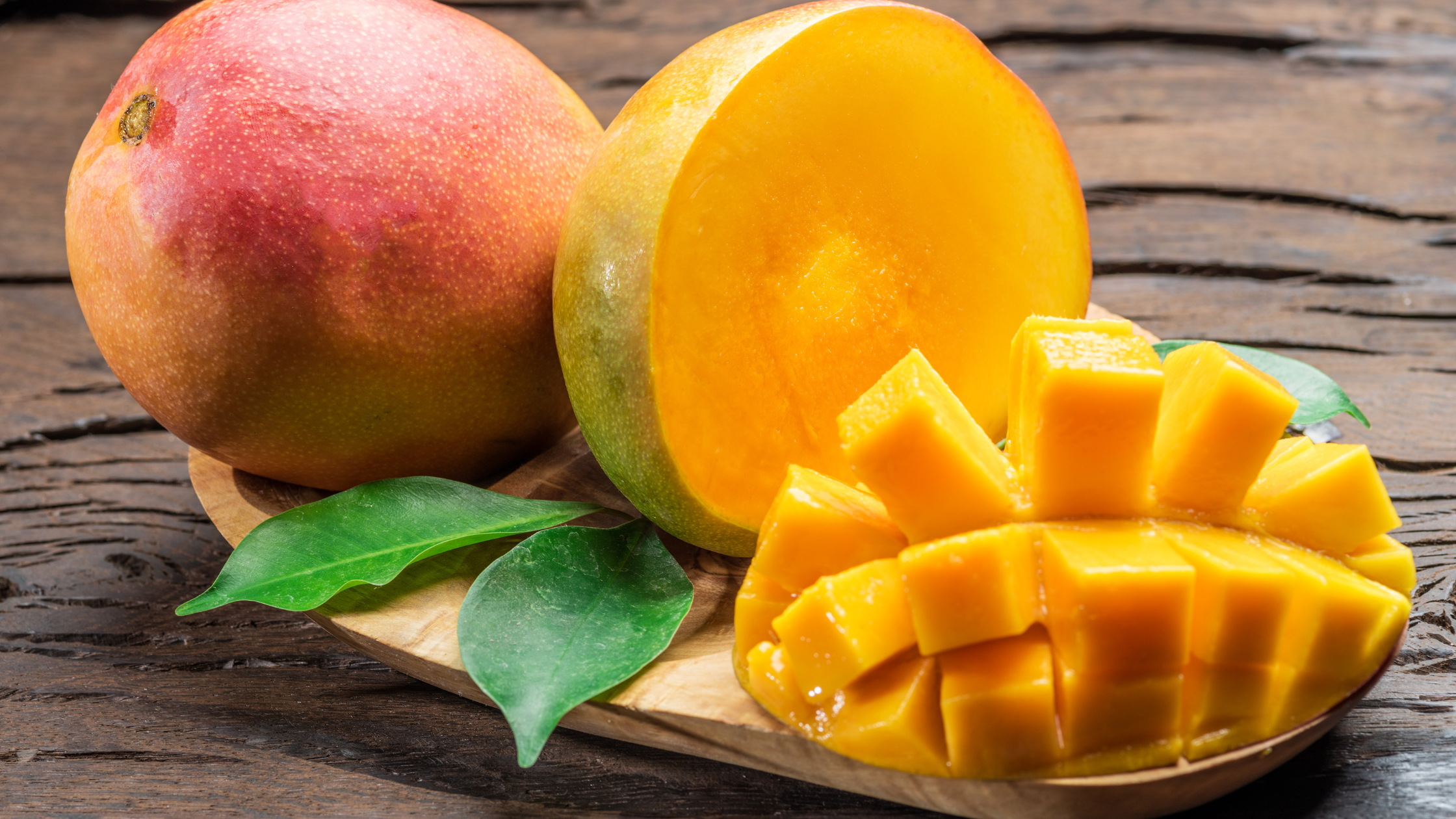
Mangos
Mango, scientifically known as Mangifera indica, is a tropical fruit renowned for its delicious taste, vibrant color, and myriad health benefits. Belonging to the Anacardiaceae family, mango is native to South Asia but is now cultivated in many tropical and subtropical regions worldwide. This succulent fruit is not only a delight to the taste buds but also packs a nutritional punch, offering a plethora of vitamins, minerals, and antioxidants.
History
The history of mango traces back thousands of years to its cultivation in South Asia, particularly in India, where it is considered the national fruit. It is believed that mango cultivation began over 4,000 years ago in the Indo-Burma region. The fruit holds significant cultural and religious importance in various Asian societies, often symbolizing prosperity, fertility, and even love. Through trade and colonization, mangoes spread to other parts of the world, including Africa, the Middle East, and eventually the Americas. Today, mangoes are celebrated globally, cherished for their sweet flavor and versatility in culinary applications.
Health Benefits
The health benefits of mangoes are attributed to their rich nutritional profile, which encompasses essential vitamins such as A, C, E, and K, along with folate, potassium, and dietary fiber. Additionally, mangoes are abundant in antioxidants, including beta-carotene, quercetin, and astragalin, which play a crucial role in combating oxidative stress and inflammation within the body. The presence of digestive enzymes, such as amylases, further enhances their health benefits, while mangiferin, a notable bioactive compound, is recognized for its anti-inflammatory and anti-diabetic properties.
Regular consumption of mangoes is linked to several health advantages, including boosted immunity due to their high vitamin C content, improved digestion facilitated by dietary fiber and enzymes, and enhanced heart health supported by potassium and magnesium, which help regulate blood pressure. Furthermore, the vitamin A in mangoes contributes to eye health by promoting good vision and potentially preventing age-related macular degeneration. The antioxidants found in mangoes also benefit skin and hair care by combating free radicals, thereby promoting youthful skin and healthy hair. Additionally, preliminary studies suggest that the phytochemicals present in mangoes may offer protective effects against certain types of cancer, highlighting their potential role in cancer prevention.
In South Asian cuisine, mangoes are consumed in both raw and cooked forms, featuring prominently in salads, smoothies, curries, and desserts, which enhance the flavor and nutritional profile of meals. The fruit is also processed into value-added products such as juices, jams, and jellies, showcasing its adaptability in various culinary applications. Additionally, mango pulp serves as an excellent base for milkshakes and other beverages, providing a rich source of vitamins and antioxidants.
Furthermore, innovative uses of mango byproducts, such as mango peel powder, have been explored to enhance the nutritional quality of staple foods like pasta and noodles, indicating the fruit’s potential beyond traditional uses.
Precautions and Possible Side Effects
Mangoes are widely recognized for their numerous health benefits; however, individuals with a known latex allergy may experience cross-reactivity, leading to allergic reactions upon consuming mangoes. Additionally, those with diabetes should be mindful of their intake, as mangoes contain natural sugars that can impact blood glucose levels, necessitating moderation. While mangoes are generally safe for consumption, excessive intake may result in gastrointestinal discomfort or diarrhea due to their high fiber content. It is also important to note that mango peel and sap contain urushiol, a compound that can cause skin irritation or allergic reactions in susceptible individuals. Furthermore, mangoes may interact with certain medications, particularly anticoagulants or blood thinners, making it advisable for individuals on such medications to consult with a healthcare professional regarding their mango consumption.
Mangoes hold significant value in both traditional Eastern medicine and Western culinary practices, each recognizing their unique properties and benefits. In traditional Eastern medicine, particularly within Ayurveda, mangoes are esteemed for their cooling effects, which are especially advantageous during hot weather or for pacifying the Pitta dosha. They are utilized to mitigate excessive heat in the body and alleviate conditions such as inflammation, acidity, and skin irritations.
Similarly, in Traditional Chinese Medicine (TCM), mangoes are linked to the Stomach and Lung meridians, where they are thought to nourish Yin and clear heat, thus aiding in the treatment of ailments like dry cough, thirst, and indigestion. Additionally, within Ayurveda, mangoes are recognized as a rasayana, or rejuvenating food, believed to promote vitality and longevity while helping to balance excess Pitta energy when consumed in moderation.
In the West, mangoes are celebrated for their culinary versatility and nutritional value in a diverse array of dishes, including salads, smoothies, curries, and desserts, which enhance meals with their vibrant flavor and color.
Final Thoughts
The mango is not just a tropical fruit; it’s a symbol of abundance, vitality, and culinary delight. With its rich history, diverse health benefits, and culinary versatility, mangoes continue to captivate people’s palates and nourish their bodies around the globe. Whether enjoyed fresh, dried, or incorporated into various dishes, the mango remains a beloved fruit cherished for its taste, nutrition, and cultural significance.
(2020). A review on pharmacological and nutritional benefits of mango (mangifera indica linn): a remedy for cancer, diabetes and gastrointestinal infections. Abasyn Journal Life Sciences, 82-92. https://doi.org/10.34091/ajls.3.2.8
Asanga, E. (2023). Antiplasmodial profiling of mangifera indica’s herbal formulation and its ability to ameliorate hematological derangements in plasmodium berghei-infected mice. Natural Product Communications, 18(12). https://doi.org/10.1177/1934578×231215937
Asuncion, P., Liu, C., Castro, R., Yon, V., Rosas, M., Hooshmand, S., … & Hong, M. (2023). The effects of fresh mango consumption on gut health and microbiome – randomized controlled trial. Food Science & Nutrition, 11(4), 2069-2078. https://doi.org/10.1002/fsn3.3243
Burton‐Freeman, B., Sandhu, A., & Edirisinghe, I. (2017). Mangos and their bioactive components: adding variety to the fruit plate for health. Food & Function, 8(9), 3010-3032. https://doi.org/10.1039/c7fo00190h
Hou, X. (2024). Integrating genes and metabolites: unraveling mango’s drought resilience mechanisms. BMC Plant Biology, 24(1). https://doi.org/10.1186/s12870-024-04908-w
Kim, H., Castellon-Chicas, M., Arbizu, S., Talcott, S., Drury, N., Smith, S., … & Mertens‐Talcott, S. (2021). Mango (mangifera indica l.) polyphenols: anti-inflammatory intestinal microbial health benefits, and associated mechanisms of actions. Molecules, 26(9), 2732. https://doi.org/10.3390/molecules26092732
Lauricella, M., Emanuele, S., Calvaruso, G., Giuliano, M., & D’Anneo, A. (2017). Multifaceted health benefits of mangifera indica l. (mango): the inestimable value of orchards recently planted in sicilian rural areas. Nutrients, 9(5), 525. https://doi.org/10.3390/nu9050525
Masibo, M. and Qian, H. (2008). Major mango polyphenols and their potential significance to human health. Comprehensive Reviews in Food Science and Food Safety, 7(4), 309-319. https://doi.org/10.1111/j.1541-4337.2008.00047.x
Nestmann, E., Alluri, V., Dodda, S., & Davis, B. (2019). Toxicological studies on the botanical supplement li12542f6 containing extracts ofsphaeranthus indicusflower heads andmangifera indica(mango tree) bark. Food Science & Nutrition, 7(2), 817-833. https://doi.org/10.1002/fsn3.931
Reddy, L., Wee, Y., Ye, W., & Korivi, M. (2021). Nutritional composition and bioactive compounds in three different parts of mango fruit. International Journal of Environmental Research and Public Health, 18(2), 741. https://doi.org/10.3390/ijerph18020741
Roa-Tort, A. (2024). Extraction and microencapsulation of phytochemical compounds from mango peel (mangifera indica l.) var. “kent” and assessment of bioaccessibility through in vitro digestion. Processes, 12(1), 154. https://doi.org/10.3390/pr12010154
Sj, S., Swaroop, A., Moriyama, H., Bagchi, M., Ahmad, T., & Bagchi, D. (2018). A review on antioxidant, anti-inflammatory and gastroprotective abilities of mango (magnifera indica) leaf extract and mangiferin. Journal of Nutrition and Health Sciences, 5(3). https://doi.org/10.15744/2393-9060.5.303
Vithana, M., Singh, Z., & Johnson, S. (2019). Regulation of the levels of health promoting compounds: lupeol, mangiferin and phenolic acids in the pulp and peel of mango fruit: a review. Journal of the Science of Food and Agriculture, 99(8), 3740-3751. https://doi.org/10.1002/jsfa.9628
Wang, P., Luo, Y., Huang, J., Gao, S., Zhu, G., Zhiguo, D., … & Chen, Y. (2020). The genome evolution and domestication of tropical fruit mango. Genome Biology, 21(1). https://doi.org/10.1186/s13059-020-01959-8
Wightman, E., Jackson, P., Forster, J., Khan, J., Wiebe, J., Gericke, N., … & Kennedy, D. (2020). Acute effects of a polyphenol-rich leaf extract of mangifera indica l. (zynamite) on cognitive function in healthy adults: a double-blind, placebo-controlled crossover study. Nutrients, 12(8), 2194. https://doi.org/10.3390/nu12082194
Yang, E., Tibpromma, S., Karunarathna, S., Phookamsak, R., Xu, J., Zhao, Z., … & Promputtha, I. (2022). Taxonomy and phylogeny of novel and extant taxa in pleosporales associated with mangifera indica from yunnan, china (series i). Journal of Fungi, 8(2), 152. https://doi.org/10.3390/jof8020152
MyFoodData. (n.d.). Mango nutrition facts and health benefits. Retrieved December 18, 2024, from https://tools.myfooddata.com/nutrition-facts/169910/wt1/1
Medical Disclaimer
The information provided in this document is intended for educational and informational purposes only and should not be construed as medical advice, diagnosis, or treatment. It is essential to consult a qualified healthcare professional for any medical concerns or conditions. The content herein does not substitute for professional medical advice, and individuals should not disregard or delay seeking medical advice based on the information provided.
The authors and publishers of this document do not assume any responsibility for any adverse effects or consequences resulting from the use or application of the information contained herein. The reader is encouraged to conduct their own research and consult with healthcare providers to make informed decisions regarding their health and treatment options. Furthermore, the information presented may not reflect the most current research or medical guidelines, as medical knowledge is continually evolving. Therefore, it is imperative to verify the information with up-to-date, peer-reviewed sources and consult with medical professionals for personalized advice.