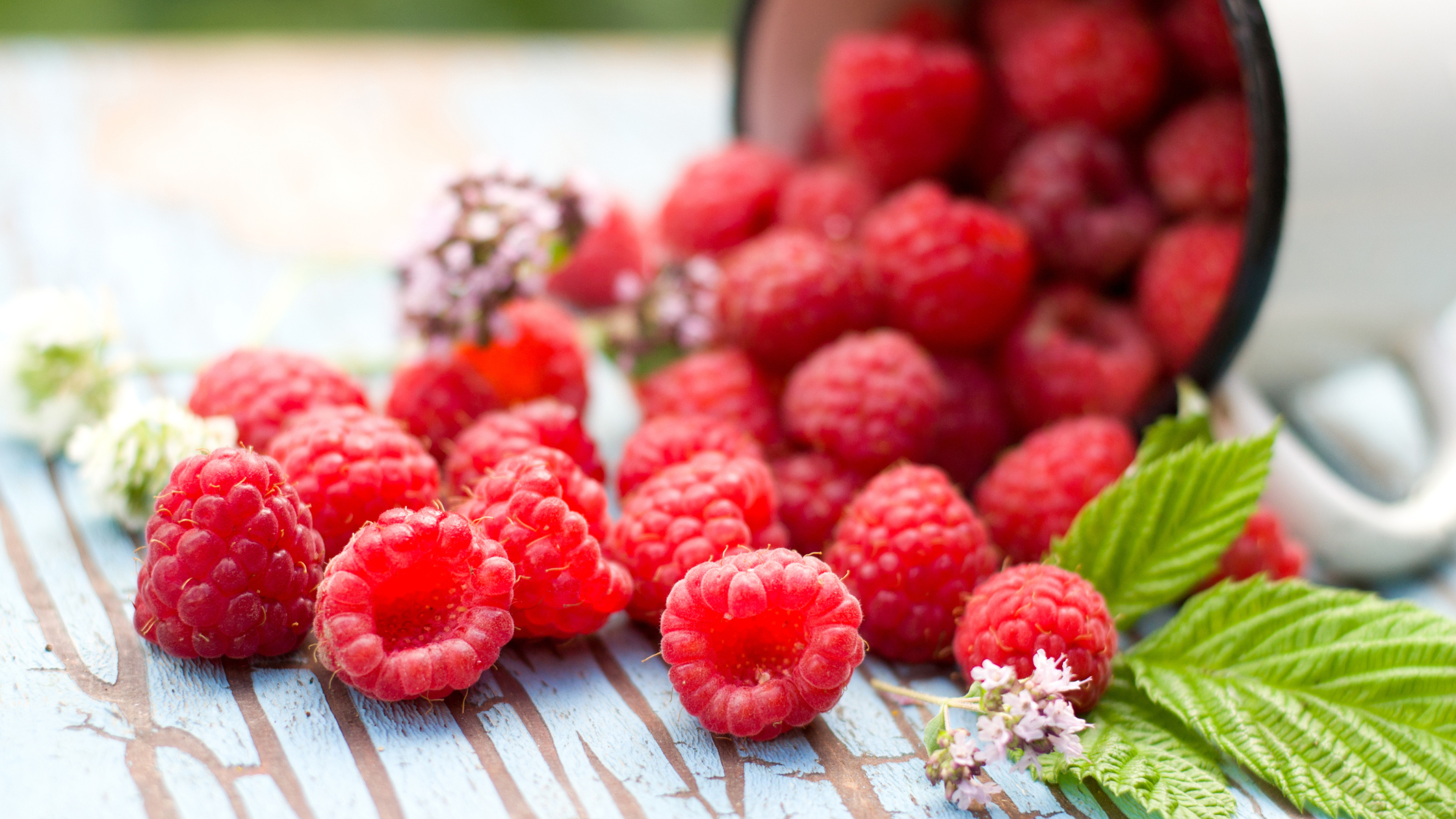
Raspberries
Raspberry, a small but potent fruit, has captivated taste buds and inspired culinary creations for centuries. Beyond its delightful taste and vibrant hue, raspberries boast a plethora of health benefits, making them a valuable addition to both Eastern and Western diets. From their rich nutritional profile to their therapeutic properties, raspberries have earned their place as a superfood in the realm of natural medicine and nutrition.
History
Raspberries have a long and illustrious history, dating back to ancient times. Native to Eastern Europe, raspberries were revered by ancient civilizations for their taste and purported health benefits. The Greeks and Romans prized raspberries for their medicinal properties, using them to alleviate various ailments. Over time, raspberries spread across Europe and eventually to North America, where they became a staple in indigenous diets. Today, raspberries are cultivated worldwide, enjoyed fresh, frozen, or incorporated into various culinary delights.
Health Benefits
The health benefits of raspberries are largely attributed to their diverse array of phytochemicals, including flavonoids, anthocyanins, and ellagic acid, which possess potent antioxidant properties that scavenge harmful free radicals and mitigate oxidative stress in the body. Raspberries are also rich in dietary fiber, vitamins such as vitamin C, and essential minerals like manganese, all of which contribute to their overall health-promoting effects. Notably, their high antioxidant content is recognized for its role in combating oxidative stress and potentially reducing the risk of chronic diseases, including cancer, heart disease, and diabetes.
Furthermore, the anti-inflammatory compounds present in raspberries may alleviate symptoms associated with inflammatory conditions such as arthritis and promote joint health. Regular consumption of raspberries has been linked to improved cardiovascular health, evidenced by reductions in blood pressure and cholesterol levels, thereby lowering the risk of heart disease. Additionally, the fiber content in raspberries supports digestive health by aiding bowel regularity and preventing constipation. Their low-calorie, high-fiber profile makes raspberries a satisfying snack choice, which can assist in weight management and appetite control.
[/et_pb_text][/et_pb_column][/et_pb_row][/et_pb_section][et_pb_section fb_built=”1″ _builder_version=”4.27.4″ _module_preset=”default” background_color=”#F2F2F2″ custom_padding=”31px||8px||false|false” global_colors_info=”{}”][et_pb_row column_structure=”2_3,1_3″ _builder_version=”4.27.4″ _module_preset=”default” custom_margin=”-17px|auto||auto||” custom_padding=”5px||12px|||” global_colors_info=”{}”][et_pb_column type=”2_3″ _builder_version=”4.27.4″ _module_preset=”default” global_colors_info=”{}”][et_pb_heading title=”Best Preparation Methods ” _builder_version=”4.27.4″ _module_preset=”default” title_level=”h2″ title_text_color=”#000000″ custom_margin=”||10px||false|false” global_colors_info=”{}”][/et_pb_heading][et_pb_text _builder_version=”4.27.4″ _module_preset=”default” text_text_color=”#000000″ text_font_size=”17px” global_colors_info=”{}”]Fresh raspberries are often consumed raw, added to salads, or used as a topping for desserts, while they are also commonly processed into a variety of products such as jams, jellies, syrups, and sauces, enhancing both taste and nutritional value in various dishes. The fruit’s natural sweetness and vibrant color make it a popular ingredient in baked goods, smoothies, and beverages, contributing not only to flavor but also to visual appeal.
[/et_pb_text][et_pb_image src=”https://www.immortalme.com/wp-content/uploads/2025/01/Raspberry-Food.png” title_text=”Raspberry Food” _builder_version=”4.27.4″ _module_preset=”default” border_radii=”on|6px|6px|6px|6px” box_shadow_style=”preset1″ box_shadow_spread=”3px” box_shadow_color=”#84776C” global_colors_info=”{}”][/et_pb_image][/et_pb_column][et_pb_column type=”1_3″ _builder_version=”4.27.4″ _module_preset=”default” global_colors_info=”{}”][et_pb_image src=”https://www.immortalme.com/wp-content/uploads/2025/01/Raspberries.png” title_text=”Raspberries” _builder_version=”4.27.4″ _module_preset=”default” border_radii=”on|6px|6px|6px|6px” box_shadow_style=”preset1″ box_shadow_spread=”3px” box_shadow_color=”#84776C” global_colors_info=”{}”][/et_pb_image][/et_pb_column][/et_pb_row][/et_pb_section][et_pb_section fb_built=”1″ _builder_version=”4.27.4″ _module_preset=”default” background_color=”#F2F2F2″ custom_padding=”31px||8px||false|false” global_colors_info=”{}”][et_pb_row _builder_version=”4.27.4″ _module_preset=”default” custom_padding=”4px||5px|||” global_colors_info=”{}”][et_pb_column type=”4_4″ _builder_version=”4.27.4″ _module_preset=”default” global_colors_info=”{}”][et_pb_text _builder_version=”4.27.4″ _module_preset=”default” text_text_color=”#000000″ text_font_size=”17px” header_2_text_color=”#000000″ global_colors_info=”{}”]Precautions and Possible Side Effects
Raspberries are generally regarded as safe for consumption; however, certain individuals should exercise caution. Those with allergies to berries or a history of oxalate-containing kidney stones may be at risk and should limit their intake. Furthermore, individuals on blood-thinning medications are advised to consult their healthcare provider before consuming large quantities of raspberries, as the fruit contains vitamin K, which could potentially interfere with the efficacy of these medications. Although rare, some people may experience allergic reactions to raspberries, particularly if they have sensitivities to other berries. Additionally, excessive consumption of raspberries may lead to gastrointestinal discomfort due to their high fiber content. Overall, while raspberries do not have significant interactions with most medications, moderation is recommended for those on anticoagulant therapy.
[/et_pb_text][/et_pb_column][/et_pb_row][/et_pb_section][et_pb_section fb_built=”1″ admin_label=”Post Body” _builder_version=”4.27.4″ background_color=”#F2F2F2″ custom_padding=”30px||3px|||” locked=”off” global_colors_info=”{}”][et_pb_row _builder_version=”4.27.4″ _module_preset=”default” custom_margin=”-16px|auto||auto||” custom_padding=”5px||3px|||” global_colors_info=”{}”][et_pb_column type=”4_4″ _builder_version=”4.27.4″ _module_preset=”default” global_colors_info=”{}”][et_pb_heading title=”Eastern and Western Nutrition” _builder_version=”4.27.4″ _module_preset=”default” title_level=”h2″ title_text_color=”#000000″ custom_margin=”||10px||false|false” global_colors_info=”{}”][/et_pb_heading][/et_pb_column][/et_pb_row][et_pb_row column_structure=”1_2,1_2″ _builder_version=”4.27.4″ min_height=”313.6px” custom_margin=”-1px|auto||auto||” custom_padding=”3px||6px|||” locked=”off” global_colors_info=”{}”][et_pb_column type=”1_2″ _builder_version=”4.16″ global_colors_info=”{}”][et_pb_text _builder_version=”4.27.4″ _module_preset=”default” text_text_color=”#000000″ text_font_size=”17px” global_colors_info=”{}”]In Eastern medicine, raspberries are esteemed for their cooling properties, which are thought to help balance excess heat within the body. Traditional Chinese medicine (TCM) employs raspberries to address various ailments, including fever, sore throat, and inflammatory disorders, as they are believed to exert a cooling effect that aids in clearing excess heat from the Lung and Stomach meridians. This cooling characteristic contributes to the promotion of overall balance and well-being.
Conversely, in Western herbalism, raspberries are recognized for their astringent properties, which render them beneficial for toning mucous membranes and alleviating conditions such as diarrhea.
[/et_pb_text][/et_pb_column][et_pb_column type=”1_2″ _builder_version=”4.16″ global_colors_info=”{}”][et_pb_image src=”https://www.immortalme.com/wp-content/uploads/2025/02/Screenshot-2025-02-12-124256.png” title_text=”Screenshot 2025-02-12 124256″ _builder_version=”4.27.4″ _module_preset=”default” custom_margin=”2px|||||” border_radii=”on|6px|6px|6px|6px” box_shadow_style=”preset1″ box_shadow_spread=”3px” box_shadow_color=”#84776C” global_colors_info=”{}”][/et_pb_image][/et_pb_column][/et_pb_row][/et_pb_section][et_pb_section fb_built=”1″ _builder_version=”4.27.4″ _module_preset=”default” background_color=”#F2F2F2″ custom_padding=”27px||1px|||” global_colors_info=”{}”][et_pb_row _builder_version=”4.27.4″ _module_preset=”default” custom_padding=”1px||4px|||” global_colors_info=”{}”][et_pb_column type=”4_4″ _builder_version=”4.27.4″ _module_preset=”default” global_colors_info=”{}”][et_pb_text _builder_version=”4.27.4″ _module_preset=”default” text_text_color=”#000000″ text_font_size=”17px” header_2_text_color=”#000000″ global_colors_info=”{}”]Final Thoughts
Raspberries are not only a delicious and versatile fruit but also a nutritional powerhouse with a wide range of health benefits. Whether enjoyed fresh, frozen, or incorporated into various recipes, raspberries offer a convenient and tasty way to support overall health and well-being. With their rich history and therapeutic properties, raspberries continue to be celebrated as a valuable addition to both Eastern and Western diets.
[/et_pb_text][/et_pb_column][/et_pb_row][et_pb_row _builder_version=”4.27.4″ _module_preset=”default” custom_padding=”35px||6px|||” global_colors_info=”{}”][et_pb_column type=”4_4″ _builder_version=”4.27.4″ _module_preset=”default” global_colors_info=”{}”][et_pb_divider color=”#84776C” divider_weight=”2px” _builder_version=”4.27.4″ _module_preset=”default” custom_margin=”||27px|||” global_colors_info=”{}”][/et_pb_divider][et_pb_toggle title=”References” open_toggle_background_color=”#FFFFFF” closed_toggle_background_color=”#FFFFFF” icon_color=”#84776C” toggle_icon=”||fa||900″ use_icon_font_size=”on” icon_font_size=”25px” open_icon_color=”#E02B20″ open_toggle_icon=”||fa||900″ open_use_icon_font_size=”on” open_icon_font_size=”25px” _builder_version=”4.27.4″ _module_preset=”default” title_text_color=”#000000″ title_font=”Cormorant Garamond||||||||” title_text_align=”left” title_font_size=”20px” text_orientation=”left” custom_margin=”||42px|||” custom_padding=”|||20px|false|false” border_radii=”on|6px|6px|6px|6px” box_shadow_style=”preset1″ box_shadow_color=”#84776C” global_colors_info=”{}”]Battino, M., Gasparrini, M., Afrin, S., Cianciosi, D., Zhang, J., Manna, P., … & Giampieri, F. (2018). Relevance of functional foods in the mediterranean diet: the role of olive oil, berries and honey in the prevention of cancer and cardiovascular diseases. Critical Reviews in Food Science and Nutrition, 59(6), 893-920. https://doi.org/10.1080/10408398.2018.1526165
Chen, Z. (2024). Genome-wide identification of expansins in rubus chingii and profiling analysis during fruit ripening and softening. Plants, 13(3), 431. https://doi.org/10.3390/plants13030431
Fotschki, B., Cholewińska, E., Ognik, K., Sójka, M., Milala, J., Fotschki, J., … & Juśkiewicz, J. (2023). Dose-related regulatory effect of raspberry polyphenolic extract on cecal microbiota activity, lipid metabolism and inflammation in rats fed a diet rich in saturated fats. Nutrients, 15(2), 354. https://doi.org/10.3390/nu15020354
He, H., Yao, Y., Dong, D., Bao, Y., Luo, T., Chen, Q., … & Wang, J. (2021). Effect of issatchenkia terricola wjl-g4 on deacidification characteristics and antioxidant activities of red raspberry wine processing. Journal of Fungi, 8(1), 17. https://doi.org/10.3390/jof8010017
Kaur, M., Kumar, S., Naqvi, Z., & Jayawardena, R. (2021). The impact of raspberry and blueberry extract on the microbial and lipid oxidative stability of calcium and chicken protein fortified composite chocolate. Journal of Food Processing and Preservation, 46(2). https://doi.org/10.1111/jfpp.16216
Mihok, E., György, É., & Máthé, E. (2019). The carpathian lingonberry, raspberry and blackberry fruit extracts feature variable antimicrobial efficiency. Acta Agraria Debreceniensis, (1), 27-32. https://doi.org/10.34101/actaagrar/1/2365
Remberg, S., Sønsteby, A., Aaby, K., & Heide, O. (2010). Influence of postflowering temperature on fruit size and chemical composition of glen ample raspberry (rubus idaeus l.). Journal of Agricultural and Food Chemistry, 58(16), 9120-9128. https://doi.org/10.1021/jf101736q
Schell, J. (2017). Raspberries modulate postprandial glycemia and markers of lipid oxidation and inflammation in type 2 diabetes. The Faseb Journal, 31(S1). https://doi.org/10.1096/fasebj.31.1_supplement.431.4
Yoon, Y., Ameer, K., Song, B., Kim, J., Lee, K., Eun, J., … & Park, J. (2022). Assessment of changes in microbiological, physicochemical, and sensory qualities of γ‐irradiated strawberries ( fragaria x Ananassa duch. “maehyang”) during storage. Journal of Food Processing and Preservation, 46(7). https://doi.org/10.1111/jfpp.16618
MyFoodData. (n.d.). *Raspberry nutrition facts and health benefits*. Retrieved January 6, 2025, from https://tools.myfooddata.com/nutrition-facts/2709281/wt2/1
[/et_pb_toggle][/et_pb_column][/et_pb_row][/et_pb_section][et_pb_section fb_built=”1″ _builder_version=”4.27.4″ _module_preset=”default” background_color=”#84776C” custom_padding=”35px||60px||false|false” hover_enabled=”0″ global_colors_info=”{}” custom_margin=”||-60px||false|false” sticky_enabled=”0″][et_pb_row _builder_version=”4.27.4″ _module_preset=”default” custom_padding=”12px|||||” global_colors_info=”{}”][et_pb_column type=”4_4″ _builder_version=”4.27.4″ _module_preset=”default” global_colors_info=”{}”][et_pb_heading title=”More Articles You May Like” _builder_version=”4.27.4″ _module_preset=”default” title_text_color=”#FFFFFF” global_colors_info=”{}”][/et_pb_heading][et_pb_divider color=”#F2F2F2″ divider_weight=”2px” _builder_version=”4.27.4″ _module_preset=”default” global_colors_info=”{}”][/et_pb_divider][et_pb_blog_extras posts_number=”12″ include_categories=”57,19,56″ blog_layout=”slider” slider_layout=”vertical_grid” excerpt_length=”600″ show_author=”off” show_date=”off” category_color=”#2533ab” category_background_color=”RGBA(255,255,255,0)” show_comments=”off” content_color=”#000000″ slider_loop=”on” _builder_version=”4.27.4″ _module_preset=”default” header_text_color=”#000000″ body_text_color=”#000000″ meta_text_color=”#000000″ border_radii=”on|10px|10px|10px|10px” border_width_all=”2px” border_color_all=”rgba(242,242,242,0.32)” box_shadow_style=”preset2″ box_shadow_blur=”28px” box_shadow_color=”rgba(0,0,0,0.53)” global_colors_info=”{}”][/et_pb_blog_extras][/et_pb_column][/et_pb_row][et_pb_row _builder_version=”4.27.4″ _module_preset=”default” background_color=”#FFFFFF” border_radii=”on|6px|6px|6px|6px” global_colors_info=”{}” theme_builder_area=”post_content”][et_pb_column type=”4_4″ _builder_version=”4.27.4″ _module_preset=”default” global_colors_info=”{}” theme_builder_area=”post_content”][et_pb_text _builder_version=”4.27.4″ _module_preset=”default” text_text_color=”#84776C” text_font_size=”12px” text_line_height=”1.5em” header_font=”|300|||||||” header_font_size=”25px” header_4_font=”–et_global_heading_font||||||||” header_4_text_color=”#84776C” custom_padding=”|17px||17px|false|false” global_colors_info=”{}” theme_builder_area=”post_content”]Medical Disclaimer
The information provided in this document is intended for educational and informational purposes only and should not be construed as medical advice, diagnosis, or treatment. It is essential to consult a qualified healthcare professional for any medical concerns or conditions. The content herein does not substitute for professional medical advice, and individuals should not disregard or delay seeking medical advice based on the information provided.
The authors and publishers of this document do not assume any responsibility for any adverse effects or consequences resulting from the use or application of the information contained herein. The reader is encouraged to conduct their own research and consult with healthcare providers to make informed decisions regarding their health and treatment options. Furthermore, the information presented may not reflect the most current research or medical guidelines, as medical knowledge is continually evolving. Therefore, it is imperative to verify the information with up-to-date, peer-reviewed sources and consult with medical professionals for personalized advice.
[/et_pb_text][/et_pb_column][/et_pb_row][/et_pb_section]