
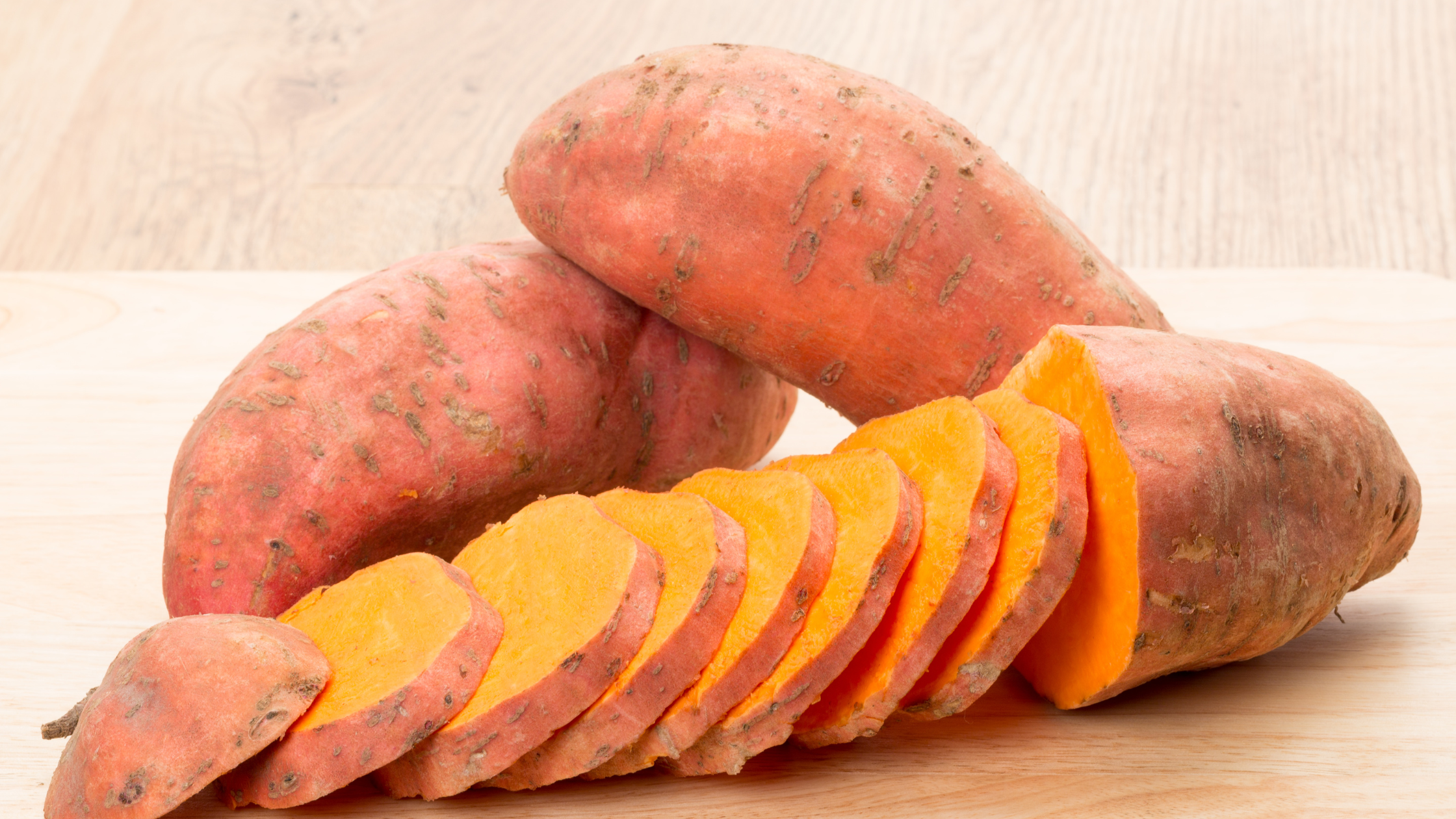
Sweet Potatoes
The sweet potato, a root vegetable cherished for its sweet taste and vibrant color, has garnered significant attention in the culinary and health communities alike. Revered for its versatility and nutritional richness, the sweet potato holds a prominent place in various cuisines worldwide. From its humble origins to its modern-day popularity, this tuberous vegetable boasts a fascinating history and an array of health benefits.
History
The sweet potato (Ipomoea batatas) is believed to have originated in Central or South America over 5,000 years ago, where it was cultivated by indigenous populations. Spanish explorers introduced sweet potatoes to Europe in the 16th century, and from there, it spread globally. Today, it is cultivated in many countries with diverse climates, including China, Nigeria, and the United States.
Health Benefits
Sweet potatoes are a nutrient-dense food, rich in complex carbohydrates, dietary fiber, vitamins such as A, C, and B6, essential minerals including potassium and manganese, and antioxidants like beta-carotene. These nutrients work together to confer a variety of health benefits, such as supporting immune function, promoting healthy vision, and reducing inflammation. The high fiber content in sweet potatoes aids in digestion, potentially lowering the risk of constipation and colon cancer.
Additionally, the vitamins A and C, along with other antioxidants, bolster the immune system and help protect against infections. Beta-carotene, which is abundant in sweet potatoes, is crucial for maintaining good vision and may lower the risk of age-related macular degeneration. Furthermore, the potassium and fiber found in sweet potatoes contribute to heart health by helping to regulate blood pressure and cholesterol levels. Notably, despite their sweet flavor, sweet potatoes have a lower glycemic index compared to white potatoes, making them a beneficial choice for individuals managing diabetes.
Sweet potatoes are a versatile ingredient widely used in various culinary applications across different cultures. Their naturally sweet flavor and creamy texture make them suitable for both savory and sweet dishes. In many cuisines, sweet potatoes can be roasted, mashed, or baked, and they serve as a nutritious base for soups, stews, and casseroles. They are also popular in desserts, such as pies and puddings, where their sweetness enhances the overall flavor profile. In addition to the tubers, sweet potato leaves are edible and can be stir-fried or used in salads, adding a nutritious green element to meals.
While sweet potatoes are widely recognized for their numerous health benefits, individuals with specific health conditions should consume them in moderation or avoid them altogether. Those with digestive disorders, such as irritable bowel syndrome (IBS), may experience discomfort due to the high fiber content in sweet potatoes. Additionally, although sweet potatoes have a lower glycemic index compared to other starchy foods, individuals with diabetes should carefully monitor their intake and consider their overall carbohydrate consumption. Furthermore, some individuals may have rare allergic reactions to sweet potatoes, particularly if they are allergic to other plants in the Convolvulaceae family. It is also important to note that excessive consumption of sweet potatoes can lead to gastrointestinal discomfort, including bloating, gas, or diarrhea, attributable to their high fiber content. Moreover, sweet potatoes contain oxalates, which can interfere with the absorption of certain minerals such as calcium and magnesium; therefore, individuals with a history of kidney stones should limit their intake.
In Eastern medicine, particularly within the framework of Traditional Chinese Medicine (TCM), sweet potatoes are associated with the spleen and stomach meridians, where they are regarded as nourishing and supportive to these organs. This belief underscores their role in promoting digestion and overall health, leading to their inclusion in various dishes and herbal preparations aimed at balancing the body’s energy and enhancing wellness. Conversely, in Western cuisine and medicine, sweet potatoes are celebrated for their nutritional richness and versatility.
Final Thoughts
The sweet potato stands out as a nutrient-rich superfood, offering a plethora of health benefits and culinary possibilities. From its ancient origins to its modern-day prominence, this vibrant tuber continues to captivate palates and support well-being worldwide. Incorporating sweet potatoes into a balanced diet can contribute to overall health and vitality, making them a valuable addition to any meal.
Abiche, M., Teferi, M., & Olbamo, S. (2019). Determination of glycemic index and glycemic loads of commonly consumed food items of cassava and sweet potato of bench maji zone, south west ethiopia 2017. International Journal of Biochemistry Research & Review, 1-12. https://doi.org/10.9734/ijbcrr/2019/v26i430104
Allen, J., Corbitt, A., Maloney, K., Butt, M., & Trương, B. (2012). Glycemic index of sweet potato as affected by cooking methods. The Open Nutrition Journal, 6(1), 1-11. https://doi.org/10.2174/1874288201206010001
Ayeleso, T., Ramachela, K., & Mukwevho, E. (2018). Aqueous-methanol extracts of orange-fleshed sweet potato (ipomoea batatas) ameliorate oxidative stress and modulate type 2 diabetes associated genes in insulin resistant c2c12 cells. Molecules, 23(8), 2058. https://doi.org/10.3390/molecules23082058
Gopalakrishnan, J., Menon, R., Padmaja, G., Sajeev, M., & Moorthy, S. (2011). Nutritional and functional characteristics of protein-fortified pasta from sweet potato. Food and Nutrition Sciences, 02(09), 944-955. https://doi.org/10.4236/fns.2011.29129
Guo, H., Kong, F., & Yan, C. (2017). Optimization of polysaccharide ultrasonic extraction conditions using purple sweet potato tubers based on free radical scavenging and glycosylation inhibitory bioactivities. Pharmacognosy Magazine, 13(51), 504. https://doi.org/10.4103/0973-1296.211044
Mappiratu, K., Laga, A., & Sirajuddin, S. (2022). Utilization of functional instant porridge formulated from taro and purple sweet potato as anti-diabetic. Open Access Macedonian Journal of Medical Sciences, 10(A), 357-360. https://doi.org/10.3889/oamjms.2022.7057
Muhammad, R., Nor, N., Ikram, E., & Sharif, M. (2021). The sustainability of malaysia purple sweet potato and its nutritional value: product development perspective. International Journal of Academic Research in Business and Social Sciences, 11(8). https://doi.org/10.6007/ijarbss/v11-i8/10732
Nagai, M., Tani, M., Kishimoto, Y., Iizuka, M., Saita, E., Toyozaki, M., … & Kondo, K. (2011). Sweet potato (ipomoea batatas l.) leaves suppressed oxidation of low density lipoprotein (ldl) in vitro and in human subjects. Journal of Clinical Biochemistry and Nutrition, 48(3), 203-208. https://doi.org/10.3164/jcbn.10-84
Petrol, B. (2022). Hypoglycemic response of alloxan-induced diabetic rats fed with sweet potato (ipomoea batatas) and irish (solanum tuberosum) potato flour supplemented with vitamins. Sahel Journal of Veterinary Sciences, 19(1), 10-14. https://doi.org/10.54058/saheljvs.v19i1.284
Rahmawati, D. (2024). The benefits of processed purple sweet potato(ipomoea batatas l. poir)in increasing nutritional intake. Bio Web of Conferences, 96, 01020. https://doi.org/10.1051/bioconf/20249601020
Shih, C., Chen, C., Varga, V., Shih, L., Chen, P., Lo, S., … & Li, S. (2020). White sweet potato ameliorates hyperglycemia and regenerates pancreatic islets in diabetic mice. Food & Nutrition Research, 64(0). https://doi.org/10.29219/fnr.v64.3609
Strugała, P., Dzydzan, O., Brodyak, I., Kucharska, A., Kuropka, P., Liuta, M., … & Sybirna, N. (2019). Antidiabetic and antioxidative potential of the blue congo variety of purple potato extract in streptozotocin-induced diabetic rats. Molecules, 24(17), 3126. https://doi.org/10.3390/molecules24173126
Sun, H., Mu, T., Xi, L., & Song, Z. (2014). Effects of domestic cooking methods on polyphenols and antioxidant activity of sweet potato leaves. Journal of Agricultural and Food Chemistry, 62(36), 8982-8989. https://doi.org/10.1021/jf502328d
Tian, J., Shuai, X., Li, J., Yang, N., Deng, L., Li, S., … & He, J. (2020). Protein-bound anthocyanin compounds of purple sweet potato ameliorate hyperglycemia by regulating hepatic glucose metabolism in high-fat diet/streptozotocin-induced diabetic mice. Journal of Agricultural and Food Chemistry, 68(6), 1596-1608. https://doi.org/10.1021/acs.jafc.9b06916
Yao, Y., Yang, X., Tian, J., Liu, C., & Cheng, X. (2013). Antioxidant and antidiabetic activities of black mung bean (vigna radiata l.). Journal of Agricultural and Food Chemistry, 61(34), 8104-8109. https://doi.org/10.1021/jf401812z
Yuan, B., Yang, X., Kou, M., Lu, C., Wang, Y., Peng, J., … & Jiang, J. (2017). Selenylation of polysaccharide from the sweet potato and evaluation of antioxidant, antitumor, and antidiabetic activities. Journal of Agricultural and Food Chemistry, 65(3), 605-617. https://doi.org/10.1021/acs.jafc.6b04788
MyFoodData. (n.d.). *Sweet potato nutrition facts*. Retrieved January 6, 2025, from https://tools.myfooddata.com/nutrition-facts/168482/wt1/1
Medical Disclaimer
The information provided in this document is intended for educational and informational purposes only and should not be construed as medical advice, diagnosis, or treatment. It is essential to consult a qualified healthcare professional for any medical concerns or conditions. The content herein does not substitute for professional medical advice, and individuals should not disregard or delay seeking medical advice based on the information provided.
The authors and publishers of this document do not assume any responsibility for any adverse effects or consequences resulting from the use or application of the information contained herein. The reader is encouraged to conduct their own research and consult with healthcare providers to make informed decisions regarding their health and treatment options. Furthermore, the information presented may not reflect the most current research or medical guidelines, as medical knowledge is continually evolving. Therefore, it is imperative to verify the information with up-to-date, peer-reviewed sources and consult with medical professionals for personalized advice.