
Apples
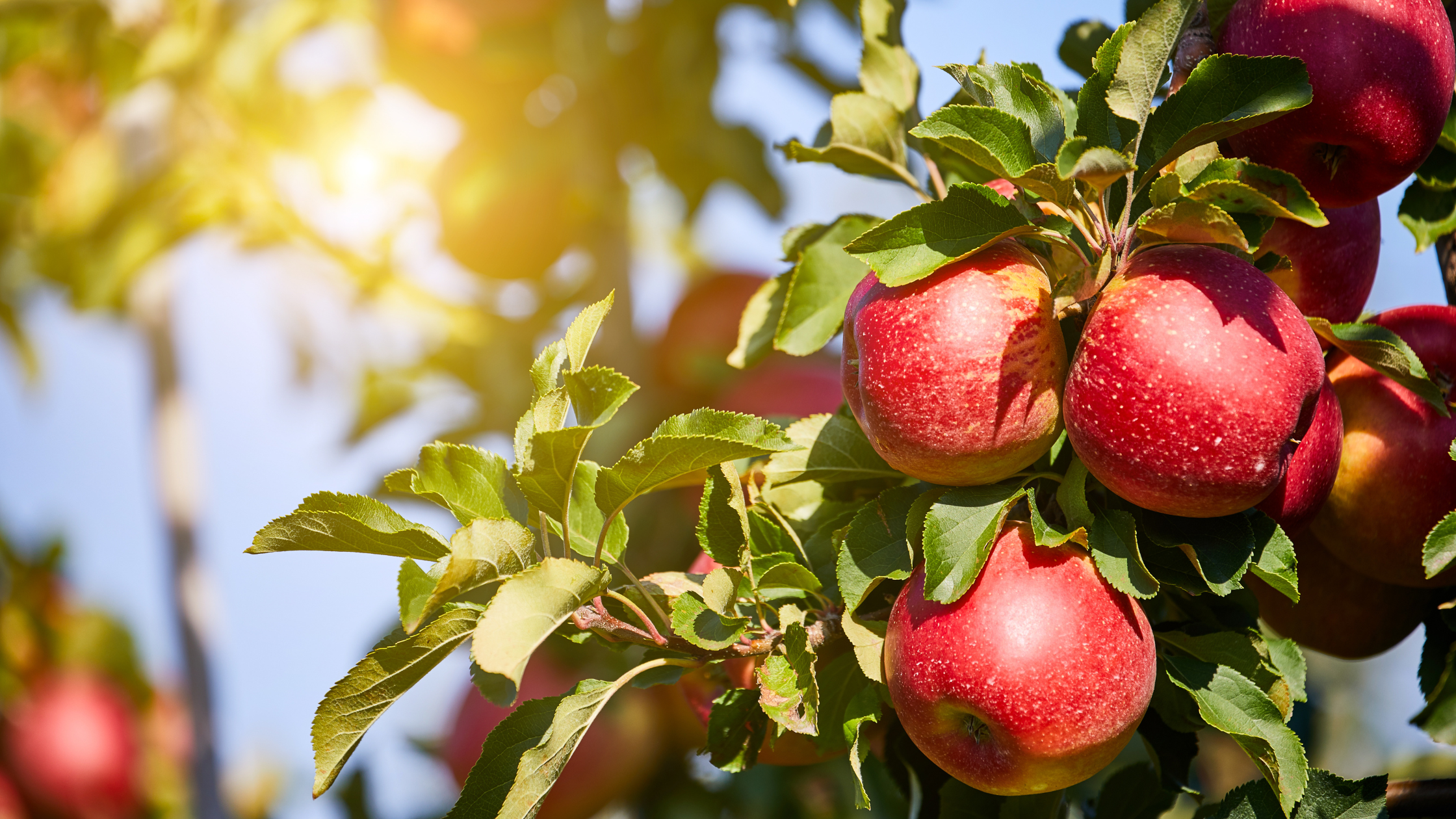
Apples are a widely cultivated and consumed fruit belonging to the Rosaceae family. These crisp, juicy fruits are renowned for their diverse flavors, ranging from sweet to tart, and their vibrant colors, including red, yellow, and green. Apples have been an integral part of human diets for centuries, valued not only for their delectable taste but also for their impressive array of health benefits.
The apple tree has a rich and storied history, with its origins tracing back to the wild apple species Malus sieversii, native to the mountainous regions of Central Asia. Through centuries of cultivation and selective breeding, the modern cultivated apple has evolved, resulting in the vast array of apple varieties we enjoy today. Apples were introduced to North America by European settlers in the 17th century and have since become a staple crop and cultural icon in many regions.
Apples are renowned for their impressive health benefits, which can be attributed to their rich phytochemical composition. These fruits are an abundant source of dietary fiber, vitamins, and antioxidants, including quercetin, catechin, phloridzin, and chlorogenic acid. Studies have shown that regular apple consumption is associated with a reduced risk of chronic diseases, such as cardiovascular disease, type 2 diabetes, and certain types of cancer. The high antioxidant content of apples also contributes to their ability to support immune function and overall well-being.
Apples can be enjoyed in a wide variety of ways, both raw and cooked. They can be eaten fresh, used in baking and cooking, or juiced to create a refreshing and nutritious beverage. Apple slices can be added to salads, sandwiches, and snacks, while baked or sautéed apples make a delightful dessert or side dish. Apple pomace, the byproduct of juicing or cider production, can also be utilized as a source of dietary fiber and incorporated into various food products.
While apples are generally considered safe for consumption, there are a few potential contraindications and medical interactions to be aware of. Individuals with fructose intolerance or irritable bowel syndrome may experience digestive discomfort from the high fructose content in apples. Additionally, the acidic nature of apples can potentially exacerbate symptoms of gastroesophageal reflux disease (GERD). Caution is also advised for those taking certain medications, as the high fiber content in apples may interfere with the absorption of some drugs.
Apples hold a prominent place in both Eastern and Western nutritional paradigms. In traditional Chinese medicine (TCM), apples are not only valued for their nutritional content but also for their energetic properties. They are believed to harmonize the Spleen and Stomach meridians, which are essential for digestion and nutrient absorption. The sweet and slightly sour flavor of apples is thought to support the Spleen’s function, promoting digestive health and alleviating symptoms such as constipation and dryness Additionally, the cooling nature of apples is considered beneficial in balancing internal heat, making them a popular choice during warmer seasons or in hot climates.
From a Western nutritional perspective, apples are recognized for their high fiber content, particularly soluble fiber in the form of pectin, which aids in maintaining healthy digestive function and regulating blood sugar levels. The consumption of apples has been linked to a reduced risk of chronic diseases, including cardiovascular disease and certain cancers, largely attributed to their rich antioxidant profile, which includes flavonoids and vitamin C. Furthermore, the polyphenolic compounds found in apples have been shown to exhibit anti-inflammatory and anti-cancer properties, contributing to overall health and longevity. This dual appreciation of apples in both Eastern and Western contexts underscores their status as a superfood, highlighting their role in promoting health through diverse cultural lenses.
Apples are a versatile and nutritious fruit that have been cherished for centuries. Their rich history, impressive health benefits, and diverse culinary applications make them a valuable addition to a balanced diet. By understanding the potential contraindications, medical interactions, and traditional uses of apples, individuals can make informed choices to incorporate these remarkable fruits into their lives and reap the numerous advantages they offer.
Adyanthaya, I., Kwon, Y., Apostolidis, E., & Shetty, K. (2010). Health benefits of apple phenolics from postharvest stages for potential type 2 diabetes management usingin vitromodels. Journal of Food Biochemistry, 34(1), 31-49. https://doi.org/10.1111/j.1745-4514.2009.00257.x
Akyereko, Y., Wireko‐Manu, F., Alemawor, F., & Adzanyo, M. (2022). Cashew apples in ghana: stakeholders’ knowledge, perception, and utilization. International Journal of Food Science, 2022, 1-10. https://doi.org/10.1155/2022/2749234
Antonić, B., Jančíková, S., Đorđević, Đ., & Tremlová, B. (2020). Apple pomace as food fortification ingredient: a systematic review and meta‐analysis. Journal of Food Science, 85(10), 2977-2985. https://doi.org/10.1111/1750-3841.15449
Boyer, J. and Liu, R. (2004). Apple phytochemicals and their health benefits. Nutrition Journal, 3(1). https://doi.org/10.1186/1475-2891-3-5
Curutchet, A., Trías, J., Tárrega, A., & Arcia, P. (2021). Consumer response to cake with apple pomace as a sustainable source of fibre. Foods, 10(3), 499. https://doi.org/10.3390/foods10030499
Cárcel, J., Martins, M., Cortés, E., Simal, S., Mulet, A., & Pérez-Muelas, N. (2018). Influence of drying temperature and ultrasound application in some quality properties of apple skin… https://doi.org/10.4995/ids2018.2018.7890
Davies, T., Watts, S., McClure, K., Migicovsky, Z., & Myles, S. (2022). Phenotypic divergence between the cultivated apple (malus domestica) and its primary wild progenitor (malus sieversii). Plos One, 17(3), e0250751. https://doi.org/10.1371/journal.pone.0250751
El-Sahar, E. (2012). The protective and therapy effect of apple peel on the experimental rats suppressed immune system. مجلة بحوث التربية النوعية, 2012(24), 647-678. https://doi.org/10.21608/mbse.2012.145737
Ferretti, G., Turco, I., & Bacchetti, T. (2014). Apple as a source of dietary phytonutrients: bioavailability and evidence of protective effects against human cardiovascular disease. Food and Nutrition Sciences, 05(13), 1234-1246. https://doi.org/10.4236/fns.2014.513134
Fouad, S., Ibrahim, G., Hussein, A., Ibrahim, F., & Elgendy, A. (2021). Physicochemical properties of and volatile compounds in riboflavin fortified cloudy apple juice; study of its effect on job fatigue among egyptian construction workers. Heliyon, 7(10), e08246. https://doi.org/10.1016/j.heliyon.2021.e08246
Khoshoo, V. (2000). Smaller volume, thickened formulas in the management of gastroesophageal reflux in thriving infants. Journal of Pediatric Gastroenterology and Nutrition, 31(5), 554-556. https://doi.org/10.1002/j.1536-4801.2000.tb07179.x
Lee, P., et al. (2019). Adzuki bean water extract attenuates obesity by modulating m2/m1 macrophage polarization and gut microbiota composition. Molecular Nutrition &Amp; Food Research, 63(23). https://doi.org/10.1002/mnfr.201900626
Li, H., et al. (2022). Adzuki bean (vigna angularis): chemical compositions, physicochemical properties, health benefits, and food applications. Comprehensive Reviews in Food Science and Food Safety, 21(3), 2335-2362. https://doi.org/10.1111/1541-4337.12945
Marcotte, B., et al. (2022). Health benefits of apple juice consumption: a review of interventional trials on humans. Nutrients, 14(4), 821. https://doi.org/10.3390/nu14040821
Mikulič-Petkovšek, M., et al. (2010). The influence of organic/integrated production on the content of phenolic compounds in apple leaves and fruits in four different varieties over a 2‐year period. Journal of the Science of Food and Agriculture, 90(14), 2366-2378. https://doi.org/10.1002/jsfa.4093
Philadelpho, B. O., et al. (2021). Chromatography-independent fractionation and newly identified molecular features of the adzuki bean (vigna angularis willd.) β-vignin protein. International Journal of Molecular Sciences, 22(6), 3018. https://doi.org/10.3390/ijms22063018
Sluis, A., Dekker, M., et al. (2002). Activity and concentration of polyphenolic antioxidants in apple juice. 1. effect of existing production methods. Journal of Agricultural and Food Chemistry, 50(25), 7211-7219. https://doi.org/10.1021/jf020115h
Yao, Y., et al. (2011). Biological potential of sixteen legumes in china. International Journal of Molecular Sciences, 12(10), 7048-7058. https://doi.org/10.3390/ijms12107048
Zhang, J., et al. (2022). Optimization of microwave pre-cooked conditions for gelatinization of adzuki bean. Foods, 11(2), 171. https://doi.org/10.3390/foods11020171
Zhong, L., Carere, J., et al. (2018). Patulin in apples and apple-based food products: the burdens and the mitigation strategies. Toxins, 10(11), 475. https://doi.org/10.3390/toxins10110475
MyFoodData. (n.d.). Nutrition facts for food item: WT1. Retrieved December 10, 2024, from https://tools.myfooddata.com/nutrition-facts/171688/wt1/1
Medical Disclaimer
The information provided in this document is intended for educational and informational purposes only and should not be construed as medical advice, diagnosis, or treatment. It is essential to consult a qualified healthcare professional for any medical concerns or conditions. The content herein does not substitute for professional medical advice, and individuals should not disregard or delay seeking medical advice based on the information provided.
The authors and publishers of this document do not assume any responsibility for any adverse effects or consequences resulting from the use or application of the information contained herein. The reader is encouraged to conduct their own research and consult with healthcare providers to make informed decisions regarding their health and treatment options. Furthermore, the information presented may not reflect the most current research or medical guidelines, as medical knowledge is continually evolving. Therefore, it is imperative to verify the information with up-to-date, peer-reviewed sources and consult with medical professionals for personalized advice.