Chicken Liver
Chicken liver, a delicacy cherished in culinary traditions across the globe, is not only a flavorful addition to meals but also boasts a plethora of health benefits. Rich in essential nutrients and vitamins, chicken liver has been consumed for centuries, both for its taste and its potential medicinal properties.
[/et_pb_text][et_pb_heading title=”History” _builder_version=”4.27.4″ _module_preset=”default” custom_margin=”||10px||false|false” hover_enabled=”0″ global_colors_info=”{}” title_level=”h2″ title_text_color=”#000000″ sticky_enabled=”0″][/et_pb_heading][et_pb_text _builder_version=”4.27.4″ _module_preset=”default” text_text_color=”#000000″ text_font_size=”17px” hover_enabled=”0″ global_colors_info=”{}” sticky_enabled=”0″]The consumption of liver, including that of chickens, dates back thousands of years. In ancient civilizations such as Egypt, Greece, and Rome, liver was esteemed for its rich taste and believed medicinal properties. Traditional Chinese Medicine (TCM) also recognizes the therapeutic potential of liver, incorporating it into various herbal remedies and dietary practices.
[/et_pb_text][et_pb_heading title=”Health Benefits” _builder_version=”4.27.4″ _module_preset=”default” custom_margin=”||10px||false|false” custom_padding=”||||false|false” hover_enabled=”0″ global_colors_info=”{}” title_level=”h2″ title_text_color=”#000000″ sticky_enabled=”0″][/et_pb_heading][et_pb_text _builder_version=”4.27.4″ _module_preset=”default” text_text_color=”#000000″ text_font_size=”17px” global_colors_info=”{}”]Chicken liver is a nutritional powerhouse, containing high levels of essential nutrients such as iron, vitamin A, vitamin B12, and folate. These nutrients play vital roles in various physiological processes, including red blood cell production, DNA synthesis, and immune function. Iron, in particular, is crucial for transporting oxygen throughout the body and maintaining energy levels. Chicken liver is one of the most nutrient-dense foods available, making it an excellent addition to the diet for individuals looking to boost their nutrient intake. Chicken liver provides a highly absorbable form of iron, making it an effective dietary source for preventing or treating iron deficiency anemia. Chicken liver is an exceptional source of vitamin A, a nutrient essential for vision, immune function, and skin health. Adequate intake of vitamin A is crucial for maintaining overall health and wellbeing. Vitamin B12 is vital for nerve function, DNA synthesis, and red blood cell production.
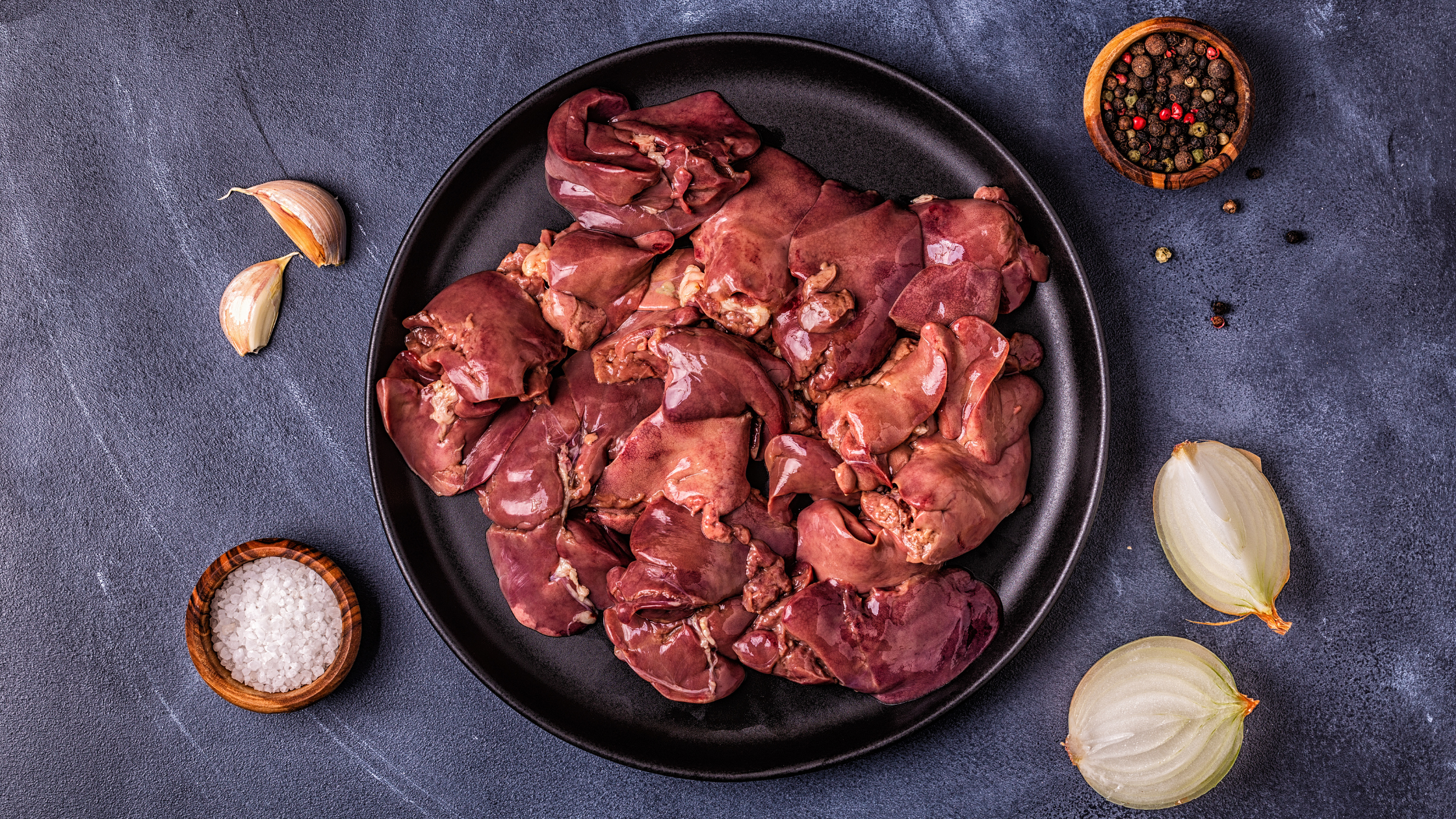
[/et_pb_text][/et_pb_column][/et_pb_row][/et_pb_section][et_pb_section fb_built=”1″ _builder_version=”4.27.4″ _module_preset=”default” background_color=”#F2F2F2″ custom_padding=”30px||5px||false|false” global_colors_info=”{}”][et_pb_row column_structure=”2_3,1_3″ _builder_version=”4.27.4″ _module_preset=”default” custom_padding=”5px||9px|||” global_colors_info=”{}” custom_margin=”-10px|auto||auto||”][et_pb_column type=”2_3″ _builder_version=”4.27.4″ _module_preset=”default” global_colors_info=”{}”][et_pb_heading title=”Best Preparation Methods ” _builder_version=”4.27.4″ _module_preset=”default” custom_margin=”||10px||false|false” global_colors_info=”{}”][/et_pb_heading][et_pb_text _builder_version=”4.27.4″ _module_preset=”default” text_text_color=”#000000″ text_font_size=”17px” global_colors_info=”{}”]For optimal flavor and safety, it is crucial to cook chicken liver thoroughly; this can be achieved by pan-frying, sautéing, or baking until the internal temperature reaches at least 165°F (74°C) to eliminate harmful bacteria such as Campylobacter. Chicken liver can be enjoyed in various dishes, including pâtés, spreads, and stir-fries, or simply seasoned and served as a main dish.
[/et_pb_text][et_pb_image src=”https://www.immortalme.com/wp-content/uploads/2025/01/Chicken-Liver-Food.png” title_text=”Chicken Liver Food” _builder_version=”4.27.4″ _module_preset=”default” hover_enabled=”0″ border_radii=”on|6px|6px|6px|6px” box_shadow_style=”preset1″ global_colors_info=”{}” box_shadow_spread=”3px” box_shadow_color=”#84776C” sticky_enabled=”0″][/et_pb_image][/et_pb_column][et_pb_column type=”1_3″ _builder_version=”4.27.4″ _module_preset=”default” global_colors_info=”{}”][et_pb_image src=”https://www.immortalme.com/wp-content/uploads/2025/01/Chicken-Liver.png” title_text=”Chicken Liver” _builder_version=”4.27.4″ _module_preset=”default” hover_enabled=”0″ box_shadow_style=”preset1″ global_colors_info=”{}” border_radii=”on|6px|6px|6px|6px” box_shadow_spread=”3px” box_shadow_color=”#84776C” sticky_enabled=”0″][/et_pb_image][/et_pb_column][/et_pb_row][/et_pb_section][et_pb_section fb_built=”1″ _builder_version=”4.27.4″ _module_preset=”default” custom_padding=”30px||5px|||” hover_enabled=”0″ global_colors_info=”{}” background_color=”#F2F2F2″ sticky_enabled=”0″][et_pb_row _builder_version=”4.27.4″ _module_preset=”default” custom_padding=”5px||8px|||” global_colors_info=”{}” custom_margin=”-20px|auto||auto||”][et_pb_column type=”4_4″ _builder_version=”4.27.4″ _module_preset=”default” global_colors_info=”{}”][et_pb_heading title=”Precautions and Possible Side Effects” _builder_version=”4.27.4″ _module_preset=”default” custom_margin=”||10px||false|false” hover_enabled=”0″ global_colors_info=”{}” title_level=”h2″ title_text_color=”#000000″ sticky_enabled=”0″][/et_pb_heading][et_pb_text _builder_version=”4.27.4″ _module_preset=”default” text_text_color=”#000000″ text_font_size=”17px” global_colors_info=”{}”]While chicken liver offers numerous health benefits, there are some considerations to keep in mind; Chicken liver is high in cholesterol and should be consumed in moderation, especially by individuals with high cholesterol levels or cardiovascular disease. Excessive intake of vitamin A from animal sources such as liver can lead to vitamin A toxicity, which may cause symptoms such as nausea, dizziness, and liver damage. It’s essential to consume liver in moderation and avoid excessive supplementation. Some individuals may experience digestive discomfort or allergic reactions after consuming liver. Chicken liver can interact with certain medications, particularly those that affect liver function or blood clotting. Individuals taking medications should consult with their healthcare provider before adding chicken liver to their diet.
[/et_pb_text][/et_pb_column][/et_pb_row][/et_pb_section][et_pb_section fb_built=”1″ admin_label=”Post Body” _builder_version=”4.27.4″ background_color=”#F2F2F2″ custom_padding=”30px||6px|||” locked=”off” global_colors_info=”{}”][et_pb_row column_structure=”1_2,1_2″ _builder_version=”4.27.4″ custom_padding=”4px||8px|||” hover_enabled=”0″ locked=”off” global_colors_info=”{}” sticky_enabled=”0″ custom_margin=”-15px|auto||auto||”][et_pb_column type=”1_2″ _builder_version=”4.16″ global_colors_info=”{}”][et_pb_heading title=”Eastern and Western Nutrition” _builder_version=”4.27.4″ _module_preset=”default” hover_enabled=”0″ sticky_enabled=”0″ title_level=”h2″ title_text_color=”#000000″ custom_margin=”||7px|||”][/et_pb_heading][et_pb_text _builder_version=”4.27.4″ _module_preset=”default” text_text_color=”#000000″ text_font_size=”17px” hover_enabled=”0″ global_colors_info=”{}” sticky_enabled=”0″ custom_margin=”3px|||||”]In Traditional Chinese Medicine (TCM), chicken liver is highly regarded for its health benefits, particularly in its ability to tonify blood, nourish yin, and replenish essence. This organ is often recommended for individuals suffering from blood deficiency or chronic illnesses, as it is believed to have a nourishing and tonifying effect on vital organs, thereby promoting overall health and vitality. The nutritional profile of chicken liver supports these claims, as it is rich in essential amino acids, vitamins, and minerals, which are crucial for maintaining bodily functions and enhancing energy levels. Furthermore, the inclusion of chicken liver in the diet is thought to improve conditions related to anemia and immune system dysfunction, highlighting its role in enhancing overall well-being.
In contrast, Western cuisine celebrates chicken liver primarily for its culinary versatility and rich flavor. It is a key ingredient in gourmet dishes such as pâtés and terrines, where its creamy texture and robust taste are highly prized. The preparation of chicken liver in these dishes often involves careful cooking techniques that enhance its flavor while ensuring food safety. The nutritional benefits of chicken liver, including its high protein content and abundance of vitamins A and B12, further contribute to its appeal in Western gastronomy.
[/et_pb_text][/et_pb_column][et_pb_column type=”1_2″ _builder_version=”4.16″ global_colors_info=”{}”][et_pb_image src=”https://www.immortalme.com/wp-content/uploads/2025/02/Screenshot-2025-02-18-021726.png” title_text=”Screenshot 2025-02-18 021726″ _builder_version=”4.27.4″ _module_preset=”default” hover_enabled=”0″ border_radii=”on|6px|6px|6px|6px” box_shadow_style=”preset1″ global_colors_info=”{}” sticky_enabled=”0″ box_shadow_spread=”3px” box_shadow_color=”#84776C”][/et_pb_image][/et_pb_column][/et_pb_row][/et_pb_section][et_pb_section fb_built=”1″ _builder_version=”4.27.4″ _module_preset=”default” background_color=”#F2F2F2″ custom_padding=”29px||5px|||” hover_enabled=”0″ global_colors_info=”{}” sticky_enabled=”0″][et_pb_row _builder_version=”4.27.4″ _module_preset=”default” custom_padding=”6px||6px|||” global_colors_info=”{}” custom_margin=”-20px|auto||auto||”][et_pb_column type=”4_4″ _builder_version=”4.27.4″ _module_preset=”default” global_colors_info=”{}”][et_pb_heading title=”Final Thoughts” _builder_version=”4.27.4″ _module_preset=”default” custom_margin=”||10px||false|false” hover_enabled=”0″ global_colors_info=”{}” title_level=”h2″ title_text_color=”#000000″ sticky_enabled=”0″][/et_pb_heading][et_pb_text _builder_version=”4.27.4″ _module_preset=”default” text_text_color=”#000000″ text_font_size=”17px” global_colors_info=”{}”]In conclusion, chicken liver is a nutrient-dense food with a rich history of culinary and medicinal use. While it offers numerous health benefits, it should be consumed in moderation, taking into account individual health status and dietary considerations. By incorporating chicken liver into a balanced diet, individuals can enjoy its unique flavor and reap its many nutritional rewards.
[/et_pb_text][/et_pb_column][/et_pb_row][et_pb_row _builder_version=”4.27.4″ _module_preset=”default” custom_padding=”33px||5px|||” global_colors_info=”{}” theme_builder_area=”post_content”][et_pb_column type=”4_4″ _builder_version=”4.27.4″ _module_preset=”default” global_colors_info=”{}” theme_builder_area=”post_content”][et_pb_divider color=”#84776C” divider_weight=”2px” _builder_version=”4.27.4″ _module_preset=”default” global_colors_info=”{}” theme_builder_area=”post_content”][/et_pb_divider][et_pb_toggle title=”References” open_toggle_background_color=”#FFFFFF” closed_toggle_background_color=”#FFFFFF” icon_color=”#84776C” toggle_icon=”||fa||900″ use_icon_font_size=”on” icon_font_size=”25px” open_icon_color=”#E02B20″ open_toggle_icon=”||fa||900″ open_use_icon_font_size=”on” open_icon_font_size=”25px” _builder_version=”4.27.4″ _module_preset=”default” title_text_color=”#000000″ title_font=”Cormorant Garamond||||||||” title_text_align=”left” title_font_size=”20px” text_orientation=”left” custom_margin=”||42px|||” custom_padding=”|||20px|false|false” hover_enabled=”0″ border_radii=”on|6px|6px|6px|6px” box_shadow_style=”preset1″ box_shadow_color=”#84776C” global_colors_info=”{}” theme_builder_area=”post_content” sticky_enabled=”0″]Abdalrahman, L. and Fakhr, M. (2015). Incidence, antimicrobial susceptibility, and toxin genes possession screening of staphylococcus aureus in retail chicken livers and gizzards. Foods, 4(2), 115-129. https://doi.org/10.3390/foods4020115
Acaröz, D. and Sözbilir, N. (2020). Investigation of enrofloxacin and ciprofloxacin residues by lc-ms/ms in chicken liver marketed in afyonkarahisar. Ankara Üniversitesi Veteriner Fakültesi Dergisi, 67(2), 137-142. https://doi.org/10.33988/auvfd.561824
Alshamy, Z., et al. (2019). Structure and age-dependent growth of the chicken liver together with liver fat quantification: a comparison between a dual-purpose and a broiler chicken line. Plos One, 14(12), e0226903. https://doi.org/10.1371/journal.pone.0226903
Borisova, V., et al. (2023). The use of regionalized agricultural raw materials of plant origin in the production of the base for enriched combined liver pates. Iop Conference Series Earth and Environmental Science, 1154(1), 012066. https://doi.org/10.1088/1755-1315/1154/1/012066
Choe, J., et al. (2019). Effects of green tea leaf, lotus leaf, and kimchi powders on quality characteristics of chicken liver sausages. Journal of Animal Science and Technology, 61(1), 28-34. https://doi.org/10.5187/jast.2019.61.1.28
Daneshyar, M., et al. (2011). Effects of dietary turmeric supplementation on plasma lipoproteins, meat quality and fatty acid composition in broilers. South African Journal of Animal Science, 41(4). https://doi.org/10.4314/sajas.v41i4.13
Edwards, D., et al. (2013). Campylobacteriosis outbreak associated with consumption of undercooked chicken liver pâté in the east of England, September 2011: identification of a dose–response risk. Epidemiology and Infection, 142(2), 352-357. https://doi.org/10.1017/s0950268813001222
Firlieyanti, A., et al. (2016). Campylobacters and their bacteriophages from chicken liver: the prospect for phage biocontrol. International Journal of Food Microbiology, 237, 121-127. https://doi.org/10.1016/j.ijfoodmicro.2016.08.026
Gesek, M., et al. (2013). Morphological pattern of the livers of different lines of broiler chickens during rearing. Veterinární Medicína, 58(1), 16-24. https://doi.org/10.17221/6652-vetmed
Hamani, B., et al. (2022). Effects of feeding housefly (musca domestica) larvae on the butchery skills and meat sensory characteristics of local chickens in niger. Veterinary Sciences, 9(10), 553. https://doi.org/10.3390/vetsci9100553
Hanson, H., et al. (2014). Creating student sleuths: how a team of graduate students helped solve an outbreak of salmonella heidelberg infections associated with kosher broiled chicken livers. Journal of Food Protection, 77(8), 1390-1393. https://doi.org/10.4315/0362-028x.jfp-13-564
Hutchison, M., et al. (2015). A method for the preparation of chicken liver pâté that reliably destroys campylobacters. International Journal of Environmental Research and Public Health, 12(5), 4652-4669. https://doi.org/10.3390/ijerph120504652
Hu, Y., et al. (2017). In ovo injection of betaine alleviates corticosterone-induced fatty liver in chickens through epigenetic modifications. Scientific Reports, 7(1). https://doi.org/10.1038/srep40251
Huang, P., et al. (2018). The chicken gut metagenome and the modulatory effects of plant-derived benzylisoquinoline alkaloids. Microbiome, 6(1). https://doi.org/10.1186/s40168-018-0590-5
Klarić, I., et al. (2018). Influence of dietary supplementation of propolis and bee pollen on liver pathology in broiler chickens. Animals, 8(4), 54. https://doi.org/10.3390/ani8040054
Li, Z., et al. (2020). Ammonia-induced energy metabolism disorder and autophagy via ampk/mtor/ulk1 pathway in chicken livers.. https://doi.org/10.21203/rs.3.rs-114503/v1
Liu, Y., et al. (2022). Effects of dietary macleaya cordata extract containing isoquinoline alkaloids supplementation as an alternative to antibiotics in the diets on growth performance and liver health of broiler chickens. Frontiers in Veterinary Science, 9. https://doi.org/10.3389/fvets.2022.950174
Liu, Y., et al. (2018). Folic acid reduced triglycerides deposition in primary chicken hepatocytes. Journal of Agricultural and Food Chemistry, 66(50), 13162-13172. https://doi.org/10.1021/acs.jafc.8b05193
Napirah, A., et al. (2022). The effect of different probiotics on the broiler’s offals percentage.. https://doi.org/10.2991/absr.k.220309.063
Noormohamed, A. and Fakhr, M. (2014). Molecular typing of campylobacter jejuni and campylobacter coli isolated from various retail meats by mlst and pfge. Foods, 3(1), 82-93. https://doi.org/10.3390/foods3010082
Ojima, S., et al. (2021). Characteristics of systemic infection and host responses in chickens experimentally infected with <i>salmonella enterica</i> serovar gallinarum biovar gallinarum. Journal of Veterinary Medical Science, 83(7), 1147-1154. https://doi.org/10.1292/jvms.21-0227
Ojima, S., et al. (2022). Wecb gene of salmonella gallinarum plays a critical role in systemic infection of fowl typhoid. Frontiers in Microbiology, 13. https://doi.org/10.3389/fmicb.2022.880932
Putri, A., et al. (2023). Development of iron- and vitamin a-rich dim sum from gourami (osphronemus goramy) and chicken liver for women of reproductive age. Jurnal Gizi Dan Pangan, 18(Supp.1), 55-57. https://doi.org/10.25182/jgp.2023.18.supp.1.55-57
Qu, Z., et al. (2021). Quality changes in chicken livers during cooking. Poultry Science, 100(9), 101316. https://doi.org/10.1016/j.psj.2021.101316
Qiu, Z. (2024). The fusion and influence of east Asian and western food culture. Communications in Humanities Research, 39(1), 78-81. https://doi.org/10.54254/2753-7064/39/20242187
Sugiharto, S., et al. (2017). Intestinal microbial ecology and hematological parameters of broiler fed cassava waste pulp fermented with acremonium charticola. Veterinary World, 10(3), 324-330. https://doi.org/10.14202/vetworld.2017.324-330
Wang, G., et al. (2023). Virome profiling of chickens with hepatomegaly rupture syndrome reveals coinfection of multiple viruses. Viruses, 15(6), 1249. https://doi.org/10.3390/v15061249
Wang, H., et al. (2010). Microarray analysis of genes differentially expressed in the liver of lean and fat chickens. Animal, 4(4), 513-522. https://doi.org/10.1017/s1751731109991388
Zhang, J., et al. (2015). High concentrations of atmospheric ammonia induce alterations in the hepatic proteome of broilers (gallus gallus): an itraq-based quantitative proteomic analysis. Plos One, 10(4), e0123596. https://doi.org/10.1371/journal.pone.0123596
Zhang, Y., et al. (2018). Alteration of hepatic gene expression along with the inherited phenotype of acquired fatty liver in chicken. Genes, 9(4), 199. https://doi.org/10.3390/genes9040199
MyFoodData. (n.d.). Nutrition facts for food item 171060. Retrieved December 12, 2024, from https://tools.myfooddata.com/nutrition-facts/171060/wt1/1
[/et_pb_toggle][/et_pb_column][/et_pb_row][/et_pb_section][et_pb_section fb_built=”1″ _builder_version=”4.27.4″ _module_preset=”default” background_color=”#84776C” hover_enabled=”0″ global_colors_info=”{}” custom_padding=”35px||60px||false|false” custom_margin=”||-60px||false|false” sticky_enabled=”0″][et_pb_row _builder_version=”4.27.4″ _module_preset=”default” global_colors_info=”{}”][et_pb_column type=”4_4″ _builder_version=”4.27.4″ _module_preset=”default” global_colors_info=”{}”][et_pb_heading title=”More Articles You May Like” _builder_version=”4.27.4″ _module_preset=”default” title_text_color=”#FFFFFF” global_colors_info=”{}”][/et_pb_heading][et_pb_divider color=”#F2F2F2″ divider_weight=”2px” _builder_version=”4.27.4″ _module_preset=”default” global_colors_info=”{}”][/et_pb_divider][et_pb_blog_extras posts_number=”12″ include_categories=”57,19,56″ blog_layout=”slider” excerpt_length=”600″ show_author=”off” category_color=”#2533ab” category_background_color=”RGBA(255,255,255,0)” show_comments=”off” content_color=”#000000″ _builder_version=”4.27.4″ _module_preset=”default” header_text_color=”#000000″ body_text_color=”#000000″ meta_text_color=”#000000″ hover_enabled=”0″ border_radii=”on|10px|10px|10px|10px” border_width_all=”2px” border_color_all=”rgba(242,242,242,0.32)” box_shadow_style=”preset2″ box_shadow_blur=”28px” box_shadow_color=”rgba(0,0,0,0.53)” global_colors_info=”{}” slider_layout=”vertical_grid” slider_loop=”on” show_date=”off” sticky_enabled=”0″][/et_pb_blog_extras][/et_pb_column][/et_pb_row][et_pb_row _builder_version=”4.27.4″ _module_preset=”default” background_color=”#FFFFFF” border_radii=”on|6px|6px|6px|6px” global_colors_info=”{}” theme_builder_area=”post_content”][et_pb_column type=”4_4″ _builder_version=”4.27.4″ _module_preset=”default” global_colors_info=”{}” theme_builder_area=”post_content”][et_pb_text _builder_version=”4.27.4″ _module_preset=”default” text_text_color=”#84776C” text_font_size=”12px” text_line_height=”1.5em” header_font=”|300|||||||” header_font_size=”25px” header_4_font=”–et_global_heading_font||||||||” header_4_text_color=”#84776C” custom_padding=”|17px||17px|false|false” global_colors_info=”{}” theme_builder_area=”post_content”]Medical Disclaimer
The information provided in this document is intended for educational and informational purposes only and should not be construed as medical advice, diagnosis, or treatment. It is essential to consult a qualified healthcare professional for any medical concerns or conditions. The content herein does not substitute for professional medical advice, and individuals should not disregard or delay seeking medical advice based on the information provided.
The authors and publishers of this document do not assume any responsibility for any adverse effects or consequences resulting from the use or application of the information contained herein. The reader is encouraged to conduct their own research and consult with healthcare providers to make informed decisions regarding their health and treatment options. Furthermore, the information presented may not reflect the most current research or medical guidelines, as medical knowledge is continually evolving. Therefore, it is imperative to verify the information with up-to-date, peer-reviewed sources and consult with medical professionals for personalized advice.
[/et_pb_text][/et_pb_column][/et_pb_row][/et_pb_section]