Peaches
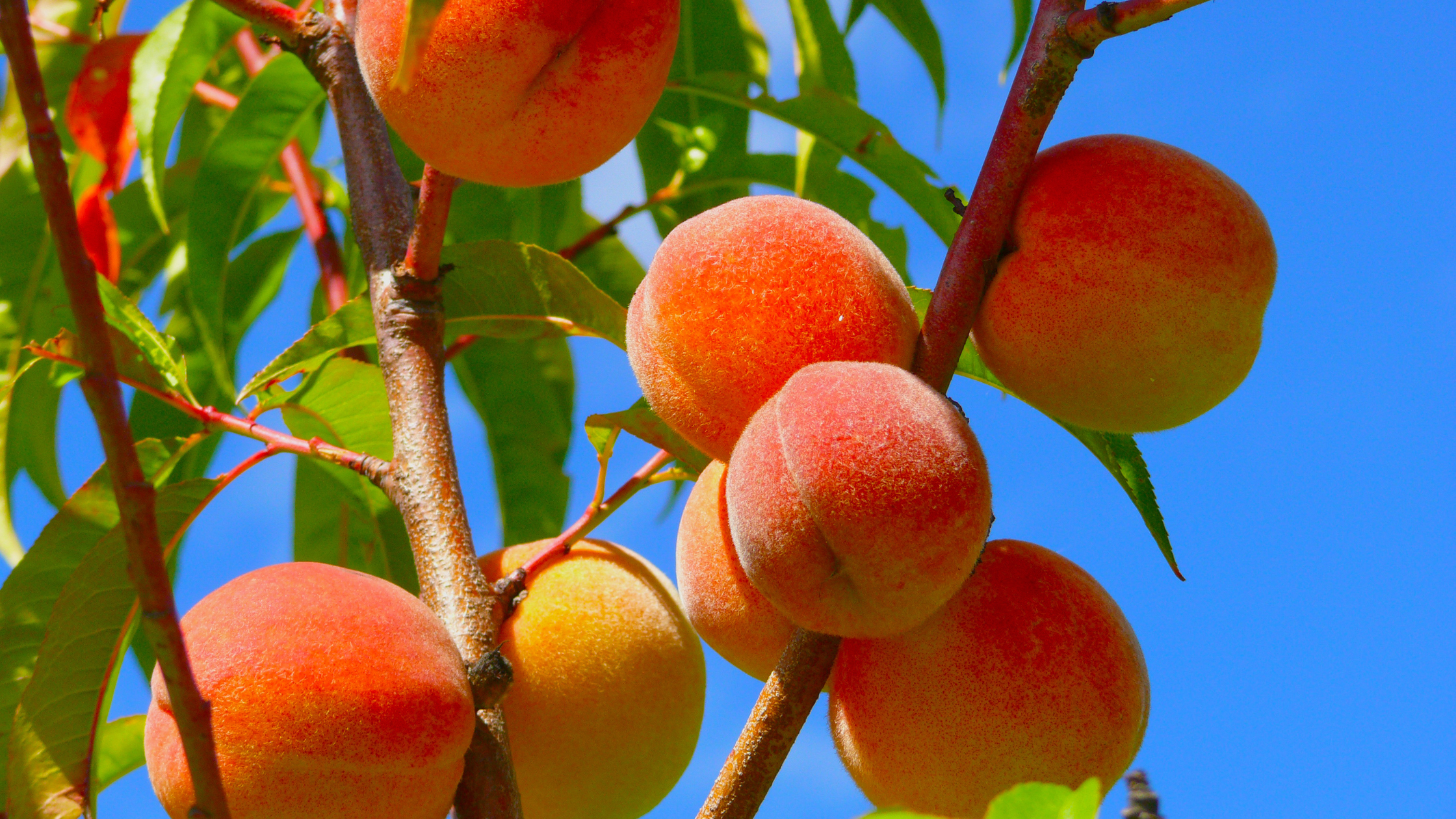
Peach, scientifically known as Prunus persica, is a juicy and delicious fruit beloved for its sweet taste and nutritional benefits. Belonging to the Rosaceae family, peaches are widely cultivated in temperate regions around the world. They are not only a delightful treat but also offer a plethora of health benefits, making them a popular choice in various cuisines and medicinal practices.
History
The origins of the peach trace back thousands of years to China, where it is believed to have been cultivated since 2000 BCE. From there, peaches spread to Persia (modern-day Iran) and eventually reached Europe via the Silk Road. Spanish explorers introduced peaches to the New World in the 16th century, where they thrived in the favorable climates of North and South America.
Health Benefits
Peaches are a nutrient-dense fruit that offers a wealth of health-promoting properties due to their rich content of antioxidants, vitamins, and minerals. They contain beneficial compounds such as flavonoids, phenolic acids, and carotenoids, which play a crucial role in combating oxidative stress and inflammation within the body. The high antioxidant levels in peaches help neutralize harmful free radicals, thereby reducing the risk of chronic diseases, including heart disease and cancer. Additionally, peaches are an excellent source of dietary fiber, which aids digestion by preventing constipation and promoting regular bowel movements.
The vitamins A and C found in peaches contribute to skin health by enhancing collagen production, resulting in a healthier and more youthful complexion. Furthermore, the potassium content in peaches supports heart health by helping to regulate blood pressure, thus lowering the risk of hypertension and stroke. With their low-calorie count and high water content, peaches also serve as a satisfying snack option for those mindful of weight management. Overall, the combination of these nutritional benefits makes peaches a valuable addition to a balanced diet.
[/et_pb_text][/et_pb_column][/et_pb_row][/et_pb_section][et_pb_section fb_built=”1″ _builder_version=”4.27.4″ _module_preset=”default” background_color=”#F2F2F2″ custom_padding=”30px||14px||false|false” global_colors_info=”{}” custom_margin=”-5px||3px|||” min_height=”757px”][et_pb_row _builder_version=”4.27.4″ _module_preset=”default” custom_padding=”6px||0px|||” custom_margin=”-26px|auto||auto||”][et_pb_column _builder_version=”4.27.4″ _module_preset=”default” type=”4_4″][et_pb_heading title=”Best Preparation Methods ” _builder_version=”4.27.4″ _module_preset=”default” hover_enabled=”0″ sticky_enabled=”0″ title_level=”h2″ title_text_color=”#000000″][/et_pb_heading][/et_pb_column][/et_pb_row][et_pb_row column_structure=”2_3,1_3″ _builder_version=”4.27.4″ _module_preset=”default” custom_padding=”5px||5px|||” global_colors_info=”{}” custom_margin=”-3px|auto||auto||”][et_pb_column type=”2_3″ _builder_version=”4.27.4″ _module_preset=”default” global_colors_info=”{}”][et_pb_text _builder_version=”4.27.4″ _module_preset=”default” text_text_color=”#000000″ text_font_size=”17px” hover_enabled=”0″ global_colors_info=”{}” sticky_enabled=”0″]Peaches are a versatile fruit widely used in culinary applications, celebrated for their sweet and juicy flavor. They can be enjoyed fresh, canned, or dried, and are often incorporated into a variety of dishes, including desserts, salads, and sauces.
In addition to their fresh consumption, peaches are commonly used in baked goods such as pies and cobblers, where their natural sweetness enhances the overall flavor profile. Furthermore, peach puree is utilized in smoothies, sorbets, and sauces, showcasing its adaptability in both sweet and savory recipes.
[/et_pb_text][et_pb_image src=”https://www.immortalme.com/wp-content/uploads/2025/01/Peaches-Food.png” title_text=”Peaches Food” _builder_version=”4.27.4″ _module_preset=”default” hover_enabled=”0″ border_radii=”on|6px|6px|6px|6px” box_shadow_style=”preset1″ global_colors_info=”{}” box_shadow_spread=”3px” box_shadow_color=”#84776C” sticky_enabled=”0″][/et_pb_image][/et_pb_column][et_pb_column type=”1_3″ _builder_version=”4.27.4″ _module_preset=”default” global_colors_info=”{}”][et_pb_image src=”https://www.immortalme.com/wp-content/uploads/2025/01/Peaches.png” title_text=”Peaches” _builder_version=”4.27.4″ _module_preset=”default” hover_enabled=”0″ box_shadow_style=”preset1″ global_colors_info=”{}” border_radii=”on|6px|6px|6px|6px” box_shadow_spread=”3px” box_shadow_color=”#84776C” sticky_enabled=”0″][/et_pb_image][/et_pb_column][/et_pb_row][et_pb_row _builder_version=”4.27.4″ _module_preset=”default” custom_padding=”19px||11px|||”][et_pb_column _builder_version=”4.27.4″ _module_preset=”default” type=”4_4″][et_pb_text _builder_version=”4.27.4″ _module_preset=”default” text_text_color=”#000000″ text_font_size=”17px” hover_enabled=”0″ global_colors_info=”{}” header_2_text_color=”#000000″ sticky_enabled=”0″]Precautions and Possible Side Effects
While peaches are generally safe for consumption, individuals with a known allergy to stone fruits such as peaches, cherries, and plums should avoid them to prevent allergic reactions. In rare cases, consuming large quantities of peach pits (which contain amygdalin) may lead to cyanide poisoning. It’s essential to avoid ingesting peach pits and to consume only the flesh of the fruit.
[/et_pb_text][/et_pb_column][/et_pb_row][/et_pb_section][et_pb_section fb_built=”1″ admin_label=”Post Body” _builder_version=”4.27.4″ background_color=”#F2F2F2″ custom_padding=”28px||3px|||” locked=”off” global_colors_info=”{}” custom_margin=”-15px|||||”][et_pb_row _builder_version=”4.27.4″ _module_preset=”default” custom_padding=”5px||0px|||” custom_margin=”-16px|auto||auto||”][et_pb_column _builder_version=”4.27.4″ _module_preset=”default” type=”4_4″][et_pb_heading title=”Eastern and Western Nutrition” _builder_version=”4.27.4″ _module_preset=”default” hover_enabled=”0″ sticky_enabled=”0″ title_level=”h2″ title_text_color=”#000000″ custom_padding=”||0px|||” custom_margin=”0px|||||”][/et_pb_heading][/et_pb_column][/et_pb_row][et_pb_row column_structure=”1_2,1_2″ _builder_version=”4.27.4″ custom_padding=”3px||9px|||” hover_enabled=”0″ locked=”off” global_colors_info=”{}” custom_margin=”-3px|auto||auto||” sticky_enabled=”0″][et_pb_column type=”1_2″ _builder_version=”4.16″ global_colors_info=”{}”][et_pb_text _builder_version=”4.27.4″ _module_preset=”default” text_text_color=”#000000″ text_font_size=”17px” hover_enabled=”0″ global_colors_info=”{}” sticky_enabled=”0″]In traditional Chinese medicine (TCM), peaches are highly regarded for their medicinal properties, particularly their ability to nourish the lungs and promote longevity. They are associated with the metal element and are linked to the lung and large intestine meridians, which are believed to play a crucial role in respiratory health, elimination, and overall vitality.
Conversely, in Western herbalism, peach leaves and flowers are utilized in teas or tinctures for their diuretic and laxative effects, showcasing the diverse applications of this fruit across different medicinal traditions. This dual appreciation for peaches highlights their significance in both TCM and Western herbal practices, emphasizing their contributions to health and wellness.
[/et_pb_text][/et_pb_column][et_pb_column type=”1_2″ _builder_version=”4.16″ global_colors_info=”{}”][et_pb_image src=”https://www.immortalme.com/wp-content/uploads/2025/02/Screenshot-2025-02-13-211432.png” title_text=”Screenshot 2025-02-13 211432″ _builder_version=”4.27.4″ _module_preset=”default” hover_enabled=”0″ border_radii=”on|6px|6px|6px|6px” box_shadow_style=”preset1″ global_colors_info=”{}” sticky_enabled=”0″ custom_margin=”-7px|||||” box_shadow_spread=”3px” box_shadow_color=”#84776C”][/et_pb_image][/et_pb_column][/et_pb_row][/et_pb_section][et_pb_section fb_built=”1″ _builder_version=”4.27.4″ _module_preset=”default” background_color=”#F2F2F2″ custom_padding=”29px||2px|||” hover_enabled=”0″ global_colors_info=”{}” sticky_enabled=”0″][et_pb_row _builder_version=”4.27.4″ _module_preset=”default” custom_padding=”1px||8px|||” hover_enabled=”0″ global_colors_info=”{}” custom_margin=”-17px|auto||auto||” sticky_enabled=”0″][et_pb_column type=”4_4″ _builder_version=”4.27.4″ _module_preset=”default” global_colors_info=”{}”][et_pb_text _builder_version=”4.27.4″ _module_preset=”default” text_text_color=”#000000″ text_font_size=”17px” hover_enabled=”0″ global_colors_info=”{}” header_2_text_color=”#000000″ sticky_enabled=”0″ custom_margin=”-2px|||||”]Final Thoughts
Peaches are not only a delicious summer fruit but also a nutritional powerhouse with numerous health benefits. Whether enjoyed fresh, dried, or incorporated into various dishes, peaches offer a tasty way to boost overall health and well-being. However, it’s essential to consume them in moderation and avoid ingesting peach pits to prevent potential adverse effects. With their rich history and versatility, peaches continue to be celebrated both in culinary traditions and holistic health practices worldwide.
[/et_pb_text][/et_pb_column][/et_pb_row][et_pb_row _builder_version=”4.27.4″ _module_preset=”default” custom_padding=”42px||5px|||” global_colors_info=”{}” theme_builder_area=”post_content”][et_pb_column type=”4_4″ _builder_version=”4.27.4″ _module_preset=”default” global_colors_info=”{}” theme_builder_area=”post_content”][et_pb_divider color=”#84776C” divider_weight=”2px” _builder_version=”4.27.4″ _module_preset=”default” global_colors_info=”{}” theme_builder_area=”post_content”][/et_pb_divider][et_pb_toggle title=”References” open_toggle_background_color=”#FFFFFF” closed_toggle_background_color=”#FFFFFF” icon_color=”#84776C” toggle_icon=”||fa||900″ use_icon_font_size=”on” icon_font_size=”25px” open_icon_color=”#E02B20″ open_toggle_icon=”||fa||900″ open_use_icon_font_size=”on” open_icon_font_size=”25px” _builder_version=”4.27.4″ _module_preset=”default” title_text_color=”#000000″ title_font=”Cormorant Garamond||||||||” title_text_align=”left” title_font_size=”20px” text_orientation=”left” custom_margin=”||42px|||” custom_padding=”|||20px|false|false” hover_enabled=”0″ border_radii=”on|6px|6px|6px|6px” box_shadow_style=”preset1″ box_shadow_color=”#84776C” global_colors_info=”{}” theme_builder_area=”post_content” body_line_height=”1.5em” sticky_enabled=”0″]Camejo, D., Martí, M., Román, P., Ortiz, A., & Jiménez, A. (2010). Antioxidant system and protein pattern in peach fruits at two maturation stages. Journal of Agricultural and Food Chemistry, 58(20), 11140-11147. https://doi.org/10.1021/jf102807t
Hong, Y., Wang, Z., Barrow, C., Dunshea, F., & Suleria, H. (2021). High-throughput screening and characterization of phenolic compounds in stone fruits waste by lc-esi-qtof-ms/ms and their potential antioxidant activities. Antioxidants, 10(2), 234. https://doi.org/10.3390/antiox10020234
Mihaylova, D., Desseva, I., Popova, A., Dincheva, I., Vrancheva, R., Lante, A., … & Krastanov, A. (2021). Gc-ms metabolic profile and α-glucosidase-, α-amylase-, lipase-, and acetylcholinesterase-inhibitory activities of eight peach varieties. Molecules, 26(14), 4183. https://doi.org/10.3390/molecules26144183
Mihaylova, D., Popova, A., & Dincheva, I. (2022). Pattern recognition of varieties of peach fruit and pulp from their volatile components and metabolic profile using hs-spme-gc/ms combined with multivariable statistical analysis. Plants, 11(23), 3219. https://doi.org/10.3390/plants11233219
Naveed, G., Tariq, M., Qazi, A., Arshad, S., Khan, H., & Muhammad, S. (2014). Lipoxygenase assay and cutaneous erythema test have discovered a potent anti-inflammatory activity shown by some genus prunus plants. Scientific Research and Essays, 9(23), 988-992. https://doi.org/10.5897/sre2014.6003
Pereira, I., Pina, A., Antunes, L., Campos, Â., & Fachinello, J. (2017). Genotypic differences in cyanogenic glycosides levels of compatible prunus persica p. persica and incompatible p. persica p. mume combinations. Bragantia, 77(1), 1-12. https://doi.org/10.1590/1678-4499.2016367
Petkova, T., Doykina, P., Alexieva, I., Mihaylova, D., & Popova, A. (2022). Characterization of fruit sorbet matrices with added value from zizyphus jujuba and stevia rebaudiana. Foods, 11(18), 2748. https://doi.org/10.3390/foods11182748
Shi, S., Li, J., Sun, J., Yu, J., & Zhou, S. (2013). Phylogeny and classification of prunus sensu lato (rosaceae). Journal of Integrative Plant Biology, 55(11), 1069-1079. https://doi.org/10.1111/jipb.12095
Zhou, Y. (2024). Microfungi associated with peach branch diseases in china. Journal of Fungi, 10(3), 217. https://doi.org/10.3390/jof10030217
MyFoodData. (n.d.). Peach nutrition facts and health benefits. Retrieved January 3, 2025, from https://tools.myfooddata.com/nutrition-facts/169928/wt1/1
[/et_pb_toggle][/et_pb_column][/et_pb_row][/et_pb_section][et_pb_section fb_built=”1″ _builder_version=”4.27.4″ _module_preset=”default” background_color=”#84776C” hover_enabled=”0″ global_colors_info=”{}” custom_padding=”35px||60px||false|false” custom_margin=”||-60px||false|false” sticky_enabled=”0″][et_pb_row _builder_version=”4.27.4″ _module_preset=”default” global_colors_info=”{}”][et_pb_column type=”4_4″ _builder_version=”4.27.4″ _module_preset=”default” global_colors_info=”{}”][et_pb_heading title=”More Articles You May Like” _builder_version=”4.27.4″ _module_preset=”default” title_text_color=”#FFFFFF” global_colors_info=”{}”][/et_pb_heading][et_pb_divider color=”#F2F2F2″ divider_weight=”2px” _builder_version=”4.27.4″ _module_preset=”default” global_colors_info=”{}”][/et_pb_divider][et_pb_blog_extras posts_number=”12″ include_categories=”57,19,56″ blog_layout=”slider” excerpt_length=”600″ show_author=”off” category_color=”#2533ab” category_background_color=”RGBA(255,255,255,0)” show_comments=”off” content_color=”#000000″ _builder_version=”4.27.4″ _module_preset=”default” header_text_color=”#000000″ body_text_color=”#000000″ meta_text_color=”#000000″ hover_enabled=”0″ border_radii=”on|10px|10px|10px|10px” border_width_all=”2px” border_color_all=”rgba(242,242,242,0.32)” box_shadow_style=”preset2″ box_shadow_blur=”28px” box_shadow_color=”rgba(0,0,0,0.53)” global_colors_info=”{}” slider_layout=”vertical_grid” slider_loop=”on” show_date=”off” sticky_enabled=”0″][/et_pb_blog_extras][/et_pb_column][/et_pb_row][et_pb_row _builder_version=”4.27.4″ _module_preset=”default” background_color=”#FFFFFF” border_radii=”on|6px|6px|6px|6px” global_colors_info=”{}” theme_builder_area=”post_content”][et_pb_column type=”4_4″ _builder_version=”4.27.4″ _module_preset=”default” global_colors_info=”{}” theme_builder_area=”post_content”][et_pb_text _builder_version=”4.27.4″ _module_preset=”default” text_text_color=”#84776C” text_font_size=”12px” text_line_height=”1.5em” header_font=”|300|||||||” header_font_size=”25px” header_4_font=”–et_global_heading_font||||||||” header_4_text_color=”#84776C” custom_padding=”|17px||17px|false|false” global_colors_info=”{}” theme_builder_area=”post_content”]Medical Disclaimer
The information provided in this document is intended for educational and informational purposes only and should not be construed as medical advice, diagnosis, or treatment. It is essential to consult a qualified healthcare professional for any medical concerns or conditions. The content herein does not substitute for professional medical advice, and individuals should not disregard or delay seeking medical advice based on the information provided.
The authors and publishers of this document do not assume any responsibility for any adverse effects or consequences resulting from the use or application of the information contained herein. The reader is encouraged to conduct their own research and consult with healthcare providers to make informed decisions regarding their health and treatment options. Furthermore, the information presented may not reflect the most current research or medical guidelines, as medical knowledge is continually evolving. Therefore, it is imperative to verify the information with up-to-date, peer-reviewed sources and consult with medical professionals for personalized advice.
[/et_pb_text][/et_pb_column][/et_pb_row][/et_pb_section]