
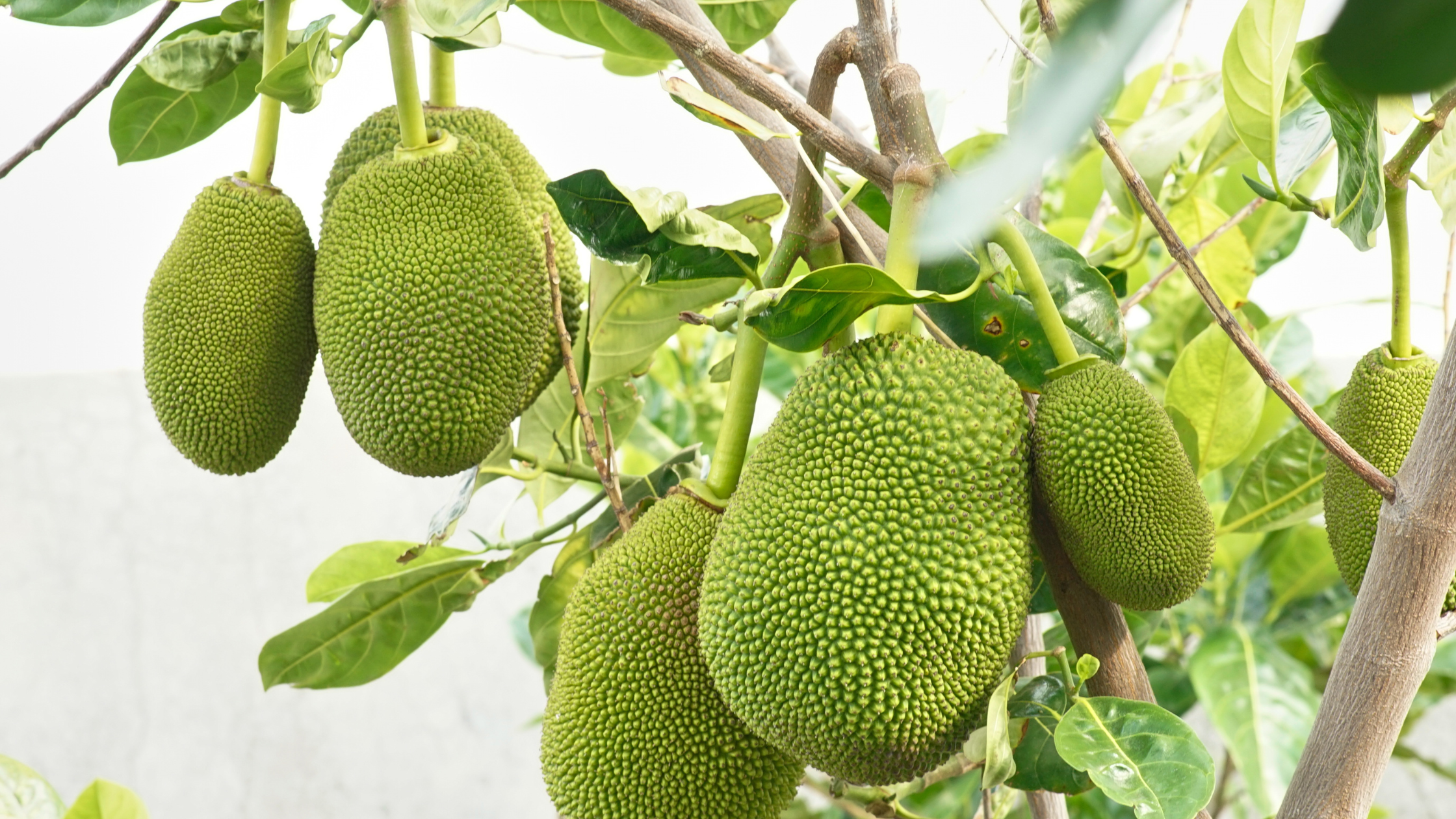
Jackfruit
Jackfruit, scientifically known as Artocarpus heterophyllus, is a tropical fruit native to South and Southeast Asia. Revered for its enormous size, distinct flavor, and versatility, jackfruit has gained global popularity not only as a delicious fruit but also as a meat substitute for its unique texture when unripe. Beyond its culinary uses, jackfruit also boasts a plethora of health benefits, making it a valuable addition to any diet.
The history of jackfruit traces back thousands of years, with its origins believed to be in the Western Ghats of India. It has been cultivated in the region for over 3000 years, where it holds cultural significance and is celebrated in various traditional dishes and festivals.
Over time, jackfruit spread throughout the tropical regions of Asia, including Thailand, Malaysia, Indonesia, and the Philippines, becoming an integral part of local cuisines and traditions.Today, its cultivation has extended to other parts of the world, including Africa, South America, and the Caribbean.
The health benefits of jackfruit can be attributed to its rich nutritional profile, which includes vitamins, minerals, and antioxidants. Jackfruit is particularly notable for its high vitamin C content, which boosts the immune system and promotes collagen synthesis for healthy skin. Additionally, it contains significant amounts of dietary fiber, aiding digestion and promoting bowel regularity. The presence of phytonutrients like flavonoids and phenolics in jackfruit contributes to its antioxidant properties, protecting cells from oxidative stress and reducing the risk of chronic diseases.
Jackfruit is a versatile ingredient in culinary preparations, celebrated for its ability to mimic meat textures, particularly in vegan and vegetarian dishes. It can be used in various forms, including fresh, canned, or dried, and is often featured in savory recipes such as curries, tacos, and stir-fries. In traditional Indonesian cuisine, young jackfruit is commonly cooked with spices and coconut milk to create dishes like “gudeg,” which is a popular dish from Yogyakarta, Indonesia. Additionally, jackfruit seeds can be boiled or roasted and incorporated into recipes, providing a nutritious addition to meals. The fruit’s fibrous texture makes it an excellent substitute for pulled pork in sandwiches and tacos, appealing to plant-based eaters.
While jackfruit is generally safe for consumption, individuals with latex allergies may experience cross-reactivity due to the presence of latex-like compounds in the fruit. Additionally, those with certain medical conditions, such as kidney issues, should consume jackfruit in moderation due to its potassium content. Consuming excessive amounts of jackfruit may also cause gastrointestinal discomfort due to its high fiber content. Interactions with certain medications may occur, particularly those related to blood pressure and diabetes management, so it’s advisable to consult a healthcare professional if you have concerns.
Jackfruit has been valued for its medicinal properties in Eastern traditional medicine for centuries. In Ayurveda, it is recognized for its cooling and rejuvenating effects, making it beneficial for individuals with Pitta dosha imbalances. Similarly, Traditional Chinese Medicine (TCM) views jackfruit as having sweet and cooling properties that support the spleen and stomach meridians, promoting digestive health and overall well-being. In Western cuisine, jackfruit has gained popularity as a versatile vegan and vegetarian meat substitute, commonly used in dishes like pulled “pork” sandwiches and tacos.
Overall, jackfruit not only delights the palate but also offers numerous health benefits, making it a nutritious addition to any diet that bridges Eastern and Western culinary traditions and holistic health practices. Its adaptability in both sweet and savory recipes has made it a favorite among plant-based eaters and culinary enthusiasts alike.
Celestial, M. (2023). Nutritional and physicochemical properties and safe consumption of jackfruit seeds (artocarpus heterophyllus lam.). International Journal on Food Agriculture and Natural Resources, 4(4), 1-12. https://doi.org/10.46676/ij-fanres.v4i4.187
Habibah, N., Albaar, N., & Rasulu, H. (2021). The effect of substitution of seed flour of jackfruit (artocarpus heterophyllus lam.) on the physicochemical and organoleptic characteristics of macrons. International Journal on Food Agriculture and Natural Resources, 2(1), 19-24. https://doi.org/10.46676/ij-fanres.v2i1.25
Juárez-Barrientos, J., Hernández‐Santos, B., Herman‐Lara, E., Martínez‐Sánchez, C., Torruco‐Uco, J., Ramírez‐Rivera, E., … & Rodríguez‐Miranda, J. (2017). Effects of boiling on the functional, thermal and compositional properties of the mexican jackfruit (artocarpus heterophyllus) seed. Emirates Journal of Food and Agriculture, 29(1), 1. https://doi.org/10.9755/ejfa.2016-08-1048
Mondal, T. (2024). Genetic resource management of jackfruit (artocarpus heterophyllus lam.). International Journal of Minor Fruits Medicinal and Aromatic Plants, 10(1), 1-12. https://doi.org/10.53552/ijmfmap.10.1.2024.1-12
N, D., Mathew, S., Baranwal, G., Shivaram, S., Katiyar, N., Pramanik, N., … & Shankarappa, S. (2020). Antibacterial efficacy of jackfruit rag extract against clinically important pathogens and validation of its antimicrobial activity inshigella dysenteriaeinfecteddrosophila melanogasterinfection model.. https://doi.org/10.1101/2020.03.09.983015
Pratama, R., Muslim, A., Suwandi, S., Damiri, N., & Soleha, S. (2021). Jackfruit (artocarpus heterophyllus), a new host plant of ceratocystis wilt in south sumatra, indonesia. Australasian Plant Disease Notes, 16(1). https://doi.org/10.1007/s13314-021-00435-x
Pruseth, S. (2024). Value addition in jackfruit pickle for physicochemical properties and sensory evaluation. Journal of Advances in Biology & Biotechnology, 27(7), 835-842. https://doi.org/10.9734/jabb/2024/v27i71043
Snehaa, D. (2023). Prevalent variability among jackfruit genotypes: an assessment on fruit and flake characteristics. International Journal of Environment and Climate Change, 13(10), 2552-2564. https://doi.org/10.9734/ijecc/2023/v13i102921
Waghmare, R., Memon, N., Gat, Y., Gandhi, S., Kumar, V., & Panghal, A. (2019). Jackfruit seed: an accompaniment to functional foods. Brazilian Journal of Food Technology, 22. https://doi.org/10.1590/1981-6723.20718
MyFoodData. (n.d.). *Nutrition facts for jackfruit*. Retrieved December 17, 2024, from https://tools.myfooddata.com/nutrition-facts/174687/wt1/1
The information provided in this document is intended for educational and informational purposes only and should not be construed as medical advice, diagnosis, or treatment. It is essential to consult a qualified healthcare professional for any medical concerns or conditions. The content herein does not substitute for professional medical advice, and individuals should not disregard or delay seeking medical advice based on the information provided.
The authors and publishers of this document do not assume any responsibility for any adverse effects or consequences resulting from the use or application of the information contained herein. The reader is encouraged to conduct their own research and consult with healthcare providers to make informed decisions regarding their health and treatment options. Furthermore, the information presented may not reflect the most current research or medical guidelines, as medical knowledge is continually evolving. Therefore, it is imperative to verify the information with up-to-date, peer-reviewed sources and consult with medical professionals for personalized advice.