
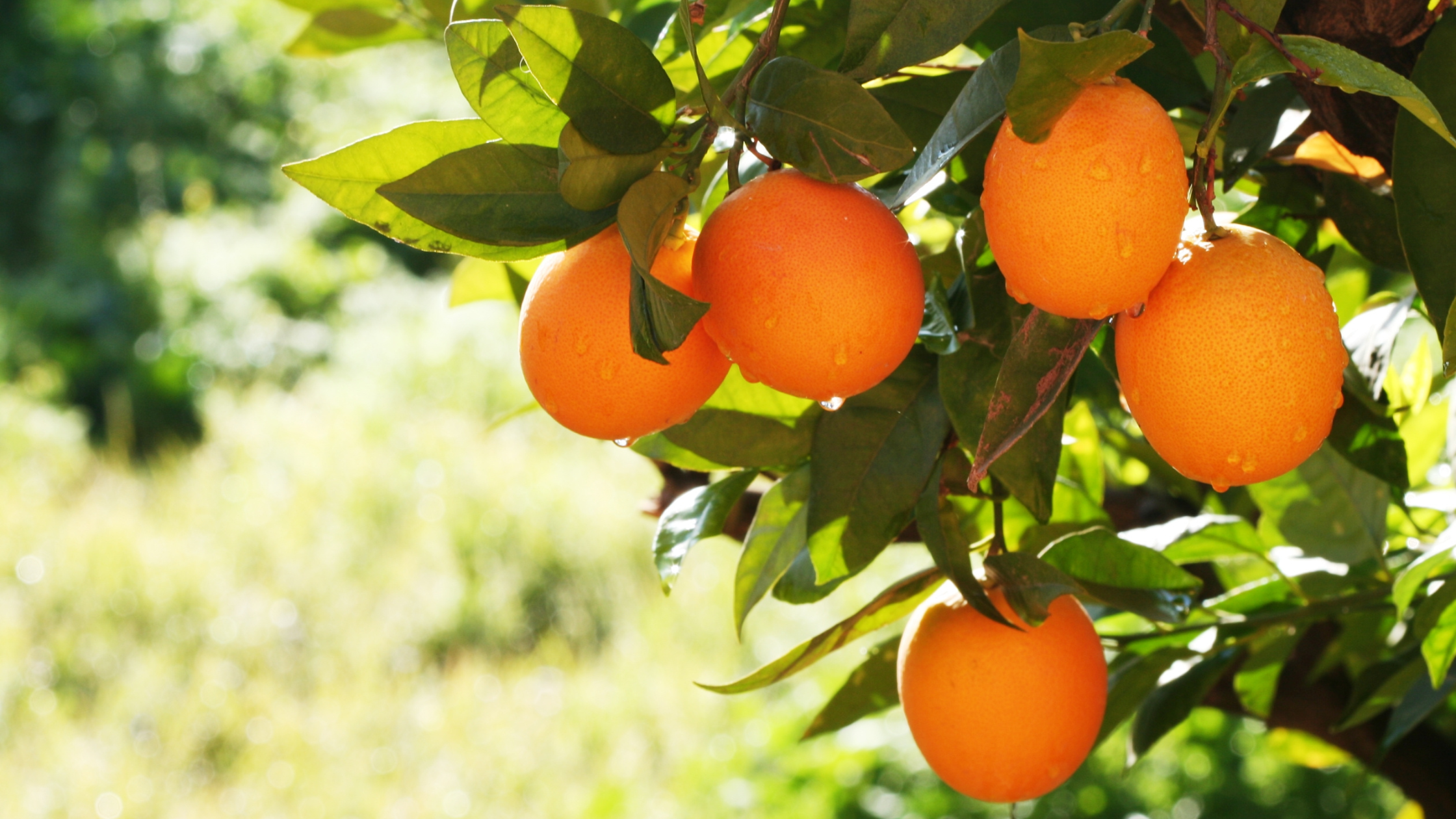
Oranges
Oranges, with their vibrant hue and tangy-sweet flavor, have long been celebrated as one of nature’s golden gifts. Originating from Southeast Asia, these citrus fruits have traveled across the globe, enchanting taste buds and providing a myriad of health benefits. Beyond their delicious taste, oranges are revered for their rich history, nutritional value, and diverse applications in both Eastern and Western medicine.
History
The history of oranges traces back thousands of years to ancient China, where they were cultivated for their medicinal properties. From there, oranges journeyed along trade routes to regions such as India, the Middle East, and eventually Europe. Spanish explorers are credited with introducing oranges to the Americas during the 15th century, where they flourished in the warm climates of Florida and California.
Health Benefits
Oranges derive their vibrant color and numerous health benefits from a rich combination of vitamins, minerals, and phytochemicals. Notably, they are abundant in vitamin C, a powerful antioxidant that plays a vital role in enhancing immune function and protecting the body against oxidative stress. Additionally, flavonoids such as hesperidin and naringenin contribute to the anti-inflammatory and cardiovascular advantages associated with orange consumption. The health benefits of oranges are extensive, including immune support due to their high vitamin C content, which helps the body ward off infections and illnesses. Furthermore, the flavonoids in oranges may reduce the risk of heart disease by improving blood circulation and decreasing inflammation. Their rich dietary fiber content promotes digestive health and helps prevent constipation, while the antioxidant properties of oranges can combat skin aging and support a youthful complexion. Lastly, with their low calorie and high water content, oranges serve as a nutritious and satisfying snack for individuals aiming to manage their weight.
Oranges are a versatile ingredient in culinary applications, celebrated for their bright flavor and refreshing sweetness. They can be enjoyed fresh, juiced, or incorporated into a variety of dishes, ranging from salads to desserts. The zest and juice of oranges are commonly used to enhance the flavor of marinades, dressings, and sauces, while orange segments can add a burst of color and taste to salads and salsas. Additionally, orange peel is often utilized in baking, contributing both flavor and aroma to cakes, muffins, and pastries.
Precautions and Possible Side Effects
While oranges are widely recognized for their numerous health benefits, they may not be suitable for everyone. Individuals with citrus allergies should exercise caution, as consuming oranges can trigger allergic reactions that range from mild itching to severe anaphylaxis. Furthermore, those suffering from gastroesophageal reflux disease (GERD) may find that the acidic nature of oranges exacerbates their symptoms. Although oranges are generally safe for most individuals, excessive consumption can lead to digestive discomfort due to their high fiber content. Additionally, interactions with certain medications, such as statins and calcium channel blockers, may occur, potentially altering their effectiveness or causing adverse effects. Therefore, it is advisable for individuals with specific health concerns or those taking certain medications to consult with a healthcare provider before significantly increasing their orange intake.
In Traditional Chinese Medicine (TCM), oranges are recognized for their cooling properties, which are thought to help balance the body’s energy and promote overall well-being. They are commonly utilized to soothe coughs, alleviate phlegm, and enhance digestion, being particularly linked to the stomach and spleen meridians that govern digestive health. This association underscores their role in harmonizing the energies of these meridians, thereby supporting digestion, metabolism, and the distribution of nutrients throughout the body.
Conversely, in Western herbalism, oranges are esteemed for their high vitamin C content and immune-boosting properties. They are frequently employed to bolster immune function, alleviate symptoms of colds, and promote cardiovascular health. Additionally, orange peel is utilized in herbal remedies for its digestive benefits and aromatic qualities, further highlighting the multifaceted health benefits of this fruit across different medicinal traditions.
Final Thoughts
Oranges stand as a testament to nature’s bounty, offering a tantalizing blend of flavor and nutrition. From their ancient roots in Asia to their widespread cultivation around the world, oranges have earned their place as a beloved fruit with a rich history and a host of health benefits. Whether enjoyed fresh, juiced, or incorporated into culinary creations, the golden fruit continues to brighten lives and nourish bodies with its zestful energy.
Ahrazem, O., Ibáñez, M., López-Torrejón, G., Sánchez-Monge, R., Sastre, J., Lombardero, M., … & Salcedo, G. (2005). Lipid transfer proteins and allergy to oranges. International Archives of Allergy and Immunology, 137(3), 201-210. https://doi.org/10.1159/000086332
Chen, J., Shi, Y., Zhong, Y., Sun, Z., Niu, J., Wang, Y., … & Luan, M. (2022). Transcriptome analysis and hplc profiling of flavonoid biosynthesis in citrus aurantium l. during its key developmental stages. Biology, 11(7), 1078. https://doi.org/10.3390/biology11071078
Ebo, D., Ahrazem, O., López‐Torrejón, G., Bridts, C., Salcedo, G., & Stevens, W. (2007). Anaphylaxis from mandarin <i>(citrus reticulata)</i>: identification of potential responsible allergens. International Archives of Allergy and Immunology, 144(1), 39-43. https://doi.org/10.1159/000102612
Harima-Mizusawa, N., Iino, T., Onodera-Masuoka, N., Kato-Nagaoka, N., Kiyoshima-Shibata, J., Gomi, A., … & ISHIKAWA, F. (2014). Beneficial effects of citrus juice fermented with lactobacillus plantarum yit 0132 on japanese cedar pollinosis. Bioscience of Microbiota Food and Health. https://doi.org/10.12938/bmfh.2014-006
Harima-Mizusawa, N., Iino, T., Onodera-Masuoka, N., Kato-Nagaoka, N., Kiyoshima-Shibata, J., Gomi, A., … & Ishikawa, F. (2014). Beneficial effects of citrus juice fermented with <i>lactobacillus plantarum</i> yit 0132 on japanese cedar pollinosis. Bioscience of Microbiota Food and Health, 33(4), 147-155. https://doi.org/10.12938/bmfh.33.147
Iorio, R., Duca, S., Calamelli, E., Pula, C., Lodolini, M., Scamardella, F., … & Ricci, G. (2013). Citrus allergy from pollen to clinical symptoms. Plos One, 8(1), e53680. https://doi.org/10.1371/journal.pone.0053680
Kanny, G. (2015). Anaphylaxis to the citrus fruit yuzu. Global Journal of Allergy, 035-036. https://doi.org/10.17352/2455-8141.000007
Kavaliunas, A., Šurkienė, G., Dubakiene, R., Stukas, R., & Žagminas, K. (2013). Foods that cause adverse reactions and ailments: the europrevall survey results in vilnius (lithuania). Acta Medica Lituanica, 20(1), 33-42. https://doi.org/10.6001/actamedica.v20i1.2625
Kayode, O., Prado, N., Thursfield, D., Till, S., & Siew, L. (2020). Lemon seed allergy: a case presentation. Allergy Asthma & Clinical Immunology, 16(1). https://doi.org/10.1186/s13223-020-00429-x
Kumar, A., Mahajan, A., & Begum, Z. (2022). In-vitro estimation of phytochemicals & flavonoids in citrus sinensis & study their antimicrobial & antioxidant activity. Asian Journal of Advanced Research and Reports, 90-98. https://doi.org/10.9734/ajarr/2022/v16i930503
Kumar, R., Kumari, D., Srivastava, P., Khare, V., Fakhr, H., Arora, N., … & Singh, B. (2022). Identification of ige-mediated food allergy and allergens in older children and adults with asthma and allergic rhinitis. The Indian Journal of Chest Diseases and Allied Sciences, 52(4), 217-224. https://doi.org/10.5005/ijcdas-52-4-217
Liu, W., Yue, F., Yu, S., Fan, Z., Li, X., Li, J., … & Yin, H. (2021). The flavonoid biosynthesis network in plants. International Journal of Molecular Sciences, 22(23), 12824. https://doi.org/10.3390/ijms222312824
Lubinska-Szczygeł, M., Pudlak, D., Dymerski, T., & Namieśnik, J. (2018). Rapid assessment of the authenticity of limequat fruit using the electronic nose and gas chromatography coupled with mass spectrometry. Monatshefte Für Chemie – Chemical Monthly, 149(9), 1605-1614. https://doi.org/10.1007/s00706-018-2242-7
López‐Torrejón, G., Ibáñez, M., Ahrazem, O., Sánchez‐Monge, R., Sastre, J., Lombardero, M., … & Salcedo, G. (2005). Isolation, cloning and allergenic reactivity of natural profilin cit s 2, a major orange allergen. Allergy, 60(11), 1424-1429. https://doi.org/10.1111/j.1398-9995.2005.00903.x
Naruse, A., Osako, J., Tsuruta, D., & Yanagihara, S. (2012). A case of anaphylaxis caused by lemon sorbet. Journal of Allergy & Therapy, 03(01). https://doi.org/10.4172/2155-6121.1000112
Nwaru, B., Ahonen, S., Kaila, M., Erkkola, M., Haapala, A., Kronberg-Kippilä, C., … & Virtanen, S. (2010). Maternal diet during pregnancy and allergic sensitization in the offspring by 5 yrs of age: a prospective cohort study. Pediatric Allergy and Immunology, 21(1-Part-I), 29-37. https://doi.org/10.1111/j.1399-3038.2009.00949.x
Omary, M., Krueger, R., Li, Y., David, P., Brovelli, E., & Florez, H. (2004). Bioflavonoid profile of exotic citrus species. Acta Horticulturae, (629), 449-455. https://doi.org/10.17660/actahortic.2004.629.58
Panicker, V. and Sulaiman, S. (2017). A cross sectional study on the profile of food allergy among patients with chronic urticaria in kerala. Journal of Evidence Based Medicine and Healthcare, 4(26), 1501-1504. https://doi.org/10.18410/jebmh/2017/293
Serra, I., Bernardo, L., Spadafora, A., Faccioli, P., Canton, C., & Mazzuca, S. (2013). The citrus clementina putative allergens: from proteomic analysis to structural features. Journal of Agricultural and Food Chemistry, 61(37), 8949-8958. https://doi.org/10.1021/jf4023367
Steigerwald, H., Blanco-Pérez, F., Albrecht, M., Bender, C., Wangorsch, A., Endreß, H., … & Vieths, S. (2021). Does the food ingredient pectin provide a risk for patients allergic to non-specific lipid-transfer proteins?. Foods, 11(1), 13. https://doi.org/10.3390/foods11010013
Wu, J., Chen, L., Lin, D., Ma, Z., & Deng, X. (2016). Development and application of a multiplex real-time pcr assay as an indicator of potential allergenicity in citrus fruits. Journal of Agricultural and Food Chemistry, 64(47), 9089-9098. https://doi.org/10.1021/acs.jafc.6b03410 Ahrazem, O., Ibáñez, M., López-Torrejón, G., Sánchez-Monge, R., Sastre, J., Lombardero, M., … & Salcedo, G. (2005). Lipid transfer proteins and allergy to oranges. International Archives of Allergy and Immunology, 137(3), 201-210. https://doi.org/10.1159/000086332
Chen, J., Shi, Y., Zhong, Y., Sun, Z., Niu, J., Wang, Y., … & Luan, M. (2022). Transcriptome analysis and hplc profiling of flavonoid biosynthesis in citrus aurantium l. during its key developmental stages. Biology, 11(7), 1078. https://doi.org/10.3390/biology11071078
Ebo, D., Ahrazem, O., López‐Torrejón, G., Bridts, C., Salcedo, G., & Stevens, W. (2007). Anaphylaxis from mandarin <i>(citrus reticulata)</i>: identification of potential responsible allergens. International Archives of Allergy and Immunology, 144(1), 39-43. https://doi.org/10.1159/000102612
Harima-Mizusawa, N., Iino, T., Onodera-Masuoka, N., Kato-Nagaoka, N., Kiyoshima-Shibata, J., Gomi, A., … & ISHIKAWA, F. (2014). Beneficial effects of citrus juice fermented with lactobacillus plantarum yit 0132 on japanese cedar pollinosis. Bioscience of Microbiota Food and Health. https://doi.org/10.12938/bmfh.2014-006
Harima-Mizusawa, N., Iino, T., Onodera-Masuoka, N., Kato-Nagaoka, N., Kiyoshima-Shibata, J., Gomi, A., … & Ishikawa, F. (2014). Beneficial effects of citrus juice fermented with <i>lactobacillus plantarum</i> yit 0132 on japanese cedar pollinosis. Bioscience of Microbiota Food and Health, 33(4), 147-155. https://doi.org/10.12938/bmfh.33.147
Iorio, R., Duca, S., Calamelli, E., Pula, C., Lodolini, M., Scamardella, F., … & Ricci, G. (2013). Citrus allergy from pollen to clinical symptoms. Plos One, 8(1), e53680. https://doi.org/10.1371/journal.pone.0053680
Kanny, G. (2015). Anaphylaxis to the citrus fruit yuzu. Global Journal of Allergy, 035-036. https://doi.org/10.17352/2455-8141.000007
Kavaliunas, A., Šurkienė, G., Dubakiene, R., Stukas, R., & Žagminas, K. (2013). Foods that cause adverse reactions and ailments: the europrevall survey results in vilnius (lithuania). Acta Medica Lituanica, 20(1), 33-42. https://doi.org/10.6001/actamedica.v20i1.2625
Kayode, O., Prado, N., Thursfield, D., Till, S., & Siew, L. (2020). Lemon seed allergy: a case presentation. Allergy Asthma & Clinical Immunology, 16(1). https://doi.org/10.1186/s13223-020-00429-x
Kumar, A., Mahajan, A., & Begum, Z. (2022). In-vitro estimation of phytochemicals & flavonoids in citrus sinensis & study their antimicrobial & antioxidant activity. Asian Journal of Advanced Research and Reports, 90-98. https://doi.org/10.9734/ajarr/2022/v16i930503
Kumar, R., Kumari, D., Srivastava, P., Khare, V., Fakhr, H., Arora, N., … & Singh, B. (2022). Identification of ige-mediated food allergy and allergens in older children and adults with asthma and allergic rhinitis. The Indian Journal of Chest Diseases and Allied Sciences, 52(4), 217-224. https://doi.org/10.5005/ijcdas-52-4-217
Liu, W., Yue, F., Yu, S., Fan, Z., Li, X., Li, J., … & Yin, H. (2021). The flavonoid biosynthesis network in plants. International Journal of Molecular Sciences, 22(23), 12824. https://doi.org/10.3390/ijms222312824
Lubinska-Szczygeł, M., Pudlak, D., Dymerski, T., & Namieśnik, J. (2018). Rapid assessment of the authenticity of limequat fruit using the electronic nose and gas chromatography coupled with mass spectrometry. Monatshefte Für Chemie – Chemical Monthly, 149(9), 1605-1614. https://doi.org/10.1007/s00706-018-2242-7
López‐Torrejón, G., Ibáñez, M., Ahrazem, O., Sánchez‐Monge, R., Sastre, J., Lombardero, M., … & Salcedo, G. (2005). Isolation, cloning and allergenic reactivity of natural profilin cit s 2, a major orange allergen. Allergy, 60(11), 1424-1429. https://doi.org/10.1111/j.1398-9995.2005.00903.x
Naruse, A., Osako, J., Tsuruta, D., & Yanagihara, S. (2012). A case of anaphylaxis caused by lemon sorbet. Journal of Allergy & Therapy, 03(01). https://doi.org/10.4172/2155-6121.1000112
Nwaru, B., Ahonen, S., Kaila, M., Erkkola, M., Haapala, A., Kronberg-Kippilä, C., … & Virtanen, S. (2010). Maternal diet during pregnancy and allergic sensitization in the offspring by 5 yrs of age: a prospective cohort study. Pediatric Allergy and Immunology, 21(1-Part-I), 29-37. https://doi.org/10.1111/j.1399-3038.2009.00949.x
Omary, M., Krueger, R., Li, Y., David, P., Brovelli, E., & Florez, H. (2004). Bioflavonoid profile of exotic citrus species. Acta Horticulturae, (629), 449-455. https://doi.org/10.17660/actahortic.2004.629.58
Panicker, V. and Sulaiman, S. (2017). A cross sectional study on the profile of food allergy among patients with chronic urticaria in kerala. Journal of Evidence Based Medicine and Healthcare, 4(26), 1501-1504. https://doi.org/10.18410/jebmh/2017/293
Serra, I., Bernardo, L., Spadafora, A., Faccioli, P., Canton, C., & Mazzuca, S. (2013). The citrus clementina putative allergens: from proteomic analysis to structural features. Journal of Agricultural and Food Chemistry, 61(37), 8949-8958. https://doi.org/10.1021/jf4023367
Steigerwald, H., Blanco-Pérez, F., Albrecht, M., Bender, C., Wangorsch, A., Endreß, H., … & Vieths, S. (2021). Does the food ingredient pectin provide a risk for patients allergic to non-specific lipid-transfer proteins?. Foods, 11(1), 13. https://doi.org/10.3390/foods11010013
Wu, J., Chen, L., Lin, D., Ma, Z., & Deng, X. (2016). Development and application of a multiplex real-time pcr assay as an indicator of potential allergenicity in citrus fruits. Journal of Agricultural and Food Chemistry, 64(47), 9089-9098. https://doi.org/10.1021/acs.jafc.6b03410
MyFoodData. (n.d.). Nutrition facts for oranges. Retrieved January 2, 2025, from https://tools.myfooddata.com/nutrition-facts/169097/wt1/1
Medical Disclaimer
The information provided in this document is intended for educational and informational purposes only and should not be construed as medical advice, diagnosis, or treatment. It is essential to consult a qualified healthcare professional for any medical concerns or conditions. The content herein does not substitute for professional medical advice, and individuals should not disregard or delay seeking medical advice based on the information provided.
The authors and publishers of this document do not assume any responsibility for any adverse effects or consequences resulting from the use or application of the information contained herein. The reader is encouraged to conduct their own research and consult with healthcare providers to make informed decisions regarding their health and treatment options. Furthermore, the information presented may not reflect the most current research or medical guidelines, as medical knowledge is continually evolving. Therefore, it is imperative to verify the information with up-to-date, peer-reviewed sources and consult with medical professionals for personalized advice.