Adzuki Beans
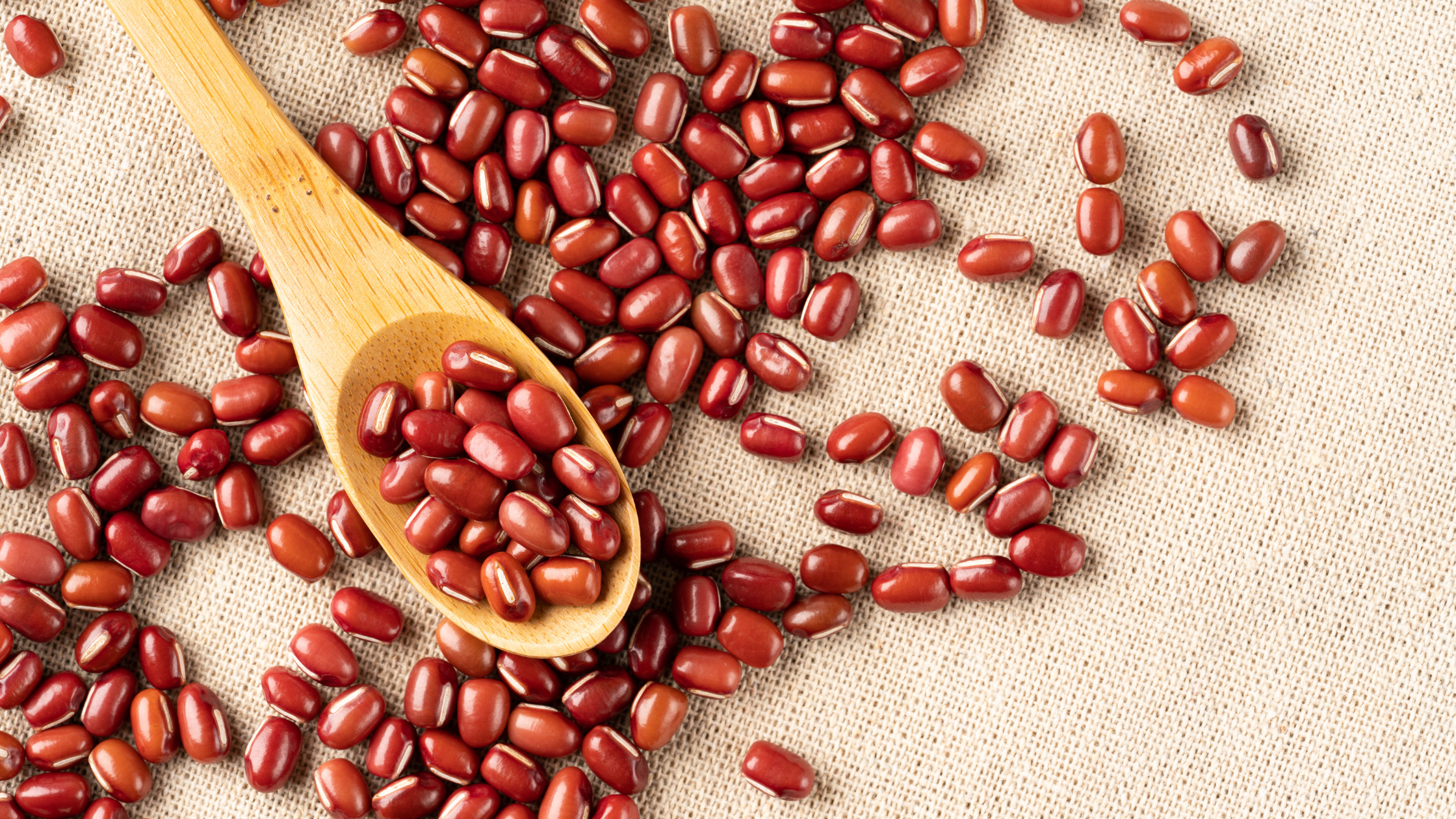
Adzuki beans, scientifically known as Vigna angularis, are a small, reddish-brown legume that originated in East Asia. These beans are highly valued for their distinct flavor, nutritional profile, and versatility in various culinary applications. Adzuki beans are a member of the Fabaceae family, which also includes other popular legumes such as soybeans, lentils, and peas.
[/et_pb_text][et_pb_heading title=”History” _builder_version=”4.27.4″ _module_preset=”default” custom_margin=”||10px||false|false” hover_enabled=”0″ global_colors_info=”{}” title_level=”h2″ title_text_color=”#000000″ sticky_enabled=”0″][/et_pb_heading][et_pb_text _builder_version=”4.27.4″ _module_preset=”default” text_text_color=”#000000″ text_font_size=”17px” hover_enabled=”0″ global_colors_info=”{}” sticky_enabled=”0″]Adzuki beans have a long and rich history, with origins tracing back to ancient China and Japan. These beans have been an integral part of traditional East Asian cuisines for centuries, often used in sweet and savory dishes. The cultivation of adzuki beans spread throughout Asia, and they became an important staple food in countries like China, Japan, and Korea. Over time, adzuki beans have gained global recognition and are now cultivated and consumed in various parts of the world.
[/et_pb_text][et_pb_heading title=”Health Benefits” _builder_version=”4.27.4″ _module_preset=”default” custom_margin=”||10px||false|false” custom_padding=”||||false|false” hover_enabled=”0″ global_colors_info=”{}” title_level=”h2″ title_text_color=”#000000″ sticky_enabled=”0″][/et_pb_heading][et_pb_text _builder_version=”4.27.4″ _module_preset=”default” text_text_color=”#000000″ text_font_size=”17px” custom_margin=”||15px|||” global_colors_info=”{}”]Adzuki beans are renowned for their impressive nutritional profile and health-promoting properties. They are an excellent source of protein, fiber, complex carbohydrates, and a variety of essential vitamins and minerals. Adzuki beans are particularly rich in antioxidants, such as polyphenols and flavonoids, which can help protect the body against oxidative stress and reduce the risk of chronic diseases. Additionally, adzuki beans have been shown to possess anti-inflammatory, anti-diabetic, and anti-obesity effects, making them a valuable addition to a healthy diet.
[/et_pb_text][/et_pb_column][/et_pb_row][/et_pb_section][et_pb_section fb_built=”1″ _builder_version=”4.27.4″ _module_preset=”default” background_color=”#F2F2F2″ custom_margin=”1px|||||” custom_padding=”29px||5px||false|false” global_colors_info=”{}”][et_pb_row column_structure=”2_3,1_3″ _builder_version=”4.27.4″ _module_preset=”default” custom_padding=”6px|||||” global_colors_info=”{}” custom_margin=”-18px|auto||auto||”][et_pb_column type=”2_3″ _builder_version=”4.27.4″ _module_preset=”default” global_colors_info=”{}”][et_pb_heading title=”Best Preparation Methods ” _builder_version=”4.27.4″ _module_preset=”default” custom_margin=”||10px||false|false” global_colors_info=”{}”][/et_pb_heading][et_pb_text _builder_version=”4.27.4″ _module_preset=”default” text_text_color=”#000000″ text_font_size=”17px” global_colors_info=”{}”]Adzuki beans can be prepared in a variety of ways, making them a versatile ingredient in both sweet and savory dishes. They can be boiled, steamed, or simmered and used in soups, stews, rice dishes, or as a filling for pastries and desserts. Adzuki bean flour can also be used in baking, and the beans can be sprouted and consumed as a nutritious addition to salads or sandwiches. When selecting adzuki beans, look for those that are uniform in size, free of blemishes, and have a vibrant reddish-brown color.
[/et_pb_text][et_pb_image src=”https://www.immortalme.com/wp-content/uploads/2024/12/Adzuki-Beans-Food.png” title_text=”Adzuki Beans Food” _builder_version=”4.27.4″ _module_preset=”default” border_radii=”on|6px|6px|6px|6px” box_shadow_style=”preset2″ global_colors_info=”{}”][/et_pb_image][/et_pb_column][et_pb_column type=”1_3″ _builder_version=”4.27.4″ _module_preset=”default” global_colors_info=”{}”][et_pb_image src=”https://www.immortalme.com/wp-content/uploads/2024/12/Adzuki-Beans-Raw.png” title_text=”Adzuki Beans Raw” _builder_version=”4.27.4″ _module_preset=”default” box_shadow_style=”preset2″ global_colors_info=”{}”][/et_pb_image][/et_pb_column][/et_pb_row][/et_pb_section][et_pb_section fb_built=”1″ _builder_version=”4.27.4″ _module_preset=”default” custom_padding=”30px||8px|||” hover_enabled=”0″ global_colors_info=”{}” background_color=”#F2F2F2″ sticky_enabled=”0″][et_pb_row _builder_version=”4.27.4″ _module_preset=”default” custom_padding=”7px||5px|||” global_colors_info=”{}” custom_margin=”-13px|auto||auto||”][et_pb_column type=”4_4″ _builder_version=”4.27.4″ _module_preset=”default” global_colors_info=”{}”][et_pb_heading title=”Precautions and Possible Side Effects” _builder_version=”4.27.4″ _module_preset=”default” custom_margin=”||10px||false|false” hover_enabled=”0″ global_colors_info=”{}” title_level=”h2″ title_text_color=”#000000″ sticky_enabled=”0″][/et_pb_heading][et_pb_text _builder_version=”4.27.4″ _module_preset=”default” text_text_color=”#000000″ text_font_size=”17px” global_colors_info=”{}”]While adzuki beans are generally considered safe for consumption, there are a few potential contraindications to be aware of. Individuals with kidney or digestive issues may need to limit their intake of adzuki beans due to their relatively high purine and fiber content. Additionally, people with soy allergies should exercise caution, as adzuki beans may trigger cross-reactions in some cases. Adzuki beans are not known to have any significant interactions with common medications. However, as with any food, it is always advisable to consult with a healthcare professional, especially for individuals taking prescription drugs or managing chronic health conditions.
[/et_pb_text][/et_pb_column][/et_pb_row][et_pb_row _builder_version=”4.27.4″ _module_preset=”default”][et_pb_column _builder_version=”4.27.4″ _module_preset=”default” type=”4_4″][et_pb_text _builder_version=”4.27.4″ _module_preset=”default” hover_enabled=”0″ sticky_enabled=”0″ text_text_color=”#000000″ text_font_size=”17px” header_2_text_color=”#000000″]Eastern and Western Nutrition
In Eastern cultures, adzuki beans are traditionally used in various culinary applications, often sweetened and incorporated into desserts, reflecting their rich flavor and nutritional profile. They are particularly valued for their high protein content, which averages around 204 g/kg, making them comparable to other legumes such as soybeans and lentils. Furthermore, adzuki beans are rich in dietary fiber, vitamins, and minerals, including magnesium, potassium, and zinc, which contribute to their health-promoting properties.
[/et_pb_text][/et_pb_column][/et_pb_row][et_pb_row column_structure=”1_2,1_2″ _builder_version=”4.16″ custom_padding=”5px||16px|||” locked=”off” global_colors_info=”{}” custom_margin=”6px|auto||auto||”][et_pb_column type=”1_2″ _builder_version=”4.16″ global_colors_info=”{}”][et_pb_image src=”https://www.immortalme.com/wp-content/uploads/2024/12/Adzuki-Beans-Sq.png” title_text=”Adzuki Beans Sq” _builder_version=”4.27.4″ _module_preset=”default” border_radii=”on|6px|6px|6px|6px” box_shadow_style=”preset2″ global_colors_info=”{}”][/et_pb_image][/et_pb_column][et_pb_column type=”1_2″ _builder_version=”4.16″ global_colors_info=”{}”][et_pb_text _builder_version=”4.27.4″ _module_preset=”default” text_text_color=”#000000″ text_font_size=”17px” hover_enabled=”0″ global_colors_info=”{}” sticky_enabled=”0″]From a nutritional perspective, adzuki beans are recognized for their bioactive compounds, including polyphenols and saponins, which exhibit antioxidant and anti-inflammatory effects. These compounds have been shown to inhibit α-glucosidase activity, thereby aiding in the management of postprandial blood glucose levels, which is particularly beneficial for individuals with diabetes. Additionally, studies indicate that adzuki beans can modulate gut microbiota, promoting beneficial bacterial populations that enhance metabolic health and potentially alleviate obesity and insulin resistance.
In Western nutrition, adzuki beans are gaining popularity as a health food due to their potential functional benefits. The increasing awareness of plant-based diets has led to a greater appreciation for legumes, including adzuki beans, as sources of high-quality protein and dietary fiber. Their incorporation into various dishes not only enhances nutritional value but also contributes to dietary diversity. Moreover, the antioxidant properties of adzuki beans are being explored for their potential roles in chronic disease prevention, aligning with the growing trend towards functional foods in Western dietary practices.
[/et_pb_text][/et_pb_column][/et_pb_row][/et_pb_section][et_pb_section fb_built=”1″ _builder_version=”4.27.4″ _module_preset=”default” background_color=”#F2F2F2″ custom_padding=”30px||42px|||” hover_enabled=”0″ global_colors_info=”{}” sticky_enabled=”0″][et_pb_row _builder_version=”4.27.4″ _module_preset=”default” custom_padding=”6px||0px|||” global_colors_info=”{}” min_height=”163.2px” custom_margin=”-29px|auto||auto||”][et_pb_column type=”4_4″ _builder_version=”4.27.4″ _module_preset=”default” global_colors_info=”{}”][et_pb_heading title=”Final Thoughts” _builder_version=”4.27.4″ _module_preset=”default” custom_margin=”||10px||false|false” global_colors_info=”{}”][/et_pb_heading][et_pb_text _builder_version=”4.27.4″ _module_preset=”default” text_text_color=”#000000″ text_font_size=”17px” global_colors_info=”{}”]Adzuki beans are a nutritious and versatile legume that have been an integral part of East Asian cuisines for centuries. With their impressive nutritional profile, health-promoting properties, and culinary versatility, adzuki beans are a valuable addition to a balanced and diverse diet. By understanding the history, nutritional benefits, and potential uses of adzuki beans, individuals can incorporate this unique legume into their culinary repertoire and enjoy its many health-enhancing qualities.
[/et_pb_text][/et_pb_column][/et_pb_row][et_pb_row _builder_version=”4.27.4″ _module_preset=”default” custom_padding=”42px||5px|||” global_colors_info=”{}” theme_builder_area=”post_content”][et_pb_column type=”4_4″ _builder_version=”4.27.4″ _module_preset=”default” global_colors_info=”{}” theme_builder_area=”post_content”][et_pb_divider color=”#84776C” divider_weight=”2px” _builder_version=”4.27.4″ _module_preset=”default” global_colors_info=”{}” theme_builder_area=”post_content”][/et_pb_divider][et_pb_toggle title=”References” open_toggle_background_color=”#FFFFFF” closed_toggle_background_color=”#FFFFFF” icon_color=”#84776C” toggle_icon=”||fa||900″ use_icon_font_size=”on” icon_font_size=”25px” open_icon_color=”#E02B20″ open_toggle_icon=”||fa||900″ open_use_icon_font_size=”on” open_icon_font_size=”25px” _builder_version=”4.27.4″ _module_preset=”default” title_text_color=”#000000″ title_font=”Cormorant Garamond||||||||” title_text_align=”left” title_font_size=”20px” text_orientation=”left” custom_margin=”||42px|||” custom_padding=”|||20px|false|false” hover_enabled=”0″ border_radii=”on|6px|6px|6px|6px” box_shadow_style=”preset1″ box_shadow_color=”#84776C” global_colors_info=”{}” theme_builder_area=”post_content” sticky_enabled=”0″]Dodick, D., et al. (2020). Migraine patients with cardiovascular disease and contraindications: an analysis of real-world claims data. Journal of Primary Care & Community Health, 11. https://doi.org/10.1177/2150132720963680
Grossman, D., et al. (2008). Accuracy of self-screening for contraindications to combined oral contraceptive use. Obstetrics and Gynecology, 112(3), 572-578. https://doi.org/10.1097/aog.0b013e31818345f0
Grossman, D., et al. (2011). Contraindications to combined oral contraceptives among over-the-counter compared with prescription users. Obstetrics and Gynecology, 117(3), 558-565. https://doi.org/10.1097/aog.0b013e31820b0244
Han et al. (2020). “Digestible Indispensable Amino Acid Scores (DIAAS) of Six Cooked Chinese Pulses” Nutrients https://doi.org/10.3390/nu12123831.
Krege, J., et al. (2022). Lasmiditan for patients with migraine and contraindications to triptans: a post hoc analysis. Pain and Therapy, 11(2), 701-712. https://doi.org/10.1007/s40122-022-00388-8
Li et al. (2022). “Adzuki bean (Vigna angularis): Chemical compositions, physicochemical properties, health benefits, and food applications” Comprehensive Reviews in Food Science and Food Safety https://doi.org/10.1111/1541-4337.12945.
Lee et al. (2019). “Adzuki Bean Water Extract Attenuates Obesity by Modulating M2/M1 Macrophage Polarization and Gut Microbiota Composition” Molecular Nutrition & Food Research https://doi.org/10.1002/mnfr.201900626.
Lee, J., et al. (2013). Necessity of education for oral contraceptive use in korea: results from the fourth korean national health and nutrition examination survey 2007-2009. Gynecologic and Obstetric Investigation, 76(1), 44-50. https://doi.org/10.1159/000351106
Lipton, R., et al. (2017). Framingham‐based cardiovascular risk estimates among people with episodic migraine in the us population: results from the american migraine prevalence and prevention (ampp) study. Headache the Journal of Head and Face Pain, 57(10), 1507-1521. https://doi.org/10.1111/head.13179
Philadelpho et al. (2021). “Chromatography-Independent Fractionation and Newly Identified Molecular Features of the Adzuki Bean (Vigna angularis Willd.) β-vignin Protein” International Journal of Molecular Sciences https://doi.org/ 10.3390/ijms22063018.
Pitsios, C., et al. (2015). Clinical contraindications to allergen immunotherapy: an eaaci position paper. Allergy, 70(8), 897-909. https://doi.org/10.1111/all.12638
Pitsios, C., et al. (2019). Contraindications to immunotherapy: a global approach. Clinical and Translational Allergy, 9(1). https://doi.org/10.1186/s13601-019-0285-4
Püchler, K. and Rennecke, J. (2005). Project management opportunities and challenges in central and eastern europe. Drug Information Journal, 39(3), 311-319. https://doi.org/10.1177/009286150503900309
Sandhu, A., et al. (2013). Contemporary use of prasugrel in clinical practice. Circulation Cardiovascular Quality and Outcomes, 6(3), 293-298. https://doi.org/10.1161/circoutcomes.111.000060
Shi et al. (2016). “Nutritional composition and biological activities of 17 Chinese adzuki bean (Vigna angularis) varieties” Food and Agricultural Immunology https://doi.org/10.1080/09540105.2016.1208152.
Smalley, W., et al. (2000). Contraindicated use of cisapride. Jama, 284(23), 3036. https://doi.org/10.1001/jama.284.23.3036
Then, M., Andrikyan, W., Fromm, M., & Maas, R. (2022). Comprehensibility of contraindications in german, uk and us summaries of product characteristics/prescribing information—a comparative qualitative and quantitative analysis. Journal of Clinical Medicine, 11(14), 4167. https://doi.org/10.3390/jcm11144167
Weisbach, L., Schuster, A., Hartmann, M., Dürr, P., Then, M., Andrikyan, W., … & Farker, K. (2023). Inconsistencies of absolute drug–drug contraindication reports: analysis of summaries of product characteristics of commonly prescribed drugs. British Journal of Clinical Pharmacology, 89(8), 2552-2560. https://doi.org/10.1111/bcp.15730
Wu et al. (2015). “Fermented Miso with Adzuki Beans or Black Soybeans Decreases Lipid Peroxidation and Serum Cholesterol in Mice fed a High-Fat Diet” Journal of Food and Nutrition Research https://doi.org/ 10.12691/jfnr-3-3-1.
Yao et al. (2014). “α-Glucosidase inhibitory activity of protein-rich extracts from extruded adzuki bean in diabetic KK-Ay mice” Food & Function https://doi.org/10.1039/c3fo60521c.
Yao et al. (2011). “Biological Potential of Sixteen Legumes in China” International Journal of Molecular Sciences https://doi.org/10.3390/ijms12107048.
Zhang, X., et al. (2021). North-south vegetation transition in the eastern qinling-daba mountains. Journal of Geographical Sciences, 31(3), 350-368. https://doi.org/10.1007/s11442-021-1840-1
Zhao et al. (2021). “Adzuki Bean Alleviates Obesity and Insulin Resistance Induced by a High-Fat Diet and Modulates Gut Microbiota in Mice” Nutrients https://doi.org/10.3390/nu13093240.
Zhao et al. (2022). “Cooked Adzuki Bean Reduces High-Fat Diet-Induced Body Weight Gain, Ameliorates Inflammation, and Modulates Intestinal Homeostasis in Mice” Frontiers in Nutrition https://doi.org/10.3389/fnut.2022.918696.
MyFoodData. (n.d.). Nutrition facts for food item: WT1. Retrieved October 10, 2024, from https://tools.myfooddata.com/nutrition-facts/173727/wt1/1
[/et_pb_toggle][/et_pb_column][/et_pb_row][/et_pb_section][et_pb_section fb_built=”1″ _builder_version=”4.27.4″ _module_preset=”default” background_color=”#84776C” global_colors_info=”{}” custom_margin=”-14px||3px|||” min_height=”1206.6px” custom_padding=”52px||9px|||”][et_pb_row _builder_version=”4.27.4″ _module_preset=”default” global_colors_info=”{}”][et_pb_column type=”4_4″ _builder_version=”4.27.4″ _module_preset=”default” global_colors_info=”{}”][et_pb_heading title=”More Articles You May Like” _builder_version=”4.27.4″ _module_preset=”default” title_text_color=”#FFFFFF” global_colors_info=”{}”][/et_pb_heading][et_pb_divider color=”#F2F2F2″ divider_weight=”2px” _builder_version=”4.27.4″ _module_preset=”default” global_colors_info=”{}”][/et_pb_divider][et_pb_blog_extras posts_number=”12″ include_categories=”19,57,56″ blog_layout=”slider” excerpt_length=”600″ show_author=”off” category_color=”#2533ab” category_background_color=”RGBA(255,255,255,0)” show_comments=”off” content_color=”#000000″ _builder_version=”4.27.4″ _module_preset=”default” header_text_color=”#000000″ body_text_color=”#000000″ meta_text_color=”#000000″ hover_enabled=”0″ border_radii=”on|10px|10px|10px|10px” border_width_all=”2px” border_color_all=”rgba(242,242,242,0.32)” box_shadow_style=”preset2″ box_shadow_blur=”28px” box_shadow_color=”rgba(0,0,0,0.53)” global_colors_info=”{}” slider_layout=”vertical_grid” slider_loop=”on” show_date=”off” sticky_enabled=”0″][/et_pb_blog_extras][/et_pb_column][/et_pb_row][et_pb_row _builder_version=”4.27.4″ _module_preset=”default” background_color=”#FFFFFF” border_radii=”on|6px|6px|6px|6px” global_colors_info=”{}” theme_builder_area=”post_content”][et_pb_column type=”4_4″ _builder_version=”4.27.4″ _module_preset=”default” global_colors_info=”{}” theme_builder_area=”post_content”][et_pb_text _builder_version=”4.27.4″ _module_preset=”default” text_text_color=”#84776C” text_font_size=”12px” text_line_height=”1.5em” header_font=”|300|||||||” header_font_size=”25px” header_4_font=”–et_global_heading_font||||||||” header_4_text_color=”#84776C” custom_padding=”|17px||17px|false|false” global_colors_info=”{}” theme_builder_area=”post_content”]Medical Disclaimer
The information provided in this document is intended for educational and informational purposes only and should not be construed as medical advice, diagnosis, or treatment. It is essential to consult a qualified healthcare professional for any medical concerns or conditions. The content herein does not substitute for professional medical advice, and individuals should not disregard or delay seeking medical advice based on the information provided.
The authors and publishers of this document do not assume any responsibility for any adverse effects or consequences resulting from the use or application of the information contained herein. The reader is encouraged to conduct their own research and consult with healthcare providers to make informed decisions regarding their health and treatment options. Furthermore, the information presented may not reflect the most current research or medical guidelines, as medical knowledge is continually evolving. Therefore, it is imperative to verify the information with up-to-date, peer-reviewed sources and consult with medical professionals for personalized advice.
[/et_pb_text][/et_pb_column][/et_pb_row][/et_pb_section][et_pb_section fb_built=”1″ _builder_version=”4.27.4″ _module_preset=”default” background_color=”#F2F2F2″ custom_margin=”-1px||-52px||false|false” global_colors_info=”{}”][et_pb_row _builder_version=”4.27.4″ _module_preset=”default” global_colors_info=”{}”][et_pb_column type=”4_4″ _builder_version=”4.27.4″ _module_preset=”default” global_colors_info=”{}”][et_pb_toggle title=”References” open_toggle_background_color=”#FFFFFF” closed_toggle_background_color=”#FFFFFF” icon_color=”#84776C” toggle_icon=”||fa||900″ use_icon_font_size=”on” icon_font_size=”25px” open_icon_color=”#E02B20″ open_toggle_icon=”||fa||900″ open_use_icon_font_size=”on” open_icon_font_size=”25px” _builder_version=”4.27.4″ _module_preset=”default” title_text_color=”#000000″ title_font=”Cormorant Garamond||||||||” title_text_align=”left” title_font_size=”20px” text_orientation=”left” custom_margin=”||42px|||” custom_padding=”|||20px|false|false” hover_enabled=”0″ border_radii=”on|6px|6px|6px|6px” global_colors_info=”{}” sticky_enabled=”0″]Dodick, D., Shewale, A., Lipton, R., Baum, S., Marcus, S., Silberstein, S., … & Weintraub, H. (2020). Migraine patients with cardiovascular disease and contraindications: an analysis of real-world claims data. Journal of Primary Care & Community Health, 11. https://doi.org/10.1177/2150132720963680
Grossman, D., Fernández, L., Hopkins, K., Amastae, J., García, S., & Potter, J. (2008). Accuracy of self-screening for contraindications to combined oral contraceptive use. Obstetrics and Gynecology, 112(3), 572-578. https://doi.org/10.1097/aog.0b013e31818345f0
Grossman, D., White, K., Hopkins, K., Amastae, J., Shedlin, M., & Potter, J. (2011). Contraindications to combined oral contraceptives among over-the-counter compared with prescription users. Obstetrics and Gynecology, 117(3), 558-565. https://doi.org/10.1097/aog.0b013e31820b0244
Krege, J., Lipton, R., Baygani, S., Komori, M., Ryan, S., & Vincent, M. (2022). Lasmiditan for patients with migraine and contraindications to triptans: a post hoc analysis. Pain and Therapy, 11(2), 701-712. https://doi.org/10.1007/s40122-022-00388-8
Lee, J., Park, S., Ko, Y., & Song, Y. (2013). Necessity of education for oral contraceptive use in korea: results from the fourth korean national health and nutrition examination survey 2007-2009. Gynecologic and Obstetric Investigation, 76(1), 44-50. https://doi.org/10.1159/000351106
Lipton, R., Reed, M., Kurth, T., Fanning, K., & Buse, D. (2017). Framingham‐based cardiovascular risk estimates among people with episodic migraine in the us population: results from the american migraine prevalence and prevention (ampp) study. Headache the Journal of Head and Face Pain, 57(10), 1507-1521. https://doi.org/10.1111/head.13179
Pitsios, C., Demoly, P., Bilò, M., Wijk, R., Pfaar, O., Sturm, G., … & Calderón, M. (2015). Clinical contraindications to allergen immunotherapy: an eaaci position paper. Allergy, 70(8), 897-909. https://doi.org/10.1111/all.12638
Pitsios, C., Tsoumani, M., Bilò, M., Sturm, G., Río, P., Gawlik, R., … & Demoly, P. (2019). Contraindications to immunotherapy: a global approach. Clinical and Translational Allergy, 9(1). https://doi.org/10.1186/s13601-019-0285-4
Püchler, K. and Rennecke, J. (2005). Project management opportunities and challenges in central and eastern europe. Drug Information Journal, 39(3), 311-319. https://doi.org/10.1177/009286150503900309
Sandhu, A., Seth, M., Dixon, S., Share, D., Wohns, D., LaLonde, T., … & Gurm, H. (2013). Contemporary use of prasugrel in clinical practice. Circulation Cardiovascular Quality and Outcomes, 6(3), 293-298. https://doi.org/10.1161/circoutcomes.111.000060
Smalley, W., Shatin, D., Wysowski, D., Gurwitz, J., Andrade, S., Goodman, M., … & Ray, W. (2000). Contraindicated use of cisapride. Jama, 284(23), 3036. https://doi.org/10.1001/jama.284.23.3036
Then, M., Andrikyan, W., Fromm, M., & Maas, R. (2022). Comprehensibility of contraindications in german, uk and us summaries of product characteristics/prescribing information—a comparative qualitative and quantitative analysis. Journal of Clinical Medicine, 11(14), 4167. https://doi.org/10.3390/jcm11144167
Weisbach, L., Schuster, A., Hartmann, M., Dürr, P., Then, M., Andrikyan, W., … & Farker, K. (2023). Inconsistencies of absolute drug–drug contraindication reports: analysis of summaries of product characteristics of commonly prescribed drugs. British Journal of Clinical Pharmacology, 89(8), 2552-2560. https://doi.org/10.1111/bcp.15730
Zhang, X., Zhang, B., Wang, J., Yu, F., Zhao, C., & Yao, Y. (2021). North-south vegetation transition in the eastern qinling-daba mountains. Journal of Geographical Sciences, 31(3), 350-368. https://doi.org/10.1007/s11442-021-1840-1
MyFoodData. (n.d.). *Nutrition facts for food item: WT1*. Retrieved October 10, 2024, from https://tools.myfooddata.com/nutrition-facts/173727/wt1/1
[/et_pb_toggle][et_pb_accordion open_toggle_background_color=”RGBA(255,255,255,0)” toggle_icon=”C||divi||400″ icon_color=”#E02B20″ use_icon_font_size=”on” _builder_version=”4.27.4″ _module_preset=”default” background_color=”#FFFFFF” custom_margin=”-6px|||||” border_radii=”on|6px|6px|6px|6px” global_colors_info=”{}” toggle_icon__hover_enabled=”on|hover” toggle_icon__hover=”C||divi||400″ icon_color__hover_enabled=”on|hover” icon_color__hover=”#E02B20″][et_pb_accordion_item title=”Medical Disclaimer” open=”on” _builder_version=”4.27.3″ _module_preset=”default” body_font_size=”12px” body_line_height=”1.5em” background_color=”RGBA(255,255,255,0)” background_enable_color=”on” global_colors_info=”{}” toggle_font=”Cormorant Garamond||||||||” toggle_font_size=”20px”]The information provided in this document is intended for educational and informational purposes only and should not be construed as medical advice, diagnosis, or treatment. It is essential to consult a qualified healthcare professional for any medical concerns or conditions. The content herein does not substitute for professional medical advice, and individuals should not disregard or delay seeking medical advice based on the information provided.
The authors and publishers of this document do not assume any responsibility for any adverse effects or consequences resulting from the use or application of the information contained herein. The reader is encouraged to conduct their own research and consult with healthcare providers to make informed decisions regarding their health and treatment options. Furthermore, the information presented may not reflect the most current research or medical guidelines, as medical knowledge is continually evolving. Therefore, it is imperative to verify the information with up-to-date, peer-reviewed sources and consult with medical professionals for personalized advice.
[/et_pb_accordion_item][/et_pb_accordion][/et_pb_column][/et_pb_row][/et_pb_section]