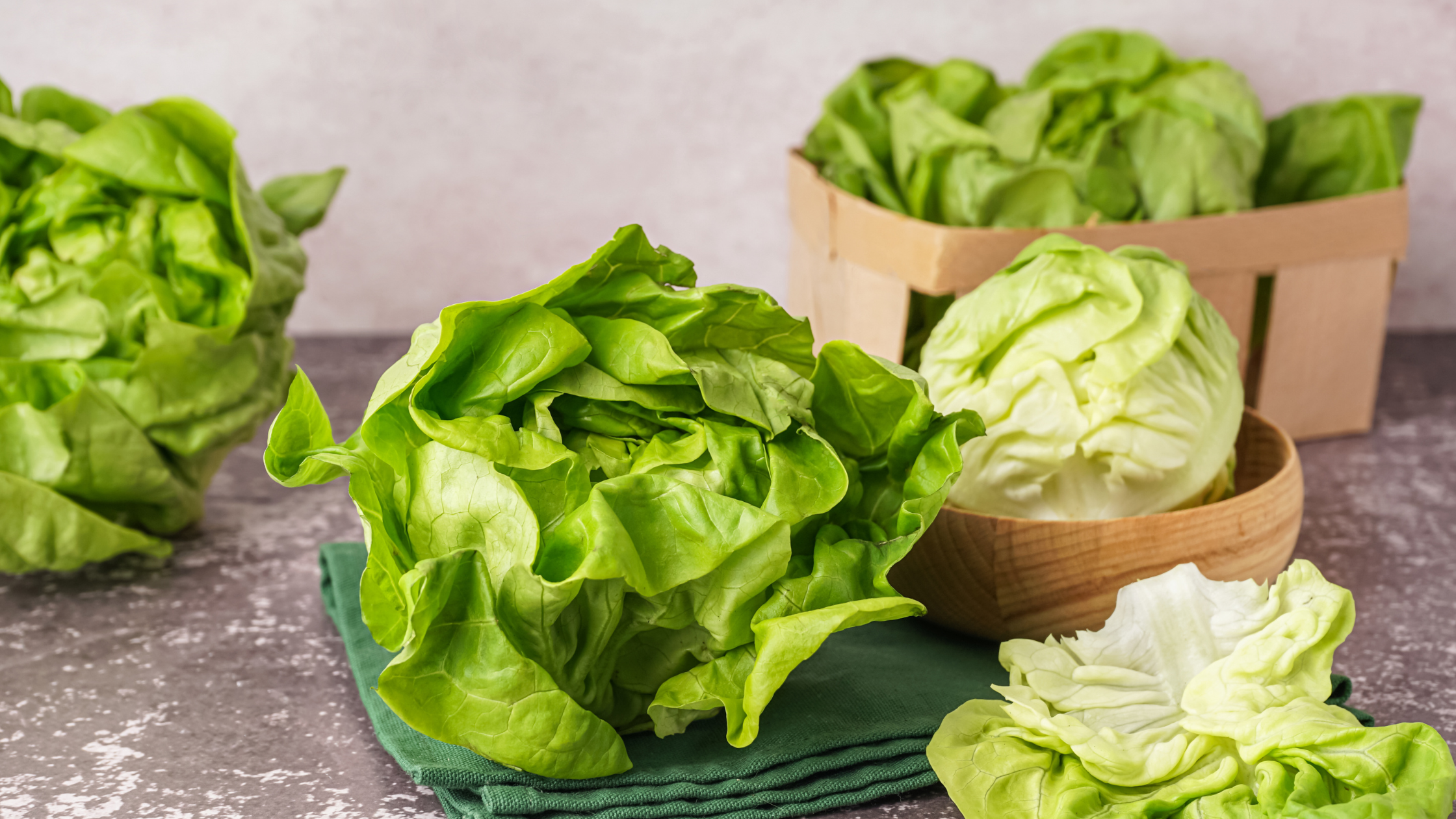
Boston Bibb Lettuce
Boston Bibb lettuce, also known as butterhead lettuce, is a popular leafy green vegetable prized for its tender leaves and delicate flavor. Belonging to the Lactuca sativa species, Boston Bibb lettuce is a staple in many culinary traditions worldwide. Beyond its culinary appeal, it boasts a range of health benefits and has found applications in both Eastern and Western medicine.
[/et_pb_text][et_pb_heading title=”History” _builder_version=”4.27.4″ _module_preset=”default” title_level=”h2″ title_text_color=”#000000″ custom_margin=”||10px||false|false” global_colors_info=”{}”][/et_pb_heading][et_pb_text _builder_version=”4.27.4″ _module_preset=”default” text_text_color=”#000000″ text_font_size=”17px” global_colors_info=”{}”]The origins of Boston Bibb lettuce trace back to the United States, particularly to the Boston region where it gained popularity in the 19th century. Named after its place of origin and its buttery texture, Boston Bibb lettuce quickly became a favored variety among chefs and home cooks alike. Its cultivation spread across the United States and eventually internationally, earning a place in both gourmet cuisine and everyday salads.
[/et_pb_text][et_pb_heading title=”Health Benefits” _builder_version=”4.27.4″ _module_preset=”default” title_level=”h2″ title_text_color=”#000000″ custom_margin=”||10px||false|false” custom_padding=”||||false|false” global_colors_info=”{}”][/et_pb_heading][et_pb_text _builder_version=”4.27.4″ _module_preset=”default” text_text_color=”#000000″ text_font_size=”17px” global_colors_info=”{}”]Boston Bibb lettuce owes its health benefits to its rich nutritional profile, which includes vitamins, minerals, and phytonutrients. Its high water content contributes to hydration, while the fiber content aids digestion and promotes a feeling of fullness. Additionally, Boston Bibb lettuce contains antioxidants such as vitamin C and beta-carotene, which help combat oxidative stress and reduce inflammation in the body. This type of lettuce is packed with essential nutrients, including vitamin K, vitamin A, folate, and potassium, all of which support overall health and well-being. The potassium present in Boston Bibb lettuce plays a crucial role in regulating blood pressure, thereby reducing the risk of cardiovascular diseases. Furthermore, its fiber content promotes healthy digestion and may lower the risk of constipation and other digestive disorders. The vitamin C found in Boston Bibb lettuce also boosts the immune system, helping the body fend off infections and illnesses.
[/et_pb_text][/et_pb_column][/et_pb_row][/et_pb_section][et_pb_section fb_built=”1″ _builder_version=”4.27.4″ _module_preset=”default” background_color=”#F2F2F2″ custom_padding=”28px||4px||false|false” global_colors_info=”{}”][et_pb_row column_structure=”2_3,1_3″ _builder_version=”4.27.4″ _module_preset=”default” custom_margin=”-13px|auto||auto||” custom_padding=”6px||5px|||” global_colors_info=”{}”][et_pb_column type=”2_3″ _builder_version=”4.27.4″ _module_preset=”default” global_colors_info=”{}”][et_pb_heading title=”Best Preparation Methods ” _builder_version=”4.27.4″ _module_preset=”default” title_level=”h2″ title_text_color=”#000000″ custom_margin=”||10px||false|false” global_colors_info=”{}”][/et_pb_heading][et_pb_text _builder_version=”4.27.4″ _module_preset=”default” text_text_color=”#000000″ text_font_size=”17px” global_colors_info=”{}”]Boston Bibb lettuce is versatile and can be utilized in various culinary applications. It is commonly featured in fresh salads, providing a crisp texture and mild flavor. Additionally, it can be used as a wrap for sandwiches or filled with various ingredients for a healthy snack. The leaves are also suitable for cooking; they can be lightly sautéed or added to soups and stir-fries, where they will wilt down while retaining their delicate taste.
[/et_pb_text][et_pb_image src=”https://www.immortalme.com/wp-content/uploads/2025/01/Boston-Bibb-Food.png” title_text=”Boston Bibb Food” _builder_version=”4.27.4″ _module_preset=”default” border_radii=”on|6px|6px|6px|6px” box_shadow_style=”preset1″ box_shadow_spread=”3px” box_shadow_color=”#84776C” global_colors_info=”{}”][/et_pb_image][/et_pb_column][et_pb_column type=”1_3″ _builder_version=”4.27.4″ _module_preset=”default” global_colors_info=”{}”][et_pb_image src=”https://www.immortalme.com/wp-content/uploads/2025/01/Boston-Bibb-Lettuce.png” title_text=”Boston Bibb Lettuce” _builder_version=”4.27.4″ _module_preset=”default” border_radii=”on|6px|6px|6px|6px” box_shadow_style=”preset1″ box_shadow_spread=”3px” box_shadow_color=”#84776C” global_colors_info=”{}”][/et_pb_image][/et_pb_column][/et_pb_row][et_pb_row _builder_version=”4.27.4″ _module_preset=”default” custom_margin=”21px|auto||auto||” custom_padding=”4px||6px|||” global_colors_info=”{}”][et_pb_column type=”4_4″ _builder_version=”4.27.4″ _module_preset=”default” global_colors_info=”{}”][et_pb_heading title=”Precautions and Possible Side Effects” _builder_version=”4.27.4″ _module_preset=”default” title_level=”h2″ title_text_color=”#000000″ custom_margin=”||10px||false|false” global_colors_info=”{}”][/et_pb_heading][et_pb_text _builder_version=”4.27.4″ _module_preset=”default” text_text_color=”#000000″ text_font_size=”17px” global_colors_info=”{}”]While Boston Bibb lettuce is generally safe for consumption, individuals with allergies to lettuce or other members of the Asteraceae family should exercise caution. Those with certain medical conditions, such as kidney problems or hyperkalemia, may need to monitor their potassium intake and consult with a healthcare professional before consuming large quantities of Boston Bibb lettuce. Although rare, excessive consumption of this type of lettuce may lead to potential side effects, including allergic reactions in susceptible individuals and gastrointestinal discomfort due to its fiber content. Boston Bibb lettuce is not known to interact with medications or other foods; however, individuals taking blood-thinning medications should be mindful of their vitamin K intake, as it may interfere with the efficacy of these medications.
[/et_pb_text][/et_pb_column][/et_pb_row][/et_pb_section][et_pb_section fb_built=”1″ admin_label=”Post Body” _builder_version=”4.27.4″ background_color=”#F2F2F2″ custom_padding=”29px||5px|||” locked=”off” global_colors_info=”{}”][et_pb_row column_structure=”1_2,1_2″ _builder_version=”4.27.4″ custom_margin=”-14px|auto||auto||” custom_padding=”8px||6px|||” locked=”off” global_colors_info=”{}”][et_pb_column type=”1_2″ _builder_version=”4.16″ global_colors_info=”{}”][et_pb_heading title=”Eastern and Western Nutrition” _builder_version=”4.27.4″ _module_preset=”default” title_level=”h2″ title_text_color=”#000000″ custom_margin=”||10px||false|false” global_colors_info=”{}”][/et_pb_heading][et_pb_text _builder_version=”4.27.4″ _module_preset=”default” text_text_color=”#000000″ text_font_size=”17px” hover_enabled=”0″ global_colors_info=”{}” sticky_enabled=”0″]In traditional Chinese medicine (TCM), Boston Bib Lettuce (Lactuca sativa) is associated with the Metal element and is believed to influence the Lung and Liver meridians. The cooling properties attributed to lettuce are thought to aid in clearing heat from the body, detoxifying the liver, and enhancing lung health, which is particularly relevant for respiratory and immune functions. The Lung meridian is crucial for respiration, while the Liver meridian is responsible for the regulation of Qi (vital energy), detoxification, and emotional balance. Furthermore, the high potassium content in lettuce is recognized for its potential benefits in managing blood pressure and heart health, making it a valuable addition to the diet for individuals with cardiovascular concerns. The incorporation of lettuce into the diet aligns with TCM principles that emphasize the importance of food as medicine, promoting overall well-being and balance within the body.
[/et_pb_text][/et_pb_column][et_pb_column type=”1_2″ _builder_version=”4.16″ global_colors_info=”{}”][et_pb_image src=”https://www.immortalme.com/wp-content/uploads/2025/02/Screenshot-2025-02-17-211928.png” title_text=”Screenshot 2025-02-17 211928″ _builder_version=”4.27.4″ _module_preset=”default” hover_enabled=”0″ border_radii=”on|6px|6px|6px|6px” box_shadow_style=”preset1″ box_shadow_spread=”3px” box_shadow_color=”#84776C” global_colors_info=”{}” sticky_enabled=”0″][/et_pb_image][/et_pb_column][/et_pb_row][et_pb_row _builder_version=”4.27.4″ _module_preset=”default” custom_margin=”|auto||auto|false|false” custom_padding=”5px||7px|||” hover_enabled=”0″ global_colors_info=”{}” sticky_enabled=”0″][et_pb_column type=”4_4″ _builder_version=”4.27.4″ _module_preset=”default” global_colors_info=”{}”][et_pb_text _builder_version=”4.27.4″ _module_preset=”default” text_text_color=”#000000″ text_font_size=”17px” hover_enabled=”0″ global_colors_info=”{}” sticky_enabled=”0″]Conversely, in Western herbalism, Boston Bib Lettuce has been historically utilized for its mild sedative properties, promoting relaxation and potentially aiding in sleep (Yang et al., 2021). This aligns with the broader recognition of lettuce as a source of bioactive compounds, including flavonoids and phenolic acids, which contribute to its health benefits. The nutritional profile of lettuce, rich in vitamins and antioxidants, supports its role in a balanced diet, enhancing overall health and potentially reducing the risk of chronic diseases. Moreover, the consumption of lettuce is encouraged in Western dietary guidelines due to its low-calorie content and high water volume, making it an excellent choice for weight management and hydration. The dual perspectives from Eastern and Western nutritional practices highlight the multifaceted benefits of Boston Bib Lettuce, underscoring its significance in promoting health across different cultural contexts.
[/et_pb_text][/et_pb_column][/et_pb_row][/et_pb_section][et_pb_section fb_built=”1″ _builder_version=”4.27.4″ _module_preset=”default” background_color=”#F2F2F2″ custom_padding=”30px||4px|||” global_colors_info=”{}” custom_margin=”-10px|||||”][et_pb_row _builder_version=”4.27.4″ _module_preset=”default” custom_margin=”-2px|auto||auto||” custom_padding=”5px||7px|||” global_colors_info=”{}” min_height=”146.2px”][et_pb_column type=”4_4″ _builder_version=”4.27.4″ _module_preset=”default” global_colors_info=”{}”][et_pb_heading title=”Final Thoughts” _builder_version=”4.27.4″ _module_preset=”default” title_level=”h2″ title_text_color=”#000000″ custom_margin=”||10px||false|false” global_colors_info=”{}”][/et_pb_heading][et_pb_text _builder_version=”4.27.4″ _module_preset=”default” text_text_color=”#000000″ text_font_size=”17px” global_colors_info=”{}”]Boston Bibb lettuce is not only a delicious addition to meals but also a nutritional powerhouse with numerous health benefits. Whether enjoyed in salads, sandwiches, or smoothies, this leafy green vegetable provides a refreshing way to boost overall health and well-being. With its rich history, versatile usage, and association with both Eastern and Western medicinal traditions, Boston Bibb lettuce continues to captivate the taste buds and promote vitality around the globe.
[/et_pb_text][/et_pb_column][/et_pb_row][et_pb_row _builder_version=”4.27.4″ _module_preset=”default” custom_padding=”31px||5px|||” global_colors_info=”{}”][et_pb_column type=”4_4″ _builder_version=”4.27.4″ _module_preset=”default” global_colors_info=”{}”][et_pb_divider color=”#84776C” divider_weight=”2px” _builder_version=”4.27.4″ _module_preset=”default” global_colors_info=”{}”][/et_pb_divider][et_pb_toggle title=”References” open_toggle_background_color=”#FFFFFF” closed_toggle_background_color=”#FFFFFF” icon_color=”#84776C” toggle_icon=”||fa||900″ use_icon_font_size=”on” icon_font_size=”25px” open_icon_color=”#E02B20″ open_toggle_icon=”||fa||900″ open_use_icon_font_size=”on” open_icon_font_size=”25px” _builder_version=”4.27.4″ _module_preset=”default” title_text_color=”#000000″ title_font=”Cormorant Garamond||||||||” title_text_align=”left” title_font_size=”20px” text_orientation=”left” custom_margin=”||42px|||” custom_padding=”|||20px|false|false” hover_enabled=”0″ border_radii=”on|6px|6px|6px|6px” box_shadow_style=”preset1″ box_shadow_color=”#84776C” global_colors_info=”{}” sticky_enabled=”0″]Adhikari, B., et al. (2022). Seed priming enhances seed germination and morphological traits of <em>lactuca sativa</em> l. under salt stress.. https://doi.org/10.20944/preprints202203.0082.v1
Chung, H., et al. (2018). Quantitative evaluation of electric light recipes for red leaf lettuce cultivation in plant factories. Horttechnology, 28(6), 755-763. https://doi.org/10.21273/horttech04024-18
Gündüz, G., et al. (2010). Efficacy of oregano oil in the inactivation of salmonella typhimurium on lettuce. Food Control, 21(4), 513-517. https://doi.org/10.1016/j.foodcont.2009.07.016
Hernandez, E., et al. (2020). Quality, yield, and biomass efficacy of several hydroponic lettuce (lactuca sativa l.) cultivars in response to high pressure sodium lights or light emitting diodes for greenhouse supplemental lighting. Horticulturae, 6(1), 7. https://doi.org/10.3390/horticulturae6010007
Kasole, R., et al. (2019). Traditional medicine and its role in the management of diabetes mellitus: “patients’ and herbalists’ perspectives”. Evidence-Based Complementary and Alternative Medicine, 2019, 1-12. https://doi.org/10.1155/2019/2835691
Li, Y., et al. (2021). Isoleucine enhances plant resistance against botrytis cinerea via jasmonate signaling pathway. Frontiers in Plant Science, 12. https://doi.org/10.3389/fpls.2021.628328
Murray, J., et al. (2023). Tocopherols, phylloquinone, ascorbic acid, and sugar contents in hydroponically grown lettuce. Journal of the American Society for Horticultural Science, 148(3), 134-147. https://doi.org/10.21273/jashs05298-23
Ortega, L. (2024). New insight into the biological activity of salmo salar nk-lysin antimicrobial peptides. Frontiers in Immunology, 15. https://doi.org/10.3389/fimmu.2024.1191966
Shultz, R., et al. (2021). Evaluation of different artificial light technologies for indoor aquaponic production of bibb lettuce, lactuca sativa var. capitata, and compact basil, ocimum basilicum var. genovese. Journal of the World Aquaculture Society, 53(3), 703-713. https://doi.org/10.1111/jwas.12860
Tsai, C., et al.(2021). Growth and photosynthetic efficiency of two lettuce cultivars under light–emitting diode monochromatic light. Journal of the Faculty of Agriculture Kyushu University, 66(1), 11-20. https://doi.org/10.5109/4363546
Weaver, G. and Iersel, M. (2019). Photochemical characterization of greenhouse-grown lettuce (lactuca sativa l. ‘green towers’) with applications for supplemental lighting control. Hortscience, 54(2), 317-322. https://doi.org/10.21273/hortsci13553-18
Yang, X., Gil, M., Yang, Q., & Tómas‐Barberán, F. (2021). Bioactive compounds in lettuce: highlighting the benefits to human health and impacts of preharvest and postharvest practices. Comprehensive Reviews in Food Science and Food Safety, 21(1), 4-45. https://doi.org/10.1111/1541-4337.12877
ZHANG, G., Wu, F., Ma, T., Zhang, B., Manyande, A., & Du, H. (2019). Preparation and characterization of cellulose nanofibers isolated from lettuce peel. Cellulose Chemistry and Technology, 53(7-8), 677-684. https://doi.org/10.35812/cellulosechemtechnol.2019.53.66
Zhong, G., et al. (2017). Plant growth and photosynthesis response to low potassium conditions in three lettuce (<i>lactuca sativa</i>) types. The Horticulture Journal, 86(2), 229-237. https://doi.org/10.2503/hortj.okd-008
MyFoodData. (n.d.). Nutrition facts for food item: WT3. Retrieved December 10, 2024from https://tools.myfooddata.com/nutrition-facts/2345310/wt3/1
[/et_pb_toggle][/et_pb_column][/et_pb_row][/et_pb_section][et_pb_section fb_built=”1″ _builder_version=”4.27.4″ _module_preset=”default” background_color=”#84776C” global_colors_info=”{}”][et_pb_row _builder_version=”4.27.4″ _module_preset=”default” global_colors_info=”{}”][et_pb_column type=”4_4″ _builder_version=”4.27.4″ _module_preset=”default” global_colors_info=”{}”][et_pb_heading title=”More Articles You May Like” _builder_version=”4.27.4″ _module_preset=”default” title_text_color=”#FFFFFF” global_colors_info=”{}”][/et_pb_heading][et_pb_divider color=”#F2F2F2″ divider_weight=”2px” _builder_version=”4.27.4″ _module_preset=”default” global_colors_info=”{}”][/et_pb_divider][et_pb_blog_extras posts_number=”12″ include_categories=”57,19,56″ blog_layout=”slider” slider_layout=”vertical_grid” excerpt_length=”600″ show_author=”off” show_date=”off” category_color=”#2533ab” category_background_color=”RGBA(255,255,255,0)” show_comments=”off” content_color=”#000000″ slider_loop=”on” _builder_version=”4.27.4″ _module_preset=”default” header_text_color=”#000000″ body_text_color=”#000000″ meta_text_color=”#000000″ border_radii=”on|10px|10px|10px|10px” border_width_all=”2px” border_color_all=”rgba(242,242,242,0.32)” box_shadow_style=”preset2″ box_shadow_blur=”28px” box_shadow_color=”rgba(0,0,0,0.53)” global_colors_info=”{}”][/et_pb_blog_extras][/et_pb_column][/et_pb_row][et_pb_row _builder_version=”4.27.4″ _module_preset=”default” background_color=”#FFFFFF” border_radii=”on|6px|6px|6px|6px” global_colors_info=”{}”][et_pb_column type=”4_4″ _builder_version=”4.27.4″ _module_preset=”default” global_colors_info=”{}”][et_pb_text _builder_version=”4.27.4″ _module_preset=”default” text_text_color=”#84776C” text_font_size=”12px” text_line_height=”1.5em” header_font=”|300|||||||” header_font_size=”25px” header_4_font=”–et_global_heading_font||||||||” header_4_text_color=”#84776C” custom_padding=”|17px||17px|false|false” global_colors_info=”{}”]Medical Disclaimer
The information provided in this document is intended for educational and informational purposes only and should not be construed as medical advice, diagnosis, or treatment. It is essential to consult a qualified healthcare professional for any medical concerns or conditions. The content herein does not substitute for professional medical advice, and individuals should not disregard or delay seeking medical advice based on the information provided.
The authors and publishers of this document do not assume any responsibility for any adverse effects or consequences resulting from the use or application of the information contained herein. The reader is encouraged to conduct their own research and consult with healthcare providers to make informed decisions regarding their health and treatment options. Furthermore, the information presented may not reflect the most current research or medical guidelines, as medical knowledge is continually evolving. Therefore, it is imperative to verify the information with up-to-date, peer-reviewed sources and consult with medical professionals for personalized advice.
[/et_pb_text][/et_pb_column][/et_pb_row][/et_pb_section][et_pb_section fb_built=”1″ _builder_version=”4.27.4″ _module_preset=”default” background_color=”#F2F2F2″ custom_margin=”||-52px||false|false” global_colors_info=”{}”][et_pb_row _builder_version=”4.27.4″ _module_preset=”default” global_colors_info=”{}”][et_pb_column type=”4_4″ _builder_version=”4.27.4″ _module_preset=”default” global_colors_info=”{}”][et_pb_toggle title=”References” open_toggle_background_color=”#FFFFFF” closed_toggle_background_color=”#FFFFFF” icon_color=”#84776C” toggle_icon=”||fa||900″ use_icon_font_size=”on” icon_font_size=”25px” open_icon_color=”#E02B20″ open_toggle_icon=”||fa||900″ open_use_icon_font_size=”on” open_icon_font_size=”25px” _builder_version=”4.27.4″ _module_preset=”default” title_text_color=”#000000″ title_font=”Cormorant Garamond||||||||” title_text_align=”left” title_font_size=”20px” text_orientation=”left” custom_margin=”||42px|||” custom_padding=”|||20px|false|false” border_radii=”on|6px|6px|6px|6px” global_colors_info=”{}”]Adhikari, B., Olorunwa, O., & Barickman, T. (2022). Seed priming enhances seed germination and morphological traits of <em>lactuca sativa</em> l. under salt stress.. https://doi.org/10.20944/preprints202203.0082.v1
Chung, H., Chang, M., Wu, C., & Fang, W. (2018). Quantitative evaluation of electric light recipes for red leaf lettuce cultivation in plant factories. Horttechnology, 28(6), 755-763. https://doi.org/10.21273/horttech04024-18
Gündüz, G., Gönül, Ş., & Karapınar, M. (2010). Efficacy of oregano oil in the inactivation of salmonella typhimurium on lettuce. Food Control, 21(4), 513-517. https://doi.org/10.1016/j.foodcont.2009.07.016
Hernandez, E., Timmons, M., & Mattson, N. (2020). Quality, yield, and biomass efficacy of several hydroponic lettuce (lactuca sativa l.) cultivars in response to high pressure sodium lights or light emitting diodes for greenhouse supplemental lighting. Horticulturae, 6(1), 7. https://doi.org/10.3390/horticulturae6010007
Kasole, R., Martin, H., & Kimiywe, J. (2019). Traditional medicine and its role in the management of diabetes mellitus: “patients’ and herbalists’ perspectives”. Evidence-Based Complementary and Alternative Medicine, 2019, 1-12. https://doi.org/10.1155/2019/2835691
Li, Y., Li, S., Du, R., Wang, J., Li, H., Xie, D., … & Yan, J. (2021). Isoleucine enhances plant resistance against botrytis cinerea via jasmonate signaling pathway. Frontiers in Plant Science, 12. https://doi.org/10.3389/fpls.2021.628328
Murray, J., Latimer, S., Simonne, A., Basset, G., Hochmuth, R., & Sandoya, G. (2023). Tocopherols, phylloquinone, ascorbic acid, and sugar contents in hydroponically grown lettuce. Journal of the American Society for Horticultural Science, 148(3), 134-147. https://doi.org/10.21273/jashs05298-23
Ortega, L. (2024). New insight into the biological activity of salmo salar nk-lysin antimicrobial peptides. Frontiers in Immunology, 15. https://doi.org/10.3389/fimmu.2024.1191966
Shultz, R., Coyle, S., Bright, L., Hager, J., & Tidwell, J. (2021). Evaluation of different artificial light technologies for indoor aquaponic production of bibb lettuce, lactuca sativa var. capitata, and compact basil, ocimum basilicum var. genovese. Journal of the World Aquaculture Society, 53(3), 703-713. https://doi.org/10.1111/jwas.12860
Tsai, C., Yen, Y., Ay, C., Miyajima, I., & Huang, K. (2021). Growth and photosynthetic efficiency of two lettuce cultivars under light–emitting diode monochromatic light. Journal of the Faculty of Agriculture Kyushu University, 66(1), 11-20. https://doi.org/10.5109/4363546
Weaver, G. and Iersel, M. (2019). Photochemical characterization of greenhouse-grown lettuce (lactuca sativa l. ‘green towers’) with applications for supplemental lighting control. Hortscience, 54(2), 317-322. https://doi.org/10.21273/hortsci13553-18
Zhong, G., Johkan, M., Hohjo, M., Tsukagoshi, S., & Maruo, T. (2017). Plant growth and photosynthesis response to low potassium conditions in three lettuce (<i>lactuca sativa</i>) types. The Horticulture Journal, 86(2), 229-237. https://doi.org/10.2503/hortj.okd-008
MyFoodData. (n.d.). *Nutrition facts for food item: WT3*. Retrieved December 10, 2024from https://tools.myfooddata.com/nutrition-facts/2345310/wt3/1
[/et_pb_toggle][et_pb_accordion open_toggle_background_color=”RGBA(255,255,255,0)” toggle_icon=”C||divi||400″ icon_color=”#E02B20″ use_icon_font_size=”on” _builder_version=”4.27.4″ _module_preset=”default” background_color=”#FFFFFF” custom_margin=”-6px|||||” border_radii=”on|6px|6px|6px|6px” global_colors_info=”{}” toggle_icon__hover_enabled=”on|hover” toggle_icon__hover=”C||divi||400″ icon_color__hover_enabled=”on|hover” icon_color__hover=”#E02B20″][et_pb_accordion_item title=”Medical Disclaimer” open=”on” _builder_version=”4.27.3″ _module_preset=”default” body_font_size=”12px” body_line_height=”1.5em” background_color=”RGBA(255,255,255,0)” background_enable_color=”on” global_colors_info=”{}” toggle_font=”Cormorant Garamond||||||||” toggle_font_size=”20px”]The information provided in this document is intended for educational and informational purposes only and should not be construed as medical advice, diagnosis, or treatment. It is essential to consult a qualified healthcare professional for any medical concerns or conditions. The content herein does not substitute for professional medical advice, and individuals should not disregard or delay seeking medical advice based on the information provided.
The authors and publishers of this document do not assume any responsibility for any adverse effects or consequences resulting from the use or application of the information contained herein. The reader is encouraged to conduct their own research and consult with healthcare providers to make informed decisions regarding their health and treatment options. Furthermore, the information presented may not reflect the most current research or medical guidelines, as medical knowledge is continually evolving. Therefore, it is imperative to verify the information with up-to-date, peer-reviewed sources and consult with medical professionals for personalized advice.
[/et_pb_accordion_item][/et_pb_accordion][/et_pb_column][/et_pb_row][/et_pb_section]