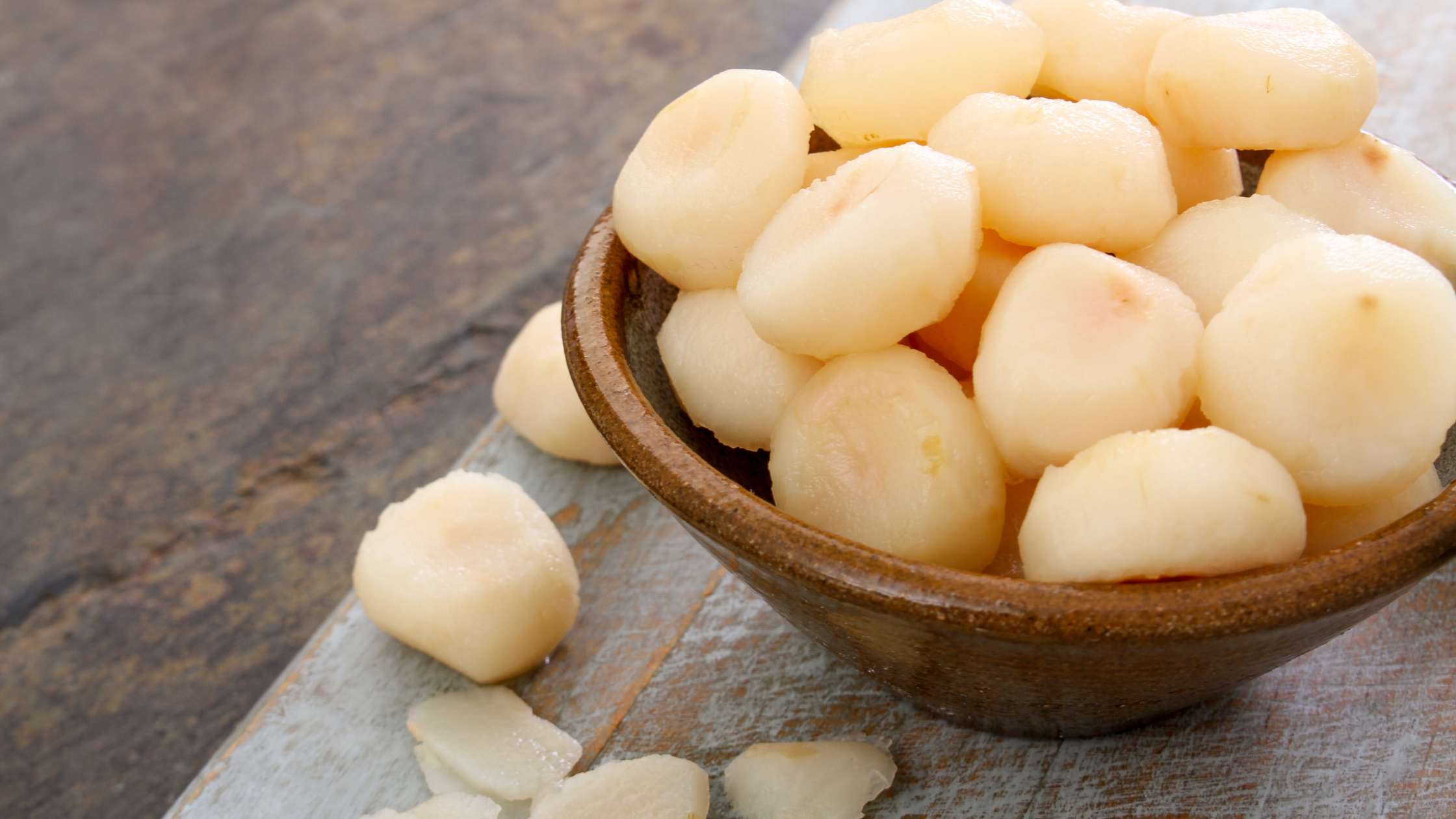
Water Chestnuts
In the realm of culinary delights, water chestnuts stand out as a unique and versatile ingredient, renowned for their crisp texture and subtle sweetness. While often mistaken for nuts, these aquatic gems are actually corms (edible bulbs), belonging to the species Eleocharis dulcis. With a rich history steeped in Asian cuisine and a growing popularity worldwide, water chestnuts offer not only culinary delight but also a plethora of health benefits.
History
Originating in Southeast Asia, water chestnuts have been cultivated for centuries, particularly in China, India, and parts of Southeast Asia. Historically, they have been a staple in Asian cuisine, featuring prominently in stir-fries, soups, salads, and desserts. Traded along ancient Silk Road routes, they gradually found their way into European and American kitchens, where they are now cherished for their unique flavor and texture.
Health Benefits
Water chestnuts are distinguished by their crisp texture, which is attributed to the air-filled cavities within their corms, making them an excellent ingredient for adding crunch to various dishes. Their high water content not only enhances their refreshing taste but also provides hydrating properties. In addition to their culinary appeal, water chestnuts offer numerous health benefits, making them a valuable addition to any diet. They are rich in essential nutrients such as potassium, manganese, copper, and vitamin B6, despite being low in calories. Their high fiber content promotes digestive health by aiding regularity and preventing constipation. Furthermore, the substantial water content of water chestnuts contributes to hydration, supporting optimal bodily functions. The potassium found in water chestnuts plays a crucial role in regulating blood pressure, potentially reducing the risk of cardiovascular diseases. Lastly, their low calorie and high fiber composition makes water chestnuts a satisfying, low-energy-density food, making them ideal for weight management.
[/et_pb_text][/et_pb_column][/et_pb_row][/et_pb_section][et_pb_section fb_built=”1″ _builder_version=”4.27.4″ _module_preset=”default” background_color=”#F2F2F2″ custom_padding=”29px||2px||false|false” global_colors_info=”{}”][et_pb_row column_structure=”2_3,1_3″ _builder_version=”4.27.4″ _module_preset=”default” min_height=”687px” custom_margin=”-25px|auto||auto||” custom_padding=”2px||9px|||” global_colors_info=”{}”][et_pb_column type=”2_3″ _builder_version=”4.27.4″ _module_preset=”default” global_colors_info=”{}”][et_pb_heading title=”Best Preparation Methods ” _builder_version=”4.27.4″ _module_preset=”default” title_level=”h2″ title_text_color=”#000000″ custom_margin=”||10px||false|false” global_colors_info=”{}”][/et_pb_heading][et_pb_text _builder_version=”4.27.4″ _module_preset=”default” text_text_color=”#000000″ text_font_size=”17px” custom_margin=”||16px|||” global_colors_info=”{}”]Water chestnuts are a versatile ingredient widely used in Asian cuisine, known for their distinctive crunchy texture and mild flavor. They can be enjoyed both raw and cooked, making them suitable for a variety of dishes, including stir-fries, salads, and soups. Their ability to retain a crisp bite even after cooking makes them a popular addition to recipes like chop suey and curries, where they provide a refreshing contrast to other ingredients. Additionally, water chestnuts can be ground into flour, which is utilized in the preparation of various baked goods, enhancing the nutritional profile of items such as cookies and breads.
[/et_pb_text][et_pb_image src=”https://www.immortalme.com/wp-content/uploads/2025/02/Screenshot-2025-02-11-001000.png” title_text=”Screenshot 2025-02-11 001000″ _builder_version=”4.27.4″ _module_preset=”default” custom_margin=”28px|||||” custom_padding=”|12px||||” border_radii=”on|6px|6px|6px|6px” box_shadow_style=”preset1″ box_shadow_spread=”3px” box_shadow_color=”#84776C” global_colors_info=”{}”][/et_pb_image][/et_pb_column][et_pb_column type=”1_3″ _builder_version=”4.27.4″ _module_preset=”default” global_colors_info=”{}”][et_pb_image src=”https://www.immortalme.com/wp-content/uploads/2025/01/Water-Chestnut.png” title_text=”Water Chestnut” _builder_version=”4.27.4″ _module_preset=”default” border_radii=”on|6px|6px|6px|6px” box_shadow_style=”preset1″ box_shadow_spread=”3px” box_shadow_color=”#84776C” global_colors_info=”{}”][/et_pb_image][/et_pb_column][/et_pb_row][/et_pb_section][et_pb_section fb_built=”1″ _builder_version=”4.27.4″ _module_preset=”default” background_color=”#F2F2F2″ custom_padding=”29px||1px|||” global_colors_info=”{}”][et_pb_row _builder_version=”4.27.4″ _module_preset=”default” custom_padding=”3px||6px|||” global_colors_info=”{}”][et_pb_column type=”4_4″ _builder_version=”4.27.4″ _module_preset=”default” global_colors_info=”{}”][et_pb_text _builder_version=”4.27.4″ _module_preset=”default” text_text_color=”#000000″ text_font_size=”17px” header_2_text_color=”#000000″ global_colors_info=”{}”]Precautions and Possible Side Effects
While water chestnuts are generally safe for consumption, individuals with allergies to this food should exercise caution, as allergic reactions can vary from mild itching to severe anaphylaxis. Additionally, those with certain medical conditions, particularly kidney disorders, may need to moderate their intake of potassium-rich foods like water chestnuts. Although rare, some individuals might experience gastrointestinal discomfort, such as bloating or gas, especially when consuming large quantities; therefore, it is advisable to start with small amounts to assess individual tolerance. Water chestnuts are not known to have significant interactions with medications or other foods; however, individuals taking potassium-sparing diuretics or potassium supplements should consult a healthcare professional before increasing their intake of potassium-rich foods, including water chestnuts.
[/et_pb_text][/et_pb_column][/et_pb_row][/et_pb_section][et_pb_section fb_built=”1″ admin_label=”Post Body” _builder_version=”4.27.4″ background_color=”#F2F2F2″ custom_padding=”28px||1px|||” locked=”off” global_colors_info=”{}”][et_pb_row column_structure=”1_2,1_2″ _builder_version=”4.27.4″ custom_padding=”5px||11px|||” locked=”off” global_colors_info=”{}”][et_pb_column type=”1_2″ _builder_version=”4.16″ global_colors_info=”{}”][et_pb_heading title=”Eastern and Western Nutrition” _builder_version=”4.27.4″ _module_preset=”default” title_level=”h2″ title_text_color=”#000000″ custom_margin=”||10px||false|false” global_colors_info=”{}”][/et_pb_heading][et_pb_text _builder_version=”4.27.4″ _module_preset=”default” text_text_color=”#000000″ text_font_size=”17px” global_colors_info=”{}”]In Eastern medicine, water chestnuts are regarded for their cooling properties, making them beneficial for individuals experiencing excessive internal heat or inflammation. They are frequently included in traditional Chinese medicine (TCM) formulations to enhance hydration and support kidney function. Water chestnuts are associated with the kidney and bladder meridians in TCM, where they are believed to nourish yin, clear heat, and promote urination, thereby aiding in detoxification and balancing bodily functions.
Conversely, in Western cuisine, water chestnuts are primarily appreciated for their unique texture and subtle sweetness, which makes them a popular ingredient in a variety of dishes, including Asian-inspired stir-fries, salads, and appetizers.
[/et_pb_text][/et_pb_column][et_pb_column type=”1_2″ _builder_version=”4.16″ global_colors_info=”{}”][et_pb_image src=”https://www.immortalme.com/wp-content/uploads/2025/02/Screenshot-2025-02-10-235715.png” title_text=”Screenshot 2025-02-10 235715″ _builder_version=”4.27.4″ _module_preset=”default” border_radii=”on|6px|6px|6px|6px” box_shadow_style=”preset2″ global_colors_info=”{}”][/et_pb_image][/et_pb_column][/et_pb_row][/et_pb_section][et_pb_section fb_built=”1″ _builder_version=”4.27.4″ _module_preset=”default” background_color=”#F2F2F2″ custom_padding=”29px||5px|||” global_colors_info=”{}”][et_pb_row _builder_version=”4.27.4″ _module_preset=”default” min_height=”156.2px” custom_margin=”-15px|auto||auto||” custom_padding=”4px||0px|||” global_colors_info=”{}”][et_pb_column type=”4_4″ _builder_version=”4.27.4″ _module_preset=”default” global_colors_info=”{}”][et_pb_heading title=”Final Thoughts” _builder_version=”4.27.4″ _module_preset=”default” title_level=”h2″ title_text_color=”#000000″ custom_margin=”||10px||false|false” global_colors_info=”{}”][/et_pb_heading][et_pb_text _builder_version=”4.27.4″ _module_preset=”default” text_text_color=”#000000″ text_font_size=”17px” global_colors_info=”{}”]Water chestnuts are not only a culinary delight but also a nutritional powerhouse, offering an array of health benefits. Whether enjoyed in Eastern stir-fries or Western salads, their crisp texture and subtle sweetness make them a versatile addition to any dish. With their rich history and growing popularity worldwide, water chestnuts continue to captivate taste buds and nourish bodies with their unique blend of flavors and nutrients.
[/et_pb_text][et_pb_divider color=”#84776C” divider_weight=”2px” _builder_version=”4.27.4″ _module_preset=”default” global_colors_info=”{}”][/et_pb_divider][/et_pb_column][/et_pb_row][et_pb_row _builder_version=”4.27.4″ _module_preset=”default” custom_padding=”||10px|||” global_colors_info=”{}”][et_pb_column type=”4_4″ _builder_version=”4.27.4″ _module_preset=”default” global_colors_info=”{}”][et_pb_toggle title=”References” open_toggle_background_color=”#FFFFFF” closed_toggle_background_color=”#FFFFFF” icon_color=”#84776C” toggle_icon=”||fa||900″ use_icon_font_size=”on” icon_font_size=”25px” open_icon_color=”#E02B20″ open_toggle_icon=”||fa||900″ open_use_icon_font_size=”on” open_icon_font_size=”25px” _builder_version=”4.27.4″ _module_preset=”default” title_text_color=”#000000″ title_font=”Cormorant Garamond||||||||” title_text_align=”left” title_font_size=”20px” text_orientation=”left” custom_margin=”||42px|||” custom_padding=”|||20px|false|false” border_radii=”on|6px|6px|6px|6px” box_shadow_style=”preset1″ box_shadow_color=”#84776C” global_colors_info=”{}”]Faruk, M., Sana, N., Shaha, R., & Biswas, K. (2012). Biochemical analysis of two varieties of water chestnuts (trapa sp.). Pakistan Journal of Biological Sciences, 15(21), 1019-1026. https://doi.org/10.3923/pjbs.2012.1019.1026
Guo, Y., Wu, R., Sun, G., Zheng, Y., & Fuller, B. (2017). Neolithic cultivation of water chestnuts (trapa l.) at tianluoshan (7000-6300 cal bp), zhejiang province, china. Scientific Reports, 7(1). https://doi.org/10.1038/s41598-017-15881-w
Punia, D. (2020). Physicochemical properties and nutritional evaluation of wheat and water chestnut composite flour. International Journal of Chemical Studies, 8(4), 1914-1919. https://doi.org/10.22271/chemi.2020.v8.i4t.9909
Rajput, J. (2023). Water chestnut (trapa natans l.): functional characteristics, nutritional properties and applications in food industry: a review. The Journal of Phytopharmacology, 12(2), 119-126. https://doi.org/10.31254/phyto.2023.12209
Tang, X., Zheng, F., Qin, J., Lu, M., & Du, Y. (2016). Genetic structure of water chestnut beetle: providing evidence for origin of water chestnut. Plos One, 11(7), e0159557. https://doi.org/10.1371/journal.pone.0159557
MyFoodData. (n.d.). *Water chestnut nutrition facts and health benefits*. Retrieved January 7, 2025, from https://tools.myfooddata.com/nutrition-facts/788562/wt1/1
[/et_pb_toggle][/et_pb_column][/et_pb_row][/et_pb_section][et_pb_section fb_built=”1″ _builder_version=”4.27.4″ _module_preset=”default” background_color=”#84776C” hover_enabled=”0″ global_colors_info=”{}” custom_margin=”||-60px||false|false” custom_padding=”||60px||false|false” sticky_enabled=”0″][et_pb_row _builder_version=”4.27.4″ _module_preset=”default” global_colors_info=”{}”][et_pb_column type=”4_4″ _builder_version=”4.27.4″ _module_preset=”default” global_colors_info=”{}”][et_pb_heading title=”More Articles You May Like” _builder_version=”4.27.4″ _module_preset=”default” title_text_color=”#FFFFFF” global_colors_info=”{}”][/et_pb_heading][et_pb_divider color=”#F2F2F2″ divider_weight=”2px” _builder_version=”4.27.4″ _module_preset=”default” global_colors_info=”{}”][/et_pb_divider][et_pb_blog_extras posts_number=”12″ include_categories=”57,19,56″ blog_layout=”slider” slider_layout=”vertical_grid” excerpt_length=”600″ show_author=”off” show_date=”off” category_color=”#2533ab” category_background_color=”RGBA(255,255,255,0)” show_comments=”off” content_color=”#000000″ slider_loop=”on” _builder_version=”4.27.4″ _module_preset=”default” header_text_color=”#000000″ body_text_color=”#000000″ meta_text_color=”#000000″ border_radii=”on|10px|10px|10px|10px” border_width_all=”2px” border_color_all=”rgba(242,242,242,0.32)” box_shadow_style=”preset2″ box_shadow_blur=”28px” box_shadow_color=”rgba(0,0,0,0.53)” global_colors_info=”{}”][/et_pb_blog_extras][/et_pb_column][/et_pb_row][et_pb_row _builder_version=”4.27.4″ _module_preset=”default” background_color=”#FFFFFF” border_radii=”on|6px|6px|6px|6px” global_colors_info=”{}” theme_builder_area=”post_content”][et_pb_column type=”4_4″ _builder_version=”4.27.4″ _module_preset=”default” global_colors_info=”{}” theme_builder_area=”post_content”][et_pb_text _builder_version=”4.27.4″ _module_preset=”default” text_text_color=”#84776C” text_font_size=”12px” text_line_height=”1.5em” header_font=”|300|||||||” header_font_size=”25px” header_4_font=”–et_global_heading_font||||||||” header_4_text_color=”#84776C” custom_padding=”|17px||17px|false|false” global_colors_info=”{}” theme_builder_area=”post_content”]Medical Disclaimer
The information provided in this document is intended for educational and informational purposes only and should not be construed as medical advice, diagnosis, or treatment. It is essential to consult a qualified healthcare professional for any medical concerns or conditions. The content herein does not substitute for professional medical advice, and individuals should not disregard or delay seeking medical advice based on the information provided.
The authors and publishers of this document do not assume any responsibility for any adverse effects or consequences resulting from the use or application of the information contained herein. The reader is encouraged to conduct their own research and consult with healthcare providers to make informed decisions regarding their health and treatment options. Furthermore, the information presented may not reflect the most current research or medical guidelines, as medical knowledge is continually evolving. Therefore, it is imperative to verify the information with up-to-date, peer-reviewed sources and consult with medical professionals for personalized advice.
[/et_pb_text][/et_pb_column][/et_pb_row][/et_pb_section]