Wakame
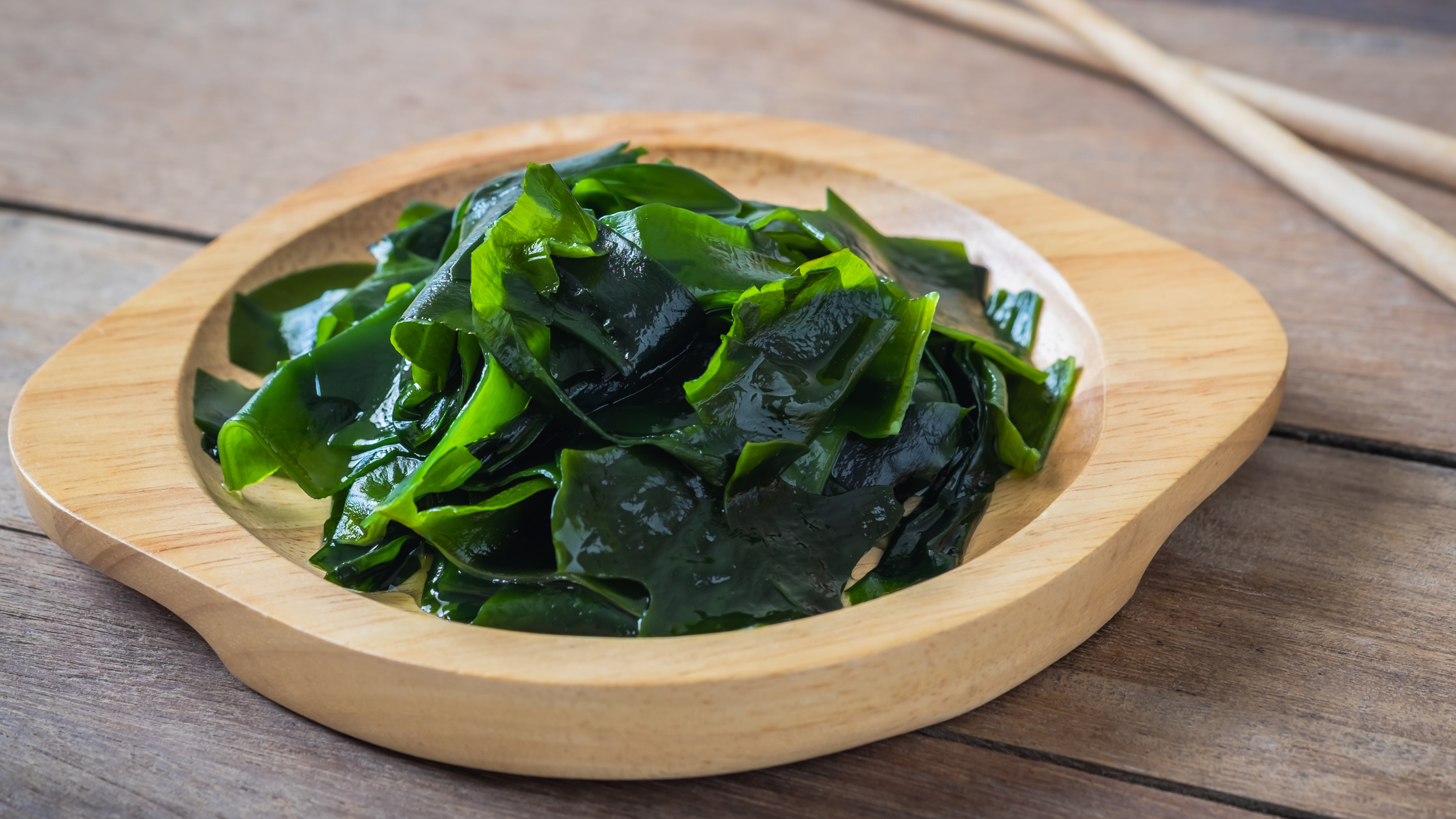
Wakame, a type of edible seaweed, has long been a staple in East Asian cuisine, known for its mild flavor, delicate texture, and impressive nutritional profile. Its significance extends beyond the culinary world, offering a variety of health benefits that have been recognized for centuries. This seaweed, scientifically known as Undaria pinnatifida, has earned its place not only in traditional diets but also in modern wellness circles. In this article, we will explore the history, health benefits, contraindications, usage, and the integration of wakame into both Eastern and Western traditions.
History
Wakame has a rich history, particularly in Japan, where it has been used for over a thousand years. It is believed that wakame was first cultivated during the Nara period (710–794 AD), making it one of the oldest cultivated seaweeds in Japanese cuisine. During this time, wakame was harvested from the wild, but as the demand for the seaweed grew, farming techniques developed to sustain its availability. The use of wakame extended to China and Korea as well, where it was incorporated into soups, salads, and teas. Over time, the cultivation and consumption of wakame spread to other parts of the world, and today, it is enjoyed globally for both its flavor and its health-promoting properties.
Health Benefits
Wakame, a type of edible seaweed, is an exceptionally nutritious food that offers a wealth of essential vitamins, minerals, and antioxidants, making it a valuable addition to any diet. Notably, wakame is rich in iodine, a critical mineral for proper thyroid function, and also provides significant amounts of calcium, magnesium, potassium, and vitamins A, C, D, and K, all of which contribute to overall health. Furthermore, its high fiber content promotes digestive health by regulating bowel movements and supporting a healthy gut microbiome, while its prebiotic properties encourage the growth of beneficial bacteria within the digestive tract. In terms of weight management, wakame is low in calories and fat yet high in fiber, which enhances satiety and may aid in weight control; additionally, its fucoxanthin content, a type of carotenoid, has been associated with promoting fat metabolism. The seaweed also boasts powerful antioxidant properties, primarily due to its vitamins C and E, which help neutralize free radicals, mitigate oxidative stress, and protect against premature aging and various diseases.
Moreover, wakame supports heart health through its high levels of omega-3 fatty acids and essential minerals like potassium and magnesium, which can contribute to lower blood pressure, improved cholesterol levels, and a reduced risk of cardiovascular diseases. Lastly, the presence of vitamin C and other antioxidants in wakame enhances immune function, providing protection against common infections and diseases.
[/et_pb_text][/et_pb_column][/et_pb_row][/et_pb_section][et_pb_section fb_built=”1″ _builder_version=”4.27.4″ _module_preset=”default” background_color=”#F2F2F2″ min_height=”738px” custom_margin=”2px|||||” custom_padding=”31px||8px||false|false” global_colors_info=”{}”][et_pb_row column_structure=”2_3,1_3″ _builder_version=”4.27.4″ _module_preset=”default” custom_margin=”-16px|auto||auto||” custom_padding=”2px||9px|||” global_colors_info=”{}”][et_pb_column type=”2_3″ _builder_version=”4.27.4″ _module_preset=”default” global_colors_info=”{}”][et_pb_heading title=”Best Preparation Methods ” _builder_version=”4.27.4″ _module_preset=”default” title_level=”h2″ title_text_color=”#000000″ custom_margin=”||10px||false|false” global_colors_info=”{}”][/et_pb_heading][et_pb_text _builder_version=”4.27.4″ _module_preset=”default” text_text_color=”#000000″ text_font_size=”17px” custom_margin=”||25px|||” global_colors_info=”{}”]Wakame is a versatile ingredient widely used in East Asian culinary traditions. It is commonly found in soups, salads, and sushi, where its delicate texture and mild flavor enhance the overall dish without overpowering other ingredients. In Japanese cuisine, wakame is often rehydrated and added to miso soup or served as a side dish, while in Korean cuisine, it is featured in seaweed salads and as a component of various stews. As global interest in plant-based diets grows, wakame’s incorporation into Western cuisines has also increased, where it is often marketed as a superfood, utilized in salads, smoothies, and as a seasoning.
[/et_pb_text][et_pb_image src=”https://www.immortalme.com/wp-content/uploads/2025/01/Wakame-Food.png” title_text=”Wakame Food” _builder_version=”4.27.4″ _module_preset=”default” custom_padding=”||0px|||” border_radii=”on|6px|6px|6px|6px” box_shadow_style=”preset1″ box_shadow_spread=”3px” box_shadow_color=”#84776C” global_colors_info=”{}”][/et_pb_image][/et_pb_column][et_pb_column type=”1_3″ _builder_version=”4.27.4″ _module_preset=”default” global_colors_info=”{}”][et_pb_image src=”https://www.immortalme.com/wp-content/uploads/2025/01/Wakame.png” title_text=”Wakame” _builder_version=”4.27.4″ _module_preset=”default” min_height=”651px” custom_padding=”56px||||false|false” border_radii=”on|6px|6px|6px|6px” box_shadow_style=”preset1″ box_shadow_spread=”3px” box_shadow_color=”#84776C” global_colors_info=”{}”][/et_pb_image][/et_pb_column][/et_pb_row][/et_pb_section][et_pb_section fb_built=”1″ _builder_version=”4.27.4″ _module_preset=”default” background_color=”#F2F2F2″ custom_padding=”26px||0px|||” global_colors_info=”{}”][et_pb_row _builder_version=”4.27.4″ _module_preset=”default” custom_margin=”-11px|auto||auto||” custom_padding=”3px||11px|||” global_colors_info=”{}”][et_pb_column type=”4_4″ _builder_version=”4.27.4″ _module_preset=”default” global_colors_info=”{}”][et_pb_heading title=”Precautions and Possible Side Effects” _builder_version=”4.27.4″ _module_preset=”default” title_level=”h2″ title_text_color=”#000000″ custom_margin=”||10px||false|false” global_colors_info=”{}”][/et_pb_heading][et_pb_text _builder_version=”4.27.4″ _module_preset=”default” text_text_color=”#000000″ text_font_size=”17px” global_colors_info=”{}”]Despite the numerous health benefits associated with wakame, it may not be suitable for everyone due to potential side effects and interactions. One significant concern is the risk of excess iodine intake, which can lead to iodine toxicity and disrupt thyroid function; therefore, individuals with hyperthyroidism should exercise caution when consuming wakame. Additionally, some people may experience allergic reactions to wakame, which can manifest as skin irritation or gastrointestinal discomfort. Furthermore, the high vitamin K content in wakame poses a risk of interfering with anticoagulant medications necessitating consultation with a healthcare provider for individuals taking such medications. Thus, while wakame can be a nutritious addition to many diets, it is essential to consider these potential risks.
[/et_pb_text][/et_pb_column][/et_pb_row][/et_pb_section][et_pb_section fb_built=”1″ admin_label=”Post Body” _builder_version=”4.27.4″ background_color=”#F2F2F2″ custom_padding=”30px||4px|||” locked=”off” global_colors_info=”{}”][et_pb_row column_structure=”1_2,1_2″ _builder_version=”4.27.4″ custom_padding=”1px||3px|||” locked=”off” global_colors_info=”{}”][et_pb_column type=”1_2″ _builder_version=”4.16″ global_colors_info=”{}”][et_pb_heading title=”Eastern and Western Nutrition” _builder_version=”4.27.4″ _module_preset=”default” title_level=”h2″ title_text_color=”#000000″ custom_margin=”||10px||false|false” global_colors_info=”{}”][/et_pb_heading][et_pb_text _builder_version=”4.27.4″ _module_preset=”default” text_text_color=”#000000″ text_font_size=”17px” global_colors_info=”{}”]In Eastern traditions, wakame is seen as a food that balances the body’s yin energy, supporting calmness and nourishment. Traditional Chinese Medicine (TCM) and Japanese Kampo medicine use wakame to improve digestion, detoxify the body, and promote skin health.
In the West, wakame is valued for its nutritional profile and its role in vegan and vegetarian diets. It is often marketed as a superfood, with emphasis on its weight-loss, anti-inflammatory, and anti-aging properties. In TCM, wakame is believed to influence the spleen and kidney meridians. The spleen meridian is associated with digestion and nutrient absorption, while the kidney meridian governs vitality and hormonal balance. Regular consumption of wakame is thought to support these systems, enhancing overall health and longevity.
[/et_pb_text][/et_pb_column][et_pb_column type=”1_2″ _builder_version=”4.16″ global_colors_info=”{}”][et_pb_image src=”https://www.immortalme.com/wp-content/uploads/2025/02/Screenshot-2025-02-11-003111.png” title_text=”Screenshot 2025-02-11 003111″ _builder_version=”4.27.4″ _module_preset=”default” border_radii=”on|6px|6px|6px|6px” box_shadow_style=”preset1″ box_shadow_spread=”3px” box_shadow_color=”#84776C” global_colors_info=”{}”][/et_pb_image][/et_pb_column][/et_pb_row][/et_pb_section][et_pb_section fb_built=”1″ _builder_version=”4.27.4″ _module_preset=”default” background_color=”#F2F2F2″ custom_padding=”29px||23px|||” global_colors_info=”{}”][et_pb_row _builder_version=”4.27.4″ _module_preset=”default” custom_margin=”-14px|auto||auto||” custom_padding=”3px||8px|||” global_colors_info=”{}”][et_pb_column type=”4_4″ _builder_version=”4.27.4″ _module_preset=”default” global_colors_info=”{}”][et_pb_text _builder_version=”4.27.4″ _module_preset=”default” text_text_color=”#000000″ text_font_size=”17px” header_2_text_color=”#000000″ custom_margin=”||35px|||” global_colors_info=”{}”]Final Thoughts
Wakame is much more than a culinary delight; it is a nutrient powerhouse with deep historical and medicinal roots. Whether you’re savoring it in a bowl of soup or applying it as part of your skincare routine, wakame offers a holistic approach to health and wellness. However, like any powerful food or supplement, it should be consumed mindfully to maximize its benefits and minimize potential risks.
[/et_pb_text][et_pb_divider color=”#84776C” divider_weight=”2px” _builder_version=”4.27.4″ _module_preset=”default” global_colors_info=”{}”][/et_pb_divider][/et_pb_column][/et_pb_row][et_pb_row _builder_version=”4.27.4″ _module_preset=”default” custom_margin=”1px|auto||auto||” custom_padding=”3px||7px|||” global_colors_info=”{}”][et_pb_column type=”4_4″ _builder_version=”4.27.4″ _module_preset=”default” global_colors_info=”{}”][et_pb_toggle title=”References” open_toggle_background_color=”#FFFFFF” closed_toggle_background_color=”#FFFFFF” icon_color=”#84776C” toggle_icon=”||fa||900″ use_icon_font_size=”on” icon_font_size=”25px” open_icon_color=”#E02B20″ open_toggle_icon=”||fa||900″ open_use_icon_font_size=”on” open_icon_font_size=”25px” _builder_version=”4.27.4″ _module_preset=”default” title_text_color=”#000000″ title_font=”Cormorant Garamond||||||||” title_text_align=”left” title_font_size=”20px” text_orientation=”left” custom_margin=”||17px|||” custom_padding=”|||20px|false|false” border_radii=”on|6px|6px|6px|6px” box_shadow_style=”preset1″ box_shadow_color=”#84776C” global_colors_info=”{}”]Bocanegra, A., Bastida, S., Benedı́, J., Ródenas, S., & Sánchez‐Muniz, F. (2009). Characteristics and nutritional and cardiovascular-health properties of seaweeds. Journal of Medicinal Food, 12(2), 236-258. https://doi.org/10.1089/jmf.2008.0151
Chan, E. (2023). The health-promoting properties of seaweeds: clinical evidence based on <i>wakame</i> and <i>kombu</i>. Journal of Natural Remedies, 687-698. https://doi.org/10.18311/jnr/2023/30820
D’Orazio, N., Gemello, E., Gammone, M., Girolamo, M., Ficoneri, C., & Riccioni, G. (2012). Fucoxantin: a treasure from the sea. Marine Drugs, 10(3), 604-616. https://doi.org/10.3390/md10030604
Fitton, J. (2003). Brown marine algae: a survey of therapeutic potentials. Alternative and Complementary Therapies, 9(1), 29-33. https://doi.org/10.1089/10762800360520767
Hashimoto, T., Ozaki, Y., Taminato, M., Das, S., Mizuno, M., Yoshimura, K., … & Kanazawa, K. (2009). The distribution and accumulation of fucoxanthin and its metabolites after oral administration in mice. British Journal of Nutrition, 102(2), 242-248. https://doi.org/10.1017/s0007114508199007
Imai, M., Kawakami, F., Chiba, M., Kanzaki, M., & Maruyama, H. (2023). Undaria pinnatifida (wakame) intake ameliorates high-fat diet-induced glucose intolerance via promoting glut4 expression and membrane translocation in muscle. Journal of Nutrition and Metabolism, 2023, 1-10. https://doi.org/10.1155/2023/9774157
Mitamura, R. and Yoshinaga, K. (2023). Undaria pinnatifida (wakame) moderates postprandial glycaemia in healthy young japanese women. Res J Food Nutr, 6(1), 1-7. https://doi.org/10.22259/2637-5583.0601001
Yun, E., Yu, S., Park, N., Cho, Y., Han, N., Liu, J., … & Kim, K. (2021). Metabolic and enzymatic elucidation of cooperative degradation of red seaweed agarose by two human gut bacteria. Scientific Reports, 11(1). https://doi.org/10.1038/s41598-021-92872-y
MyFoodData. (n.d.). *Nutrition facts for Wakame (Undaria pinnatifida)*. Retrieved January 7, 2025, from https://tools.myfooddata.com/nutrition-facts/170496/wt1/1
[/et_pb_toggle][/et_pb_column][/et_pb_row][/et_pb_section][et_pb_section fb_built=”1″ _builder_version=”4.27.4″ _module_preset=”default” background_color=”#84776C” hover_enabled=”0″ global_colors_info=”{}” custom_margin=”||-60px||false|false” custom_padding=”||60px||false|false” sticky_enabled=”0″][et_pb_row _builder_version=”4.27.4″ _module_preset=”default” global_colors_info=”{}”][et_pb_column type=”4_4″ _builder_version=”4.27.4″ _module_preset=”default” global_colors_info=”{}”][et_pb_heading title=”More Articles You May Like” _builder_version=”4.27.4″ _module_preset=”default” title_text_color=”#FFFFFF” global_colors_info=”{}”][/et_pb_heading][et_pb_divider color=”#F2F2F2″ divider_weight=”2px” _builder_version=”4.27.4″ _module_preset=”default” global_colors_info=”{}”][/et_pb_divider][et_pb_blog_extras posts_number=”12″ include_categories=”57,19,56″ blog_layout=”slider” slider_layout=”vertical_grid” excerpt_length=”600″ show_author=”off” show_date=”off” category_color=”#2533ab” category_background_color=”RGBA(255,255,255,0)” show_comments=”off” content_color=”#000000″ slider_loop=”on” _builder_version=”4.27.4″ _module_preset=”default” header_text_color=”#000000″ body_text_color=”#000000″ meta_text_color=”#000000″ border_radii=”on|10px|10px|10px|10px” border_width_all=”2px” border_color_all=”rgba(242,242,242,0.32)” box_shadow_style=”preset2″ box_shadow_blur=”28px” box_shadow_color=”rgba(0,0,0,0.53)” global_colors_info=”{}”][/et_pb_blog_extras][/et_pb_column][/et_pb_row][et_pb_row _builder_version=”4.27.4″ _module_preset=”default” background_color=”#FFFFFF” border_radii=”on|6px|6px|6px|6px” global_colors_info=”{}” theme_builder_area=”post_content”][et_pb_column type=”4_4″ _builder_version=”4.27.4″ _module_preset=”default” global_colors_info=”{}” theme_builder_area=”post_content”][et_pb_text _builder_version=”4.27.4″ _module_preset=”default” text_text_color=”#84776C” text_font_size=”12px” text_line_height=”1.5em” header_font=”|300|||||||” header_font_size=”25px” header_4_font=”–et_global_heading_font||||||||” header_4_text_color=”#84776C” custom_padding=”|17px||17px|false|false” global_colors_info=”{}” theme_builder_area=”post_content”]Medical Disclaimer
The information provided in this document is intended for educational and informational purposes only and should not be construed as medical advice, diagnosis, or treatment. It is essential to consult a qualified healthcare professional for any medical concerns or conditions. The content herein does not substitute for professional medical advice, and individuals should not disregard or delay seeking medical advice based on the information provided.
The authors and publishers of this document do not assume any responsibility for any adverse effects or consequences resulting from the use or application of the information contained herein. The reader is encouraged to conduct their own research and consult with healthcare providers to make informed decisions regarding their health and treatment options. Furthermore, the information presented may not reflect the most current research or medical guidelines, as medical knowledge is continually evolving. Therefore, it is imperative to verify the information with up-to-date, peer-reviewed sources and consult with medical professionals for personalized advice.
[/et_pb_text][/et_pb_column][/et_pb_row][/et_pb_section]