Asparagus
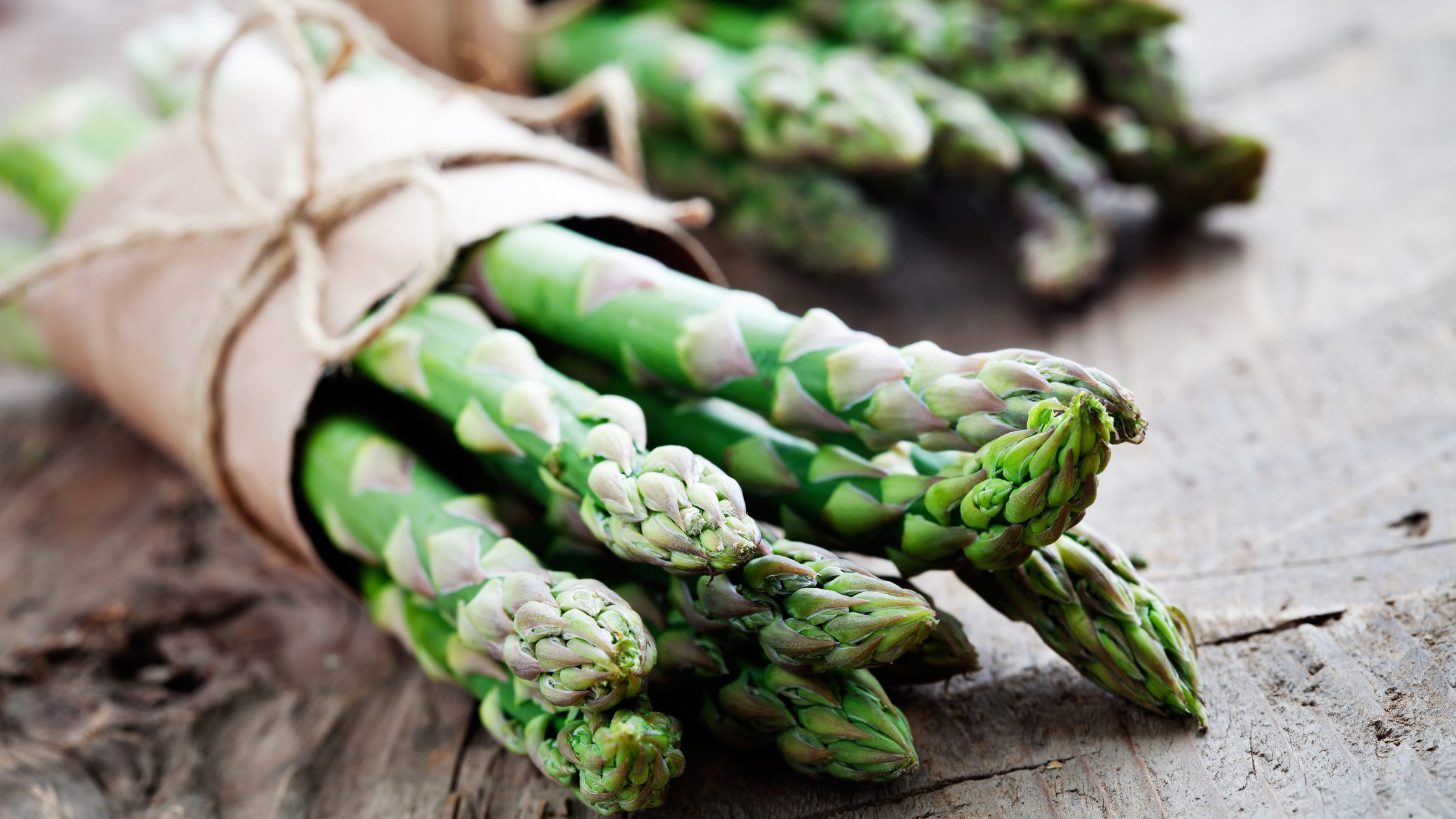
Asparagus, revered for its delicate flavor and distinctive appearance, is not just a gourmet delight but also a nutritional powerhouse with a rich history of medicinal use. Belonging to the lily family, Asparagaceae, this perennial vegetable has been cherished for centuries for its culinary versatility and therapeutic properties. From ancient civilizations to modern gastronomy and medicine, asparagus continues to captivate enthusiasts with its myriad of benefits and applications.
[/et_pb_text][et_pb_heading title=”History” _builder_version=”4.27.4″ _module_preset=”default” custom_margin=”||10px||false|false” hover_enabled=”0″ global_colors_info=”{}” title_level=”h2″ title_text_color=”#000000″ sticky_enabled=”0″][/et_pb_heading][et_pb_text _builder_version=”4.27.4″ _module_preset=”default” text_text_color=”#000000″ text_font_size=”17px” hover_enabled=”0″ global_colors_info=”{}” sticky_enabled=”0″]The history of asparagus dates back millennia, with evidence of its consumption dating as far back as ancient Egypt, Greece, and Rome. Ancient Greeks and Romans valued asparagus both as a culinary delicacy and for its medicinal properties. The Greeks believed asparagus possessed diuretic properties, while the Romans indulged in its culinary delights, considering it a delicacy fit for royalty. Asparagus also finds mention in the oldest surviving cookbook, “Apicius,” a collection of Roman recipes dating to the 4th century AD.
[/et_pb_text][et_pb_heading title=”Health Benefits” _builder_version=”4.27.4″ _module_preset=”default” custom_margin=”||10px||false|false” custom_padding=”||||false|false” hover_enabled=”0″ global_colors_info=”{}” title_level=”h2″ title_text_color=”#000000″ sticky_enabled=”0″][/et_pb_heading][et_pb_text _builder_version=”4.27.4″ _module_preset=”default” text_text_color=”#000000″ text_font_size=”17px” global_colors_info=”{}”]Asparagus contains various bioactive compounds, including saponins, flavonoids, polyphenols, and vitamins, which contribute to its diverse medicinal properties. The diuretic effect of asparagus is attributed to asparagine, an amino acid that stimulates kidney function and aids in the elimination of excess fluids and toxins from the body. Asparagus is nutrient-rich, serving as an excellent source of vitamins A, C, E, and K, along with folate, potassium, and fiber, all of which promote overall health and well-being. The antioxidants present in asparagus, such as glutathione and various flavonoids, help combat oxidative stress, thereby reducing the risk of chronic diseases and supporting cellular health. Additionally, asparagus is high in dietary fiber, which aids digestion, prevents constipation, and promotes gut health by supporting the growth of beneficial gut bacteria. Its high folate content also contributes to cardiovascular health by regulating homocysteine levels, thus reducing the risk of heart disease and stroke. Furthermore, compounds like saponins and flavonoids exhibit anti-inflammatory properties, potentially alleviating symptoms of inflammatory conditions such as arthritis.
[/et_pb_text][/et_pb_column][/et_pb_row][/et_pb_section][et_pb_section fb_built=”1″ _builder_version=”4.27.4″ _module_preset=”default” background_color=”#F2F2F2″ custom_padding=”29px||3px||false|false” global_colors_info=”{}”][et_pb_row _builder_version=”4.27.4″ _module_preset=”default” custom_padding=”7px||0px|||” custom_margin=”-21px|auto||auto||”][et_pb_column _builder_version=”4.27.4″ _module_preset=”default” type=”4_4″][et_pb_heading title=”Best Preparation Methods” _builder_version=”4.27.4″ _module_preset=”default” title_level=”h2″ title_text_color=”#000000″ hover_enabled=”0″ sticky_enabled=”0″ custom_margin=”||4px|||”][/et_pb_heading][/et_pb_column][/et_pb_row][et_pb_row column_structure=”2_3,1_3″ _builder_version=”4.27.4″ _module_preset=”default” custom_padding=”5px||3px|||” global_colors_info=”{}” custom_margin=”0px|auto||auto||”][et_pb_column type=”2_3″ _builder_version=”4.27.4″ _module_preset=”default” global_colors_info=”{}”][et_pb_text _builder_version=”4.27.4″ _module_preset=”default” text_text_color=”#000000″ text_font_size=”17px” global_colors_info=”{}”]Asparagus can be cooked in various ways, including steaming, boiling, roasting, or grilling, with cooking times varying based on thickness; generally, it takes about 5 to 10 minutes to become tender yet still crisp. This versatile vegetable can be enjoyed on its own as a side dish, tossed in salads, or incorporated into pasta, soups, and stir-fries. Additionally, asparagus can be pureed into soups or blended into smoothies for added nutrition. Trim the tough ends of the stalks, typically about one to two inches from the bottom, as these can be fibrous and unpleasant to eat.
[/et_pb_text][et_pb_image src=”https://www.immortalme.com/wp-content/uploads/2025/02/Screenshot-2025-02-15-204938.png” title_text=”Screenshot 2025-02-15 204938″ _builder_version=”4.27.4″ _module_preset=”default” hover_enabled=”0″ border_radii=”on|6px|6px|6px|6px” box_shadow_style=”preset1″ global_colors_info=”{}” sticky_enabled=”0″ box_shadow_spread=”3px” box_shadow_color=”#84776C”][/et_pb_image][/et_pb_column][et_pb_column type=”1_3″ _builder_version=”4.27.4″ _module_preset=”default” global_colors_info=”{}”][et_pb_image src=”https://www.immortalme.com/wp-content/uploads/2024/12/Asparagus-1.png” title_text=”Asparagus” _builder_version=”4.27.4″ _module_preset=”default” hover_enabled=”0″ box_shadow_style=”preset1″ global_colors_info=”{}” box_shadow_spread=”3px” box_shadow_color=”#84776C” sticky_enabled=”0″][/et_pb_image][/et_pb_column][/et_pb_row][/et_pb_section][et_pb_section fb_built=”1″ _builder_version=”4.27.4″ _module_preset=”default” custom_padding=”26px||0px|||” hover_enabled=”0″ global_colors_info=”{}” background_color=”#F2F2F2″ sticky_enabled=”0″][et_pb_row _builder_version=”4.27.4″ _module_preset=”default” custom_padding=”3px|||||” global_colors_info=”{}” custom_margin=”-14px|auto||auto||”][et_pb_column type=”4_4″ _builder_version=”4.27.4″ _module_preset=”default” global_colors_info=”{}”][et_pb_heading title=”Precautions and Possible Side Effects” _builder_version=”4.27.4″ _module_preset=”default” custom_margin=”||10px||false|false” hover_enabled=”0″ global_colors_info=”{}” title_level=”h2″ title_text_color=”#000000″ sticky_enabled=”0″][/et_pb_heading][et_pb_text _builder_version=”4.27.4″ _module_preset=”default” text_text_color=”#000000″ text_font_size=”17px” global_colors_info=”{}”]While asparagus is generally safe for consumption, individuals with kidney disorders should exercise caution due to its diuretic properties. Excessive intake may also lead to gastrointestinal discomfort in some people. Although rare, some individuals may experience allergic reactions to asparagus. Additionally, consuming large amounts can result in gastrointestinal issues, such as gas and bloating, due to its high fiber content. Asparagus may interact with certain medications, particularly those related to blood thinning and kidney function, so individuals taking such medications should consult their healthcare provider before consuming large quantities of asparagus.
[/et_pb_text][/et_pb_column][/et_pb_row][/et_pb_section][et_pb_section fb_built=”1″ admin_label=”Post Body” _builder_version=”4.27.4″ background_color=”#F2F2F2″ custom_padding=”30px||3px|||” locked=”off” global_colors_info=”{}”][et_pb_row column_structure=”1_2,1_2″ _builder_version=”4.27.4″ custom_padding=”3px||7px|||” hover_enabled=”0″ locked=”off” global_colors_info=”{}” sticky_enabled=”0″][et_pb_column type=”1_2″ _builder_version=”4.16″ global_colors_info=”{}”][et_pb_heading title=”Eastern and Western Nutrition” _builder_version=”4.27.4″ _module_preset=”default” custom_margin=”||10px||false|false” hover_enabled=”0″ global_colors_info=”{}” title_level=”h2″ title_text_color=”#000000″ sticky_enabled=”0″][/et_pb_heading][et_pb_text _builder_version=”4.27.4″ _module_preset=”default” text_text_color=”#000000″ text_font_size=”17px” hover_enabled=”0″ global_colors_info=”{}” sticky_enabled=”0″]In traditional Chinese medicine (TCM), asparagus is valued for its cooling properties and is believed to nourish the yin, particularly benefiting the lung and kidney meridians. This association is grounded in the herb’s purported ability to alleviate heat-related conditions and promote diuresis, which is essential for maintaining fluid balance and kidney health
In contrast, Western herbal medicine has historically utilized asparagus primarily as a diuretic, emphasizing its role in supporting urinary tract health and detoxification processes. The nutritional profile of asparagus is rich in bioactive compounds, including polyphenols, flavonoids, and minerals, which contribute to its antioxidant properties and overall health benefits . These compounds not only enhance vitality but also play a role in managing conditions such as hypertension and diabetes, showcasing the herb’s dual utility in both dietary and therapeutic contexts (Hafizur et al., 2012).
[/et_pb_text][/et_pb_column][et_pb_column type=”1_2″ _builder_version=”4.16″ global_colors_info=”{}”][et_pb_image src=”https://www.immortalme.com/wp-content/uploads/2025/02/Screenshot-2025-02-15-220828.png” title_text=”Screenshot 2025-02-15 220828″ _builder_version=”4.27.4″ _module_preset=”default” hover_enabled=”0″ border_radii=”on|6px|6px|6px|6px” box_shadow_style=”preset1″ global_colors_info=”{}” sticky_enabled=”0″ custom_margin=”10px|||||” box_shadow_spread=”3px” box_shadow_color=”#84776C”][/et_pb_image][/et_pb_column][/et_pb_row][/et_pb_section][et_pb_section fb_built=”1″ _builder_version=”4.27.4″ _module_preset=”default” background_color=”#F2F2F2″ custom_padding=”29px||2px|||” hover_enabled=”0″ global_colors_info=”{}” sticky_enabled=”0″ custom_margin=”-12px|||||”][et_pb_row _builder_version=”4.27.4″ _module_preset=”default” custom_padding=”7px|||||” global_colors_info=”{}”][et_pb_column type=”4_4″ _builder_version=”4.27.4″ _module_preset=”default” global_colors_info=”{}”][et_pb_heading title=”Final Thoughts” _builder_version=”4.27.4″ _module_preset=”default” custom_margin=”||10px||false|false” hover_enabled=”0″ global_colors_info=”{}” title_level=”h2″ title_text_color=”#000000″ sticky_enabled=”0″][/et_pb_heading][et_pb_text _builder_version=”4.27.4″ _module_preset=”default” text_text_color=”#000000″ text_font_size=”17px” global_colors_info=”{}”]Asparagus stands as a testament to nature’s bounty, offering both culinary delight and therapeutic benefits. Its rich history, coupled with its diverse medicinal properties, continues to make it a cherished vegetable in kitchens and apothecaries around the world. Whether enjoyed as a gourmet delicacy or utilized for its health-promoting effects, asparagus remains a timeless treasure worthy of exploration and appreciation.
[/et_pb_text][/et_pb_column][/et_pb_row][et_pb_row _builder_version=”4.27.4″ _module_preset=”default” custom_padding=”42px||5px|||” global_colors_info=”{}” theme_builder_area=”post_content” custom_margin=”-21px|auto||auto||”][et_pb_column type=”4_4″ _builder_version=”4.27.4″ _module_preset=”default” global_colors_info=”{}” theme_builder_area=”post_content”][et_pb_divider color=”#84776C” divider_weight=”2px” _builder_version=”4.27.4″ _module_preset=”default” global_colors_info=”{}” theme_builder_area=”post_content”][/et_pb_divider][et_pb_toggle title=”References” open_toggle_background_color=”#FFFFFF” closed_toggle_background_color=”#FFFFFF” icon_color=”#84776C” toggle_icon=”||fa||900″ use_icon_font_size=”on” icon_font_size=”25px” open_icon_color=”#E02B20″ open_toggle_icon=”||fa||900″ open_use_icon_font_size=”on” open_icon_font_size=”25px” _builder_version=”4.27.4″ _module_preset=”default” title_text_color=”#000000″ title_font=”Cormorant Garamond||||||||” title_text_align=”left” title_font_size=”20px” text_orientation=”left” custom_margin=”||42px|||” custom_padding=”|||20px|false|false” hover_enabled=”0″ border_radii=”on|6px|6px|6px|6px” box_shadow_style=”preset1″ box_shadow_color=”#84776C” global_colors_info=”{}” theme_builder_area=”post_content” sticky_enabled=”0″]Boubetra, K.,et al. (2017). Comparative morphological and cytogenetic study of five asparagus (asparagaceae) species from algeria including the endemic a. altissimus munby. Turkish Journal of Botany, 41, 588-599. https://doi.org/10.3906/bot-1612-63
Chen, J., rt al. (2016). Identification of mirnas and their targets through high-throughput sequencing and degradome analysis in male and female asparagus officinalis. BMC Plant Biology, 16(1). https://doi.org/10.1186/s12870-016-0770-z
DRAGHICI, M. (2023). Research on blanching pretreatment and freezing technology effect on selected vegetables. Agrolife Scientific Journal, 12(2), 69-76. https://doi.org/10.17930/agl202329
Döll, S., et al. (2021). Tissue-specific signatures of metabolites and proteins in asparagus roots and exudates. Horticulture Research, 8(1). https://doi.org/10.1038/s41438-021-00510-5
Furukawa, M., et al. (2024). Visualization of nutrients and functional compounds of asparagus (asparagus officinalis l.) by imaging mass spectrometry. Sensors and Materials, 36(3), 831. https://doi.org/10.18494/sam4817
Guo, Y., et al. (2023). Literature analysis on asparagus roots and review of its functional characterizations. Frontiers in Nutrition, 9. https://doi.org/10.3389/fnut.2022.1024190
Hafizur, R., et al. (2012). asparagus officinalis extract controls blood glucose by improving insulin secretion and β-cell function in streptozotocin-induced type 2 diabetic rats. British Journal of Nutrition, 108(9), 1586-1595. https://doi.org/10.1017/s0007114511007148
Hamdi, A., et al. (2021). Phytochemical characterization and bioactivity of asparagus acutifolius: a focus on antioxidant, cytotoxic, lipase inhibitory and antimicrobial activities. Molecules, 26(11), 3328. https://doi.org/10.3390/molecules26113328
LI, X.,et al. (2023). Optimization of blending ratios in asparagus-lemon juice using response surface methodology. Food Science and Technology, 43. https://doi.org/10.1590/fst.108622
Li, C. (2023). Genome-wide identification and comprehensive analysis heat shock transcription factor (hsf) members in asparagus (asparagus officinalis) at the seeding stage under abiotic stresses. Scientific Reports, 13(1). https://doi.org/10.1038/s41598-023-45322-w
Liu, X., et al. (2022). Detection of green asparagus using improved mask r-cnn for automatic harvesting. Sensors, 22(23), 9270. https://doi.org/10.3390/s22239270
McIntyre, E., et al. (2019). Consultations with naturopaths and western herbalists: prevalence of use and characteristics of users in australia. The Journal of Alternative and Complementary Medicine, 25(2), 181-188. https://doi.org/10.1089/acm.2018.0309
Pegiou, E., et al. (2019). Green and white asparagus (asparagus officinalis): a source of developmental, chemical and urinary intrigue. Metabolites, 10(1), 17. https://doi.org/10.3390/metabo10010017
Shawon, R., et al. (2021). Influence of shade treatment on plant growth characteristics and spear production in five asparagus (asparagus officinalis l.) cultivars. Horticultural Science and Technology, 39(1), 37-48. https://doi.org/10.7235/hort.20210004
Sobhy, Y., et al. (2022). Phytochemical and pharmacological values of two major constituents of asparagus species and their nano formulations: a review. Journal of Advanced Pharmacy Research, 6(3), 94-106. https://doi.org/10.21608/aprh.2022.141715.1176
Wang, L., et al. (2021). Surface sterilisation using chemical or physical methods influence microbial growth and quality of green asparagus. Zemdirbyste-Agriculture, 108(1), 87-94. https://doi.org/10.13080/z-a.2021.108.012
Witzel, K. and Matros, A. (2020). Fructans are differentially distributed in root tissues of asparagus. Cells, 9(9), 1943. https://doi.org/10.3390/cells9091943
Xu, G., et al. (2021). Asparagus officinalis exhibits anti-tumorigenic and anti-metastatic effects in ovarian cancer. Frontiers in Oncology, 11. https://doi.org/10.3389/fonc.2021.688461
Xue, J., et al. (2021). The aroma analysis of asparagus tea processed from different parts of green asparagus (asparagus officinalis l.). Journal of Food Processing and Preservation, 46(1). https://doi.org/10.1111/jfpp.16175
Yu, Q., et al. (2019). Effect of drying methods on the microstructure, bioactivity substances, and antityrosinase activity of asparagus stems. Journal of Agricultural and Food Chemistry, 67(5), 1537-1545. https://doi.org/10.1021/acs.jafc.8b05993
Yu-bin, J., et al. (2012). Saponins isolated from asparagus induce apoptosis in human hepatoma cell line hepg2 through a mitochondrial-mediated pathway. Current Oncology, 19(11), 1-9. https://doi.org/10.3747/co.19.1139
MyFoodData. (n.d.). Nutrition facts for food item: WT1. Retrieved December 10, 2024, from https://tools.myfooddata.com/nutrition-facts/168389/wt1/1
[/et_pb_toggle][/et_pb_column][/et_pb_row][/et_pb_section][et_pb_section fb_built=”1″ _builder_version=”4.27.4″ _module_preset=”default” background_color=”#84776C” hover_enabled=”0″ global_colors_info=”{}” custom_padding=”35px||60px||false|false” custom_margin=”||-60px||false|false” sticky_enabled=”0″][et_pb_row _builder_version=”4.27.4″ _module_preset=”default” global_colors_info=”{}” custom_padding=”11px||19px|||”][et_pb_column type=”4_4″ _builder_version=”4.27.4″ _module_preset=”default” global_colors_info=”{}”][et_pb_heading title=”More Articles You May Like” _builder_version=”4.27.4″ _module_preset=”default” title_text_color=”#FFFFFF” global_colors_info=”{}”][/et_pb_heading][et_pb_divider color=”#F2F2F2″ divider_weight=”2px” _builder_version=”4.27.4″ _module_preset=”default” global_colors_info=”{}”][/et_pb_divider][et_pb_blog_extras posts_number=”12″ include_categories=”57,19,56″ blog_layout=”slider” excerpt_length=”600″ show_author=”off” category_color=”#2533ab” category_background_color=”RGBA(255,255,255,0)” show_comments=”off” content_color=”#000000″ _builder_version=”4.27.4″ _module_preset=”default” header_text_color=”#000000″ body_text_color=”#000000″ meta_text_color=”#000000″ hover_enabled=”0″ border_radii=”on|10px|10px|10px|10px” border_width_all=”2px” border_color_all=”rgba(242,242,242,0.32)” box_shadow_style=”preset2″ box_shadow_blur=”28px” box_shadow_color=”rgba(0,0,0,0.53)” global_colors_info=”{}” slider_layout=”vertical_grid” slider_loop=”on” show_date=”off” sticky_enabled=”0″][/et_pb_blog_extras][/et_pb_column][/et_pb_row][et_pb_row _builder_version=”4.27.4″ _module_preset=”default” background_color=”#FFFFFF” border_radii=”on|6px|6px|6px|6px” global_colors_info=”{}” theme_builder_area=”post_content”][et_pb_column type=”4_4″ _builder_version=”4.27.4″ _module_preset=”default” global_colors_info=”{}” theme_builder_area=”post_content”][et_pb_text _builder_version=”4.27.4″ _module_preset=”default” text_text_color=”#84776C” text_font_size=”12px” text_line_height=”1.5em” header_font=”|300|||||||” header_font_size=”25px” header_4_font=”–et_global_heading_font||||||||” header_4_text_color=”#84776C” custom_padding=”|17px||17px|false|false” global_colors_info=”{}” theme_builder_area=”post_content”]Medical Disclaimer
The information provided in this document is intended for educational and informational purposes only and should not be construed as medical advice, diagnosis, or treatment. It is essential to consult a qualified healthcare professional for any medical concerns or conditions. The content herein does not substitute for professional medical advice, and individuals should not disregard or delay seeking medical advice based on the information provided.
The authors and publishers of this document do not assume any responsibility for any adverse effects or consequences resulting from the use or application of the information contained herein. The reader is encouraged to conduct their own research and consult with healthcare providers to make informed decisions regarding their health and treatment options. Furthermore, the information presented may not reflect the most current research or medical guidelines, as medical knowledge is continually evolving. Therefore, it is imperative to verify the information with up-to-date, peer-reviewed sources and consult with medical professionals for personalized advice.
[/et_pb_text][/et_pb_column][/et_pb_row][/et_pb_section]