Shallots
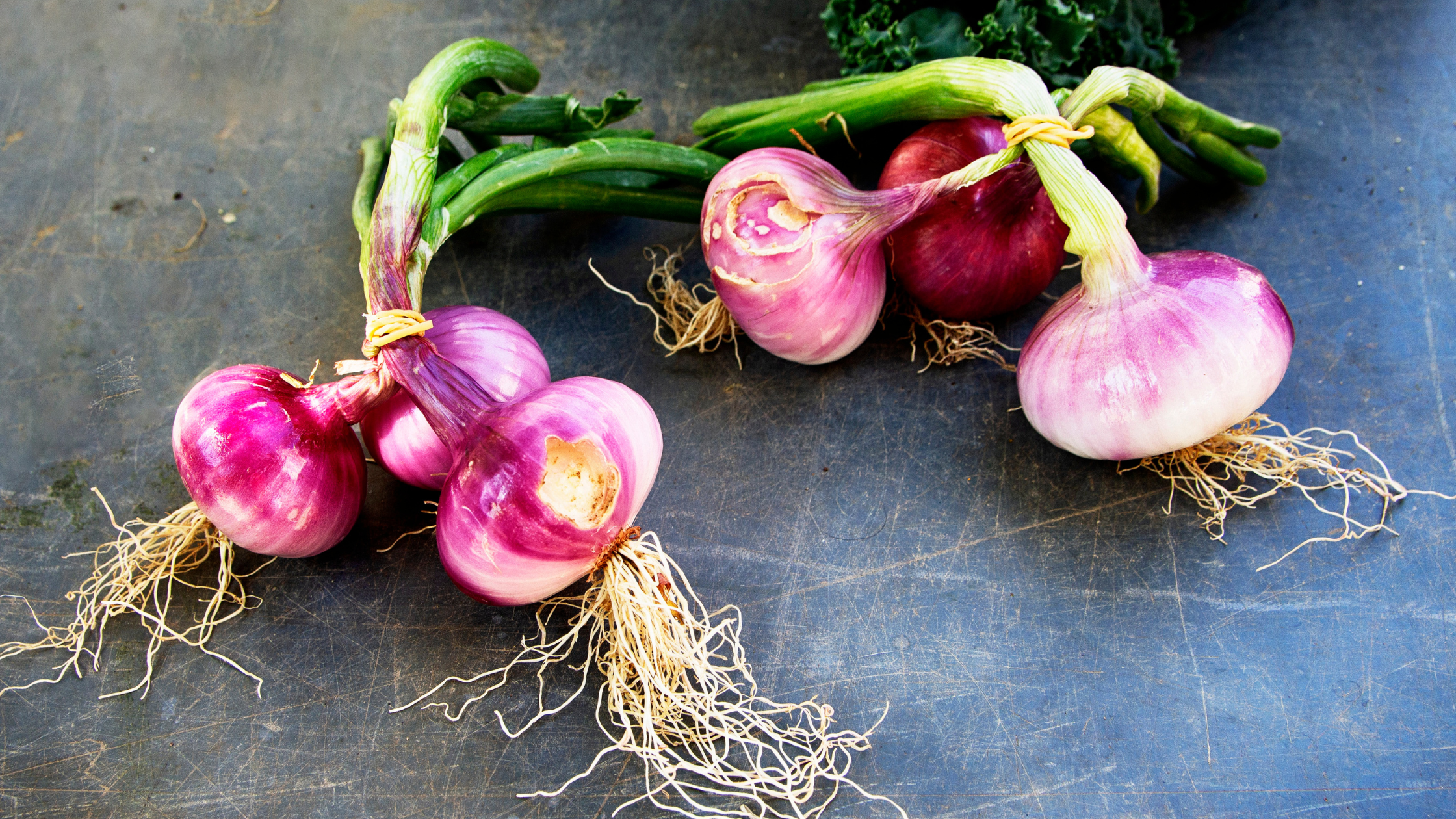
Shallots, with their delicate flavor and culinary versatility, have been a cherished ingredient in cuisines worldwide for centuries. Beyond their culinary appeal, shallots boast a range of health benefits and have been used in traditional medicine for various purposes.
History
Shallots (Allium cepa var. aggregatum), a member of the Allium genus alongside onions and garlic, have a rich historical legacy. Believed to have originated in Central or Southeast Asia, shallots have been cultivated for thousands of years and were highly prized by ancient civilizations such as the Egyptians, Greeks, and Romans for their flavor and purported medicinal properties. Over time, shallots spread across Europe and Asia, becoming an integral part of various culinary traditions.
Health Benefits
The health benefits of shallots can be largely attributed to their rich phytochemical content, which includes flavonoids, phenolic compounds, and sulfur-containing compounds such as allicin. Allicin, which is formed when shallots are chopped or crushed, is particularly notable for its antimicrobial, anti-inflammatory, and antioxidant properties, contributing significantly to the therapeutic effects of shallots. These vegetables offer a myriad of health benefits, including potent antioxidant properties due to the presence of flavonoids and phenolic compounds, which help combat oxidative stress and reduce the risk of chronic diseases.
Additionally, shallots contain organosulfur compounds that may promote cardiovascular health by reducing blood pressure, lowering cholesterol levels, and preventing the formation of blood clots. The anti-inflammatory effects of allicin and other sulfur-containing compounds may also alleviate symptoms associated with inflammatory conditions such as arthritis. Furthermore, the antimicrobial properties of shallots bolster the immune system, providing protection against infections. Emerging studies suggest that the compounds found in shallots may possess anticancer effects, potentially inhibiting the growth of cancer cells and reducing the risk of certain cancers, including stomach and colon cancer.
[/et_pb_text][/et_pb_column][/et_pb_row][/et_pb_section][et_pb_section fb_built=”1″ _builder_version=”4.27.4″ _module_preset=”default” background_color=”#F2F2F2″ custom_padding=”30px||0px||false|false” global_colors_info=”{}”][et_pb_row _builder_version=”4.27.4″ _module_preset=”default” min_height=”33px” custom_margin=”-14px|auto||auto||” custom_padding=”1px||0px|||” global_colors_info=”{}”][et_pb_column type=”4_4″ _builder_version=”4.27.4″ _module_preset=”default” global_colors_info=”{}”][et_pb_heading title=”Best Preparation Methods ” _builder_version=”4.27.4″ _module_preset=”default” title_level=”h2″ title_text_color=”#000000″ custom_margin=”||10px||false|false” global_colors_info=”{}”][/et_pb_heading][/et_pb_column][/et_pb_row][et_pb_row column_structure=”2_3,1_3″ _builder_version=”4.27.4″ _module_preset=”default” min_height=”719.7px” custom_margin=”-4px|auto||auto||” custom_padding=”4px||0px|||” global_colors_info=”{}”][et_pb_column type=”2_3″ _builder_version=”4.27.4″ _module_preset=”default” global_colors_info=”{}”][et_pb_text _builder_version=”4.27.4″ _module_preset=”default” text_text_color=”#000000″ text_font_size=”17px” header_2_text_color=”#000000″ global_colors_info=”{}”]Shallots are a versatile ingredient widely used in culinary practices around the world, prized for their rich, sweet flavor and aromatic qualities. They are often employed in various dishes, ranging from sauces and dressings to soups and stir-fries, where they enhance the overall taste profile. In many cuisines, shallots are used as a base for flavoring, often sautéed to release their natural sweetness before other ingredients are added. Additionally, they are a key component in traditional dishes such as sambal in Indonesian cuisine, where they contribute depth and complexity to the flavor. The unique flavor of shallots, which is milder than that of regular onions, makes them an ideal choice for raw applications, such as in salads or as a garnish.
[/et_pb_text][et_pb_image src=”https://www.immortalme.com/wp-content/uploads/2025/01/Shallots-Food.png” title_text=”Shallots Food” _builder_version=”4.27.4″ _module_preset=”default” custom_margin=”-10px|||||” border_radii=”on|6px|6px|6px|6px” box_shadow_style=”preset1″ box_shadow_spread=”3px” box_shadow_color=”#84776C” global_colors_info=”{}”][/et_pb_image][/et_pb_column][et_pb_column type=”1_3″ _builder_version=”4.27.4″ _module_preset=”default” global_colors_info=”{}”][et_pb_image src=”https://www.immortalme.com/wp-content/uploads/2025/01/Shallots.png” title_text=”Shallots” _builder_version=”4.27.4″ _module_preset=”default” min_height=”664px” custom_margin=”8px|||||” border_radii=”on|6px|6px|6px|6px” box_shadow_style=”preset1″ box_shadow_spread=”3px” box_shadow_color=”#84776C” global_colors_info=”{}”][/et_pb_image][/et_pb_column][/et_pb_row][/et_pb_section][et_pb_section fb_built=”1″ _builder_version=”4.27.4″ _module_preset=”default” background_color=”#F2F2F2″ custom_padding=”30px||3px|||” global_colors_info=”{}”][et_pb_row _builder_version=”4.27.4″ _module_preset=”default” custom_margin=”-20px|auto||auto||” custom_padding=”2px||7px|||” global_colors_info=”{}”][et_pb_column type=”4_4″ _builder_version=”4.27.4″ _module_preset=”default” global_colors_info=”{}”][et_pb_text _builder_version=”4.27.4″ _module_preset=”default” text_text_color=”#000000″ text_font_size=”17px” header_2_text_color=”#000000″ global_colors_info=”{}”]Precautions and Possible Side Effects
Shallots are generally considered safe for consumption; however, individuals with allergies to Allium species should exercise caution when incorporating them into their diet. While allergic reactions to shallots are rare, they can occur in those who are sensitive to this group of vegetables. Additionally, excessive intake of shallots may lead to gastrointestinal discomfort, which can manifest as bloating, gas, and indigestion in some individuals. It is also important to note that shallots may interact with certain medications, particularly blood thinners such as warfarin, due to their antiplatelet properties. Therefore, individuals taking such medications should consult their healthcare provider before significantly increasing their consumption of shallots to avoid potential complications.
[/et_pb_text][/et_pb_column][/et_pb_row][/et_pb_section][et_pb_section fb_built=”1″ admin_label=”Post Body” _builder_version=”4.27.4″ background_color=”#F2F2F2″ custom_padding=”30px||3px|||” locked=”off” global_colors_info=”{}”][et_pb_row column_structure=”1_2,1_2″ _builder_version=”4.27.4″ custom_margin=”-14px|auto||auto||” custom_padding=”3px||7px|||” locked=”off” global_colors_info=”{}”][et_pb_column type=”1_2″ _builder_version=”4.16″ global_colors_info=”{}”][et_pb_heading title=”Eastern and Western Nutrition” _builder_version=”4.27.4″ _module_preset=”default” title_level=”h2″ title_text_color=”#000000″ custom_margin=”||10px||false|false” global_colors_info=”{}”][/et_pb_heading][et_pb_text _builder_version=”4.27.4″ _module_preset=”default” text_text_color=”#000000″ text_font_size=”17px” global_colors_info=”{}”]In Eastern traditional medicine, shallots are highly regarded for their warming properties and are believed to strengthen the spleen and stomach meridians. They are commonly incorporated into culinary dishes and herbal remedies to promote digestion, dispel coldness, and address conditions such as diarrhea and abdominal pain.
Conversely, in Western herbalism, while shallots are primarily recognized for their culinary applications, they are also valued for their medicinal properties. They are frequently used as a natural remedy for respiratory infections, digestive disorders, and inflammation. Within the framework of Traditional Chinese Medicine (TCM), shallots are associated with the Spleen and Stomach meridians, where they are thought to tonify Qi (vital energy), warm the Middle Jiao (digestive system), and dispel Cold.
[/et_pb_text][/et_pb_column][et_pb_column type=”1_2″ _builder_version=”4.16″ global_colors_info=”{}”][et_pb_image src=”https://www.immortalme.com/wp-content/uploads/2025/02/Screenshot-2025-02-11-175816.png” title_text=”Screenshot 2025-02-11 175816″ _builder_version=”4.27.4″ _module_preset=”default” border_radii=”on|6px|6px|6px|6px” box_shadow_style=”preset2″ global_colors_info=”{}”][/et_pb_image][/et_pb_column][/et_pb_row][/et_pb_section][et_pb_section fb_built=”1″ _builder_version=”4.27.4″ _module_preset=”default” background_color=”#F2F2F2″ custom_padding=”30px||5px|||” global_colors_info=”{}”][et_pb_row _builder_version=”4.27.4″ _module_preset=”default” custom_margin=”-24px|auto||auto||” custom_padding=”1px||8px|||” global_colors_info=”{}”][et_pb_column type=”4_4″ _builder_version=”4.27.4″ _module_preset=”default” global_colors_info=”{}”][et_pb_text _builder_version=”4.27.4″ _module_preset=”default” text_text_color=”#000000″ text_font_size=”17px” header_2_text_color=”#000000″ global_colors_info=”{}”]Final Thoughts
Shallots are not only a flavorful addition to culinary creations but also a valuable source of nutrition and potential health benefits. From their rich history to their diverse applications in both Eastern and Western medicine, shallots continue to captivate the taste buds and intrigue the health-conscious alike. By incorporating shallots into a balanced diet, individuals can savor their distinct flavor while reaping their potential therapeutic effects.
[/et_pb_text][/et_pb_column][/et_pb_row][et_pb_row _builder_version=”4.27.4″ _module_preset=”default” custom_padding=”||0px|||” global_colors_info=”{}”][et_pb_column type=”4_4″ _builder_version=”4.27.4″ _module_preset=”default” global_colors_info=”{}”][et_pb_divider color=”#84776C” divider_weight=”2px” _builder_version=”4.27.4″ _module_preset=”default” global_colors_info=”{}”][/et_pb_divider][et_pb_toggle title=”References” open_toggle_background_color=”#FFFFFF” closed_toggle_background_color=”#FFFFFF” icon_color=”#84776C” toggle_icon=”||fa||900″ use_icon_font_size=”on” icon_font_size=”25px” open_icon_color=”#E02B20″ open_toggle_icon=”||fa||900″ open_use_icon_font_size=”on” open_icon_font_size=”25px” _builder_version=”4.27.4″ _module_preset=”default” title_text_color=”#000000″ title_font=”Cormorant Garamond||||||||” title_text_align=”left” title_font_size=”20px” text_orientation=”left” custom_margin=”||48px|||” custom_padding=”|||20px|false|false” border_radii=”on|6px|6px|6px|6px” box_shadow_style=”preset1″ box_shadow_spread=”3px” box_shadow_color=”#84776C” global_colors_info=”{}”]Moldovan, C., Frumuzachi, O., Babotă, M., Barros, L., Mocan, A., Carradori, S., … & Crișan, G. (2022). Therapeutic uses and pharmacological properties of shallot (allium ascalonicum): a systematic review. Frontiers in Nutrition, 9. https://doi.org/10.3389/fnut.2022.903686
Rahayu, W. (2023). Hybrid arima-ann model for solving nonlinearity in time series data., 70-76. https://doi.org/10.2991/978-94-6463-332-0_9
Shahrajabian, M., Sun, W., & Cheng, Q. (2020). Chinese onion, and shallot, originated in asia, medicinal plants for healthy daily recipes. Notulae Scientia Biologicae, 12(2), 197-207. https://doi.org/10.15835/nsb12210725
Sun, W., Shahrajabian, M., & Cheng, Q. (2019). The insight and survey on medicinal properties and nutritive components of shallot. Journal of Medicinal Plants Research, 13(18), 452-457. https://doi.org/10.5897/jmpr2019.6836
Tran, G. and Ngo, T. (2023). The effect of thermal treatment on antioxidant and physicochemical properties of black shallot (allium ascalonicum). Jurnal Teknologi, 85(4), 179-187. https://doi.org/10.11113/jurnalteknologi.v85.19244
MyFoodData. (n.d.). *Nutrition facts for shallots*. Retrieved January 6, 2025, from https://tools.myfooddata.com/nutrition-facts/170499/wt1/1
[/et_pb_toggle][/et_pb_column][/et_pb_row][/et_pb_section][et_pb_section fb_built=”1″ _builder_version=”4.27.4″ _module_preset=”default” background_color=”#84776C” hover_enabled=”0″ global_colors_info=”{}” custom_margin=”||-60px||false|false” custom_padding=”||60px||false|false” sticky_enabled=”0″][et_pb_row _builder_version=”4.27.4″ _module_preset=”default” global_colors_info=”{}”][et_pb_column type=”4_4″ _builder_version=”4.27.4″ _module_preset=”default” global_colors_info=”{}”][et_pb_heading title=”More Articles You May Like” _builder_version=”4.27.4″ _module_preset=”default” title_text_color=”#FFFFFF” global_colors_info=”{}”][/et_pb_heading][et_pb_divider color=”#F2F2F2″ divider_weight=”2px” _builder_version=”4.27.4″ _module_preset=”default” global_colors_info=”{}”][/et_pb_divider][et_pb_blog_extras posts_number=”12″ include_categories=”57,19,56″ blog_layout=”slider” slider_layout=”vertical_grid” excerpt_length=”600″ show_author=”off” show_date=”off” category_color=”#2533ab” category_background_color=”RGBA(255,255,255,0)” show_comments=”off” content_color=”#000000″ slider_loop=”on” _builder_version=”4.27.4″ _module_preset=”default” header_text_color=”#000000″ body_text_color=”#000000″ meta_text_color=”#000000″ border_radii=”on|10px|10px|10px|10px” border_width_all=”2px” border_color_all=”rgba(242,242,242,0.32)” box_shadow_style=”preset2″ box_shadow_blur=”28px” box_shadow_color=”rgba(0,0,0,0.53)” global_colors_info=”{}”][/et_pb_blog_extras][/et_pb_column][/et_pb_row][et_pb_row _builder_version=”4.27.4″ _module_preset=”default” background_color=”#FFFFFF” border_radii=”on|6px|6px|6px|6px” global_colors_info=”{}” theme_builder_area=”post_content”][et_pb_column type=”4_4″ _builder_version=”4.27.4″ _module_preset=”default” global_colors_info=”{}” theme_builder_area=”post_content”][et_pb_text _builder_version=”4.27.4″ _module_preset=”default” text_text_color=”#84776C” text_font_size=”12px” text_line_height=”1.5em” header_font=”|300|||||||” header_font_size=”25px” header_4_font=”–et_global_heading_font||||||||” header_4_text_color=”#84776C” custom_padding=”|17px||17px|false|false” global_colors_info=”{}” theme_builder_area=”post_content”]Medical Disclaimer
The information provided in this document is intended for educational and informational purposes only and should not be construed as medical advice, diagnosis, or treatment. It is essential to consult a qualified healthcare professional for any medical concerns or conditions. The content herein does not substitute for professional medical advice, and individuals should not disregard or delay seeking medical advice based on the information provided.
The authors and publishers of this document do not assume any responsibility for any adverse effects or consequences resulting from the use or application of the information contained herein. The reader is encouraged to conduct their own research and consult with healthcare providers to make informed decisions regarding their health and treatment options. Furthermore, the information presented may not reflect the most current research or medical guidelines, as medical knowledge is continually evolving. Therefore, it is imperative to verify the information with up-to-date, peer-reviewed sources and consult with medical professionals for personalized advice.
[/et_pb_text][/et_pb_column][/et_pb_row][/et_pb_section]