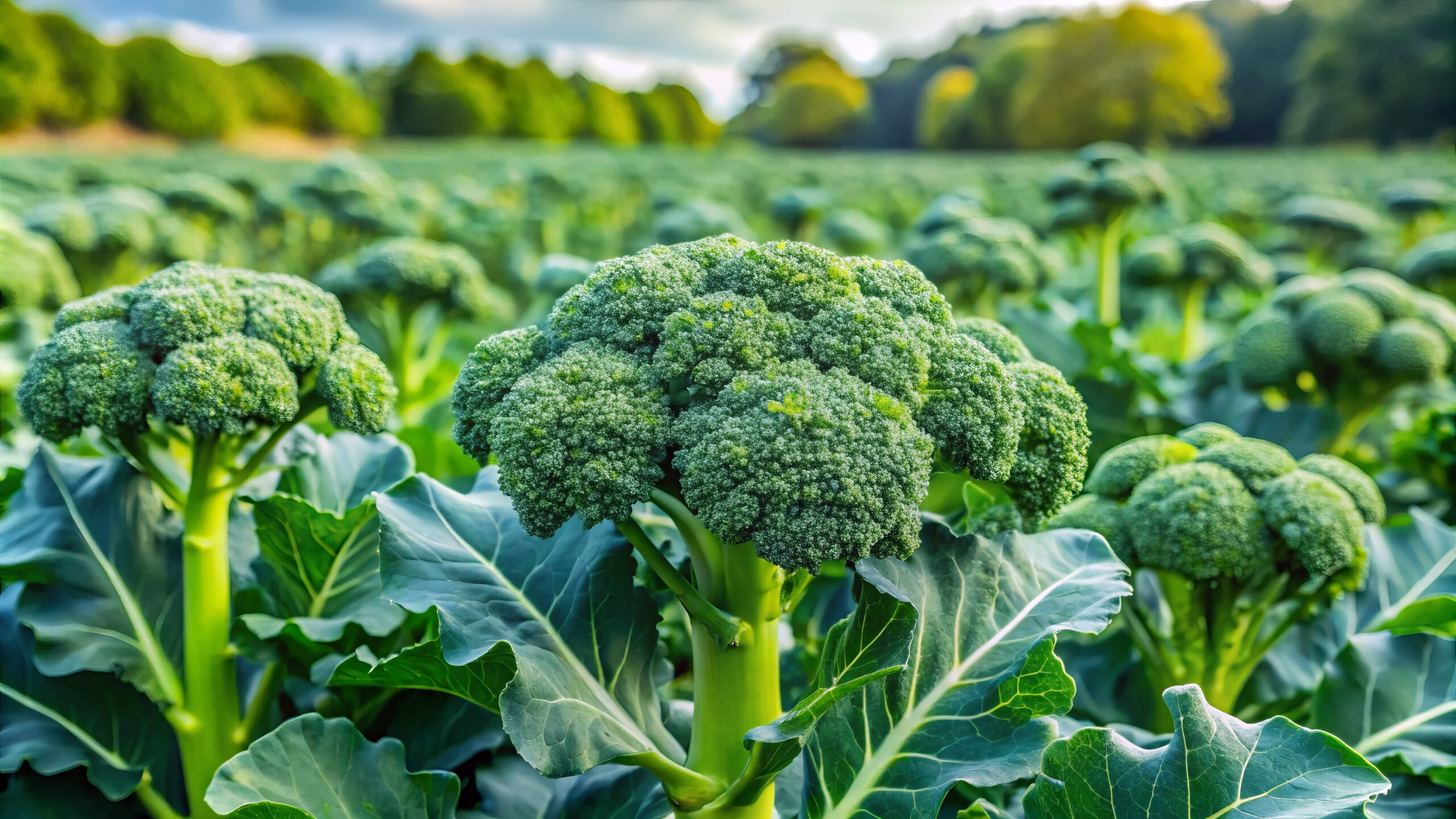
Broccoli
Broccoli, a member of the Brassica family, is a cruciferous vegetable that has gained significant attention for its nutritional and health benefits. Known scientifically as Brassica oleracea var. italica, broccoli is characterized by its green flower heads and stalks, which are consumed both raw and cooked. Its popularity has surged due to its rich content of vitamins, minerals, and phytochemicals, particularly glucosinolates, which are believed to contribute to its anticancer properties. The increasing awareness of health and wellness has led to a greater emphasis on incorporating nutrient-dense foods like broccoli into daily diets.
[/et_pb_text][et_pb_heading title=”History” _builder_version=”4.27.4″ _module_preset=”default” title_level=”h2″ title_text_color=”#000000″ custom_margin=”||10px||false|false” global_colors_info=”{}”][/et_pb_heading][et_pb_text _builder_version=”4.27.4″ _module_preset=”default” text_text_color=”#000000″ text_font_size=”17px” global_colors_info=”{}”]Historically, broccoli has its origins in the Mediterranean region, particularly in Italy, where it was cultivated as early as the Roman Empire. The cultivation of broccoli can be traced back to ancient times, with its earliest forms believed to have been developed from wild cabbage. The vegetable was highly regarded by the Romans, where it was prized for its medicinal properties and culinary versatility. By the 18th century, broccoli was being cultivated in England and later made its way to America, where it was initially met with skepticism but eventually became a staple in American diets.
Over the years, broccoli has evolved into various cultivars, each with distinct flavors and nutritional profiles, making it a versatile ingredient in diverse culinary traditions. The development of hybrid varieties in the 20th century has further enhanced its nutritional content, particularly in terms of glucoraphanin, a precursor to the potent anticancer compound sulforaphane.
[/et_pb_text][et_pb_heading title=”Health Benefits” _builder_version=”4.27.4″ _module_preset=”default” title_level=”h2″ title_text_color=”#000000″ custom_margin=”||10px||false|false” custom_padding=”||||false|false” global_colors_info=”{}”][/et_pb_heading][et_pb_text _builder_version=”4.27.4″ _module_preset=”default” text_text_color=”#000000″ text_font_size=”17px” global_colors_info=”{}”]Broccoli is renowned for its extensive health benefits, primarily attributed to its high levels of vitamins C and K, fiber, and a variety of bioactive compounds, including glucosinolates and sulforaphane. These compounds have been linked to reduced risks of various cancers, including breast, prostate, and colorectal cancers. Epidemiological studies suggest that diets rich in cruciferous vegetables like broccoli are associated with lower cancer incidence, highlighting the importance of incorporating these foods into a balanced diet. The consumption of broccoli and its derivatives can lead to a reduction in oxidative stress and inflammation, which are key factors in the development of chronic diseases. This growing body of evidence has solidified broccoli’s status as a superfood, prompting increased cultivation and consumption worldwide.
Moreover, broccoli’s antioxidant properties play a crucial role in combating oxidative stress, which is implicated in numerous health conditions, including cardiovascular diseases and neurodegenerative disorders. Research indicates that the consumption of broccoli can enhance the body’s antioxidant defenses, thereby reducing the risk of chronic diseases. Sulforaphane, a prominent compound in broccoli, has been shown to induce apoptosis and inhibit cell proliferation in various cancer cells, providing a mechanism for its chemopreventive effects. Additionally, broccoli’s dietary fiber aids digestive health by promoting gut regularity and maintaining a healthy microbiota, which is essential for overall health and well-being. Recent studies have also demonstrated that broccoli may positively influence gut health by modulating the gut microbiome, further emphasizing its role in promoting health and preventing disease.
[/et_pb_text][/et_pb_column][/et_pb_row][/et_pb_section][et_pb_section fb_built=”1″ _builder_version=”4.27.4″ _module_preset=”default” background_color=”#F2F2F2″ custom_padding=”31px||5px||false|false” global_colors_info=”{}”][et_pb_row _builder_version=”4.27.4″ _module_preset=”default” custom_margin=”-9px|auto||auto||” custom_padding=”2px||0px|||” global_colors_info=”{}”][et_pb_column type=”4_4″ _builder_version=”4.27.4″ _module_preset=”default” global_colors_info=”{}”][et_pb_heading title=”Best Preparation Methods” _builder_version=”4.27.4″ _module_preset=”default” title_level=”h2″ title_text_color=”#000000″ global_colors_info=”{}”][/et_pb_heading][/et_pb_column][/et_pb_row][et_pb_row column_structure=”2_3,1_3″ _builder_version=”4.27.4″ _module_preset=”default” custom_margin=”-1px|auto||auto||” custom_padding=”3px||6px|||” global_colors_info=”{}”][et_pb_column type=”2_3″ _builder_version=”4.27.4″ _module_preset=”default” global_colors_info=”{}”][et_pb_text _builder_version=”4.27.4″ _module_preset=”default” text_text_color=”#000000″ text_font_size=”17px” global_colors_info=”{}”]The preparation of broccoli significantly influences its nutritional profile and health benefits. Steaming is widely regarded as one of the best cooking methods, as it preserves the vegetable’s nutrients. Steaming broccoli for a short duration (about 3-5 minutes) can enhance the bioavailability of its beneficial compounds while minimizing nutrient loss compared to boiling or frying. Raw broccoli is also a nutritious option, as it retains the maximum amount of vitamins and minerals. Incorporating raw broccoli into salads or smoothies can provide a crunchy texture and a fresh flavor while delivering essential nutrients. However, it is essential to wash broccoli thoroughly to remove any pesticide residues or contaminants. Additionally, blanching broccoli before freezing can help preserve its color, texture, and nutritional value, making it a convenient option for later use.
[/et_pb_text][et_pb_image src=”https://www.immortalme.com/wp-content/uploads/2025/02/Food-Library-750×500-750-x-500-px-1.jpg” title_text=”Food Library 750×500 (750 x 500 px) – 111″ _builder_version=”4.27.4″ _module_preset=”default” hover_enabled=”0″ border_radii=”on|6px|6px|6px|6px” box_shadow_style=”preset1″ box_shadow_spread=”3px” box_shadow_color=”#84776C” global_colors_info=”{}” sticky_enabled=”0″][/et_pb_image][/et_pb_column][et_pb_column type=”1_3″ _builder_version=”4.27.4″ _module_preset=”default” global_colors_info=”{}”][et_pb_image src=”https://www.immortalme.com/wp-content/uploads/2025/01/Broccolli.png” title_text=”Broccolli” _builder_version=”4.27.4″ _module_preset=”default” border_radii=”on|6px|6px|6px|6px” box_shadow_style=”preset1″ box_shadow_spread=”3px” box_shadow_color=”#84776C” global_colors_info=”{}”][/et_pb_image][/et_pb_column][/et_pb_row][/et_pb_section][et_pb_section fb_built=”1″ _builder_version=”4.27.4″ _module_preset=”default” background_color=”#F2F2F2″ custom_padding=”30px||4px|||” global_colors_info=”{}”][et_pb_row _builder_version=”4.27.4″ _module_preset=”default” custom_margin=”-4px|auto||auto||” custom_padding=”4px||5px|||” global_colors_info=”{}”][et_pb_column type=”4_4″ _builder_version=”4.27.4″ _module_preset=”default” global_colors_info=”{}”][et_pb_heading title=”Precautions and Possible Side Effects” _builder_version=”4.27.4″ _module_preset=”default” title_level=”h2″ title_text_color=”#000000″ custom_margin=”||10px||false|false” global_colors_info=”{}”][/et_pb_heading][et_pb_text _builder_version=”4.27.4″ _module_preset=”default” text_text_color=”#000000″ text_font_size=”17px” global_colors_info=”{}”]While broccoli is generally considered safe for most individuals, there are some precautions to consider. One notable concern is its goitrogenic properties, which can interfere with thyroid function in susceptible individuals, particularly those with pre-existing thyroid conditions. Cooking broccoli can significantly reduce its goitrogenic effects, making it safer for consumption.
Additionally, excessive consumption of broccoli may lead to gastrointestinal discomfort, including bloating and gas, particularly for those with digestive conditions like irritable bowel syndrome (IBS). Due to broccoli’s high fiber content and certain carbohydrates, it can sometimes be challenging to digest. It is advisable to introduce broccoli gradually into the diet to allow the digestive system to adjust. Since broccoli may interact with medications, including anticoagulants (blood thinners) and thyroid treatments, it is essential to consult a healthcare professional if you have underlying health conditions or are taking medications regularly.
[/et_pb_text][/et_pb_column][/et_pb_row][/et_pb_section][et_pb_section fb_built=”1″ admin_label=”Post Body” _builder_version=”4.27.4″ background_color=”#F2F2F2″ custom_padding=”29px||5px|||” locked=”off” global_colors_info=”{}”][et_pb_row column_structure=”1_2,1_2″ _builder_version=”4.27.4″ custom_padding=”7px||8px|||” locked=”off” global_colors_info=”{}”][et_pb_column type=”1_2″ _builder_version=”4.16″ global_colors_info=”{}”][et_pb_heading title=”Eastern and Western Nutrition” _builder_version=”4.27.4″ _module_preset=”default” title_level=”h2″ title_text_color=”#000000″ custom_margin=”||10px||false|false” global_colors_info=”{}”][/et_pb_heading][et_pb_text _builder_version=”4.27.4″ _module_preset=”default” text_text_color=”#000000″ text_font_size=”17px” global_colors_info=”{}”]From a Western nutritional perspective, broccoli is celebrated for its high vitamin C, K, and fiber content, along with its unique phytochemicals, particularly sulforaphane. The emphasis on cancer prevention and overall health enhancement has made broccoli a staple in health-conscious diets. Western dietary guidelines often recommend a variety of vegetables, including cruciferous types like broccoli, to promote health and prevent chronic diseases.
In Eastern culinary traditions, particularly in Chinese cuisine, broccoli is often stir-fried or incorporated into soups and stews, highlighting its versatility. The focus is not only on its nutritional benefits but also on its role in balancing flavors and enhancing the overall dish. In traditional Chinese medicine (TCM), broccoli is believed to have cooling properties and is associated with the Lung and Stomach meridians, which govern detoxifying the body, respiratory health, digestion, and energy circulation. This holistic approach to nutrition emphasizes the importance of incorporating a variety of vegetables for optimal health.
[/et_pb_text][/et_pb_column][et_pb_column type=”1_2″ _builder_version=”4.16″ global_colors_info=”{}”][et_pb_image src=”https://www.immortalme.com/wp-content/uploads/2025/01/Broccoli-sq.png” title_text=”Broccoli sq” _builder_version=”4.27.4″ _module_preset=”default” hover_enabled=”0″ border_radii=”on|6px|6px|6px|6px” box_shadow_style=”preset1″ box_shadow_spread=”3px” box_shadow_color=”#84776C” global_colors_info=”{}” sticky_enabled=”0″][/et_pb_image][/et_pb_column][/et_pb_row][/et_pb_section][et_pb_section fb_built=”1″ _builder_version=”4.27.4″ _module_preset=”default” background_color=”#F2F2F2″ custom_padding=”29px||4px|||” global_colors_info=”{}”][et_pb_row _builder_version=”4.27.4″ _module_preset=”default” custom_padding=”5px||7px|||” global_colors_info=”{}”][et_pb_column type=”4_4″ _builder_version=”4.27.4″ _module_preset=”default” global_colors_info=”{}”][et_pb_heading title=”Final Thoughts” _builder_version=”4.27.4″ _module_preset=”default” title_level=”h2″ title_text_color=”#000000″ custom_margin=”||10px||false|false” global_colors_info=”{}”][/et_pb_heading][et_pb_text _builder_version=”4.27.4″ _module_preset=”default” text_text_color=”#000000″ text_font_size=”17px” global_colors_info=”{}”]In conclusion, broccoli is a nutrient-dense vegetable with a rich history and numerous health benefits. Its high content of vitamins, minerals, and bioactive compounds makes it a valuable addition to any diet. The various methods of preparation can enhance its nutritional profile, while precautions regarding its consumption can help mitigate potential side effects. Both Eastern and Western perspectives on broccoli highlight its versatility and importance in promoting health and preventing disease. As research continues to unveil the myriad benefits of this cruciferous vegetable, it is clear that broccoli deserves a prominent place on our plates.
[/et_pb_text][/et_pb_column][/et_pb_row][et_pb_row _builder_version=”4.27.4″ _module_preset=”default” custom_padding=”42px||5px|||” global_colors_info=”{}”][et_pb_column type=”4_4″ _builder_version=”4.27.4″ _module_preset=”default” global_colors_info=”{}”][et_pb_divider color=”#84776C” divider_weight=”2px” _builder_version=”4.27.4″ _module_preset=”default” global_colors_info=”{}”][/et_pb_divider][et_pb_toggle title=”References” open_toggle_background_color=”#FFFFFF” closed_toggle_background_color=”#FFFFFF” icon_color=”#84776C” toggle_icon=”||fa||900″ use_icon_font_size=”on” icon_font_size=”25px” open_icon_color=”#E02B20″ open_toggle_icon=”||fa||900″ open_use_icon_font_size=”on” open_icon_font_size=”25px” _builder_version=”4.27.4″ _module_preset=”default” title_text_color=”#000000″ title_font=”Cormorant Garamond||||||||” title_text_align=”left” title_font_size=”20px” text_orientation=”left” custom_margin=”||42px|||” custom_padding=”|||20px|false|false” border_radii=”on|6px|6px|6px|6px” box_shadow_style=”preset1″ box_shadow_color=”#84776C” global_colors_info=”{}”]Abbaoui, B., et al. (2012). Inhibition of bladder cancer by broccoli isothiocyanates sulforaphane and erucin: characterization, metabolism, and interconversion. Molecular Nutrition &Amp; Food Research, 56(11), 1675-1687. https://doi.org/10.1002/mnfr.201200276
Boeing, H., et al. (2012). Critical review: vegetables and fruit in the prevention of chronic diseases. European Journal of Nutrition, 51(6), 637-663. https://doi.org/10.1007/s00394-012-0380-y
Canene‐Adams, K., et al. (2014). Correction: dietary chemoprevention of phip induced carcinogenesis in male fischer 344 rats with tomato and broccoli. PLoS ONE, 9(1). https://doi.org/10.1371/annotation/1ac6412e-619f-4575-8b63-f5e16bd3252b
Chen, Y., et al. (2016). Dietary broccoli lessens development of fatty liver and liver cancer in mice given diethylnitrosamine and fed a western or control diet. The Journal of Nutrition, 146(3), 542-550. https://doi.org/10.3945/jn.115.228148
Cho, E., et al. (2006). Protective effects of broccoli (brassica oleracea) against oxidative damage in vitro and in vivo. Journal of Nutritional Science and Vitaminology, 52(6), 437-444. https://doi.org/10.3177/jnsv.52.437
Conaway, C., et al. (2000). Disposition of glucosinolates and sulforaphane in humans after ingestion of steamed and fresh broccoli. Nutrition and Cancer, 38(2), 168-178. https://doi.org/10.1207/s15327914nc382_5
Eve, A. A., et al. (2020). Biomarkers of broccoli consumption: implications for glutathione metabolism and liver health. Nutrients, 12(9), 2514. https://doi.org/10.3390/nu12092514
Galgano, F., et al. (2007). The influence of processing and preservation on the retention of health‐promoting compounds in broccoli. Journal of Food Science, 72(2). https://doi.org/10.1111/j.1750-3841.2006.00258.x
Hanschen, F. S. and Schreiner, M. (2017). Isothiocyanates, nitriles, and epithionitriles from glucosinolates are affected by genotype and developmental stage in brassica oleracea varieties. Frontiers in Plant Science, 8. https://doi.org/10.3389/fpls.2017.01095
Kaiser, A., et al. (2021). Sulforaphane: a broccoli bioactive phytocompound with cancer preventive potential. Cancers, 13(19), 4796. https://doi.org/10.3390/cancers13194796
Li, R., et al. (2024). Application of tryptophan and methionine in broccoli seedlings enhances formation of anticancer compounds sulforaphane and indole-3-carbinol and promotes growth. Foods, 13(5), 696. https://doi.org/10.3390/foods13050696
Li, S., et al. (2020). Maternal epigenetic regulation contributes to prevention of estrogen receptor–negative mammary cancer with broccoli sprout consumption. Cancer Prevention Research, 13(5), 449-462. https://doi.org/10.1158/1940-6207.capr-19-0491
Mandrich, L. and Caputo, E. (2020). Brassicaceae-derived anticancer agents: towards a green approach to beat cancer. Nutrients, 12(3), 868. https://doi.org/10.3390/nu12030868
Navarro‐Hortal, S., et al. (2024). in vitro and in vivo insights into a broccoli byproduct as a healthy ingredient for the management of alzheimer’s disease and aging through redox biology. Journal of Agricultural and Food Chemistry, 72(10), 5197-5211. https://doi.org/10.1021/acs.jafc.3c05609
Ross, S. A., et al. (2024). Green cancer prevention and beyond. Cancer Prevention Research, 17(3), 107-118. https://doi.org/10.1158/1940-6207.capr-23-0308
Sivapalan, T., et al. (2018). Bioavailability of glucoraphanin and sulforaphane from high‐glucoraphanin broccoli. Molecular Nutrition &Amp; Food Research, 62(18). https://doi.org/10.1002/mnfr.201700911
Subedi, L., et al. (2019). Sulforaphane-enriched broccoli sprouts pretreated by pulsed electric fields reduces neuroinflammation and ameliorates scopolamine-induced amnesia in mouse brain through its antioxidant ability via nrf2-ho-1 activation. Oxidative Medicine and Cellular Longevity, 2019, 1-19. https://doi.org/10.1155/2019/3549274
Τράκα, Μ., et al. (2013). Genetic regulation of glucoraphanin accumulation in beneforté® broccoli. New Phytologist, 198(4), 1085-1095. https://doi.org/10.1111/nph.12232
Zandani, G., et al. (2021). Broccoli consumption attenuates inflammation and modulates gut microbiome composition and gut integrity-related factors in mice fed with a high-fat high-cholesterol diet. Food & Nutrition Research. https://doi.org/10.29219/fnr.v65.7631
MyFoodData. (n.d.). Nutrition facts for food item: WT1. Retrieved December 10, 2024, from https://tools.myfooddata.com/nutrition-facts/170379/wt1/1
[/et_pb_toggle][/et_pb_column][/et_pb_row][/et_pb_section][et_pb_section fb_built=”1″ _builder_version=”4.27.4″ _module_preset=”default” background_color=”#84776C” custom_margin=”||-60px||false|false” custom_padding=”35px||60px||false|false” global_colors_info=”{}”][et_pb_row _builder_version=”4.27.4″ _module_preset=”default” global_colors_info=”{}”][et_pb_column type=”4_4″ _builder_version=”4.27.4″ _module_preset=”default” global_colors_info=”{}”][et_pb_heading title=”More Articles You May Like” _builder_version=”4.27.4″ _module_preset=”default” title_text_color=”#FFFFFF” global_colors_info=”{}”][/et_pb_heading][et_pb_divider color=”#F2F2F2″ divider_weight=”2px” _builder_version=”4.27.4″ _module_preset=”default” global_colors_info=”{}”][/et_pb_divider][et_pb_blog_extras posts_number=”12″ include_categories=”57,19,56″ blog_layout=”slider” slider_layout=”vertical_grid” excerpt_length=”600″ show_author=”off” show_date=”off” category_color=”#2533ab” category_background_color=”RGBA(255,255,255,0)” show_comments=”off” content_color=”#000000″ slider_loop=”on” _builder_version=”4.27.4″ _module_preset=”default” header_text_color=”#000000″ body_text_color=”#000000″ meta_text_color=”#000000″ border_radii=”on|10px|10px|10px|10px” border_width_all=”2px” border_color_all=”rgba(242,242,242,0.32)” box_shadow_style=”preset2″ box_shadow_blur=”28px” box_shadow_color=”rgba(0,0,0,0.53)” global_colors_info=”{}”][/et_pb_blog_extras][/et_pb_column][/et_pb_row][et_pb_row _builder_version=”4.27.4″ _module_preset=”default” background_color=”#FFFFFF” border_radii=”on|6px|6px|6px|6px” global_colors_info=”{}”][et_pb_column type=”4_4″ _builder_version=”4.27.4″ _module_preset=”default” global_colors_info=”{}”][et_pb_text _builder_version=”4.27.4″ _module_preset=”default” text_text_color=”#84776C” text_font_size=”12px” text_line_height=”1.5em” header_font=”|300|||||||” header_font_size=”25px” header_4_font=”–et_global_heading_font||||||||” header_4_text_color=”#84776C” custom_padding=”|17px||17px|false|false” global_colors_info=”{}”]Medical Disclaimer
The information provided in this document is intended for educational and informational purposes only and should not be construed as medical advice, diagnosis, or treatment. It is essential to consult a qualified healthcare professional for any medical concerns or conditions. The content herein does not substitute for professional medical advice, and individuals should not disregard or delay seeking medical advice based on the information provided.
The authors and publishers of this document do not assume any responsibility for any adverse effects or consequences resulting from the use or application of the information contained herein. The reader is encouraged to conduct their own research and consult with healthcare providers to make informed decisions regarding their health and treatment options. Furthermore, the information presented may not reflect the most current research or medical guidelines, as medical knowledge is continually evolving. Therefore, it is imperative to verify the information with up-to-date, peer-reviewed sources and consult with medical professionals for personalized advice.
[/et_pb_text][/et_pb_column][/et_pb_row][/et_pb_section]