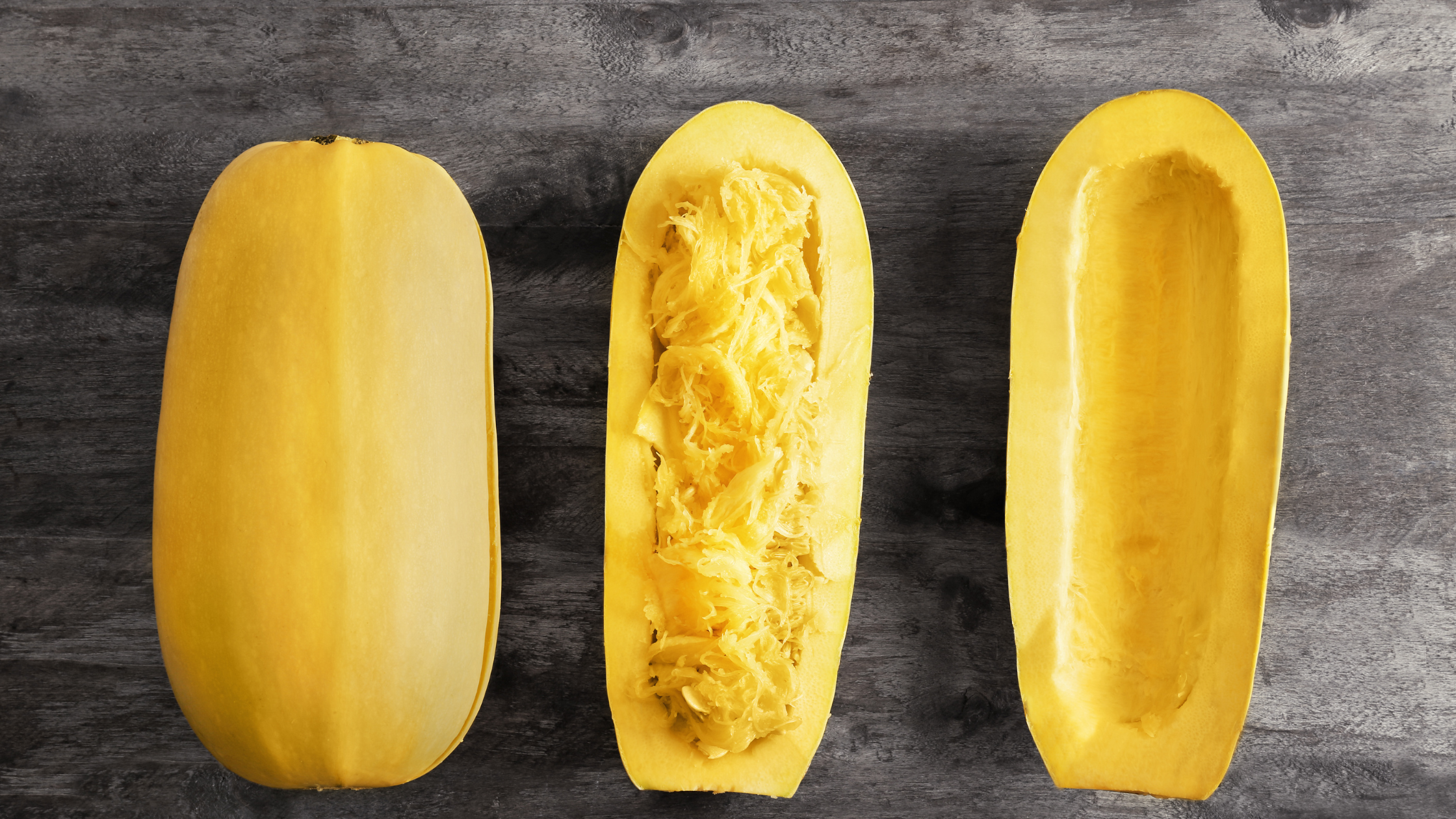
Spaghetti Squash
In the realm of versatile vegetables, spaghetti squash stands out as a unique and flavorful addition to any culinary repertoire. Renowned for its pasta-like strands and subtle sweetness, this vegetable has gained popularity not only for its taste but also for its nutritional benefits. From its intriguing history to its diverse applications in both Eastern and Western cuisine, spaghetti squash offers a delightful journey through culinary exploration and healthful eating.
History
The origins of spaghetti squash trace back to Mesoamerica, where it was first cultivated by indigenous peoples. Early records suggest that it was introduced to Europe in the late 15th century by explorers returning from the New World. However, its rise to culinary fame in Western cuisine occurred much later, around the late 20th century, as health-conscious consumers sought alternatives to traditional pasta dishes.
Health Benefits
Spaghetti squash is distinguished by its unique texture, which is a result of its composition of long, thin strands within its flesh. This characteristic arises primarily from its high water content and distinctive fibrous structure. Upon cooking, the flesh of the squash separates into stringy strands that resemble spaghetti noodles, which is the origin of its name.
Nutritionally, spaghetti squash is a powerhouse, offering numerous health benefits. It is low in both calories and carbohydrates, making it an excellent option for those looking to manage their weight or regulate their blood sugar levels. Furthermore, it is abundant in essential vitamins and minerals, such as vitamin C, vitamin A, potassium, and fiber, all of which contribute to overall health and well-being.
[/et_pb_text][/et_pb_column][/et_pb_row][/et_pb_section][et_pb_section fb_built=”1″ _builder_version=”4.27.4″ _module_preset=”default” background_color=”#F2F2F2″ custom_padding=”30px||4px||false|false” global_colors_info=”{}”][et_pb_row _builder_version=”4.27.4″ _module_preset=”default” custom_margin=”-12px|auto||auto||” custom_padding=”0px||0px|||” global_colors_info=”{}”][et_pb_column type=”4_4″ _builder_version=”4.27.4″ _module_preset=”default” global_colors_info=”{}”][et_pb_heading title=”Best Preparation Methods ” _builder_version=”4.27.4″ _module_preset=”default” title_level=”h2″ title_text_color=”#000000″ custom_margin=”||10px||false|false” global_colors_info=”{}”][/et_pb_heading][/et_pb_column][/et_pb_row][et_pb_row column_structure=”2_3,1_3″ _builder_version=”4.27.4″ _module_preset=”default” custom_margin=”-10px|auto||auto||” custom_padding=”4px||11px|||” global_colors_info=”{}”][et_pb_column type=”2_3″ _builder_version=”4.27.4″ _module_preset=”default” global_colors_info=”{}”][et_pb_text _builder_version=”4.27.4″ _module_preset=”default” text_text_color=”#000000″ text_font_size=”17px” custom_margin=”-4px|||||” global_colors_info=”{}”]Spaghetti squash is a versatile ingredient in the culinary world, celebrated for its unique ability to transform into stringy, noodle-like strands when cooked. This characteristic makes it an excellent substitute for traditional pasta in a variety of dishes, allowing for healthier, low-carbohydrate meals. It can be served simply with marinara sauce, sautéed vegetables, or incorporated into casseroles and salads, providing a nutritious base that absorbs flavors well. Additionally, spaghetti squash can be used in soups and stews, adding texture and bulk while contributing essential vitamins and minerals.
[/et_pb_text][et_pb_image src=”https://www.immortalme.com/wp-content/uploads/2025/01/Spaghetti-Squash-Food.png” title_text=”Spaghetti Squash Food” _builder_version=”4.27.4″ _module_preset=”default” border_radii=”on|6px|6px|6px|6px” box_shadow_style=”preset1″ box_shadow_spread=”3px” box_shadow_color=”#84776C” global_colors_info=”{}”][/et_pb_image][/et_pb_column][et_pb_column type=”1_3″ _builder_version=”4.27.4″ _module_preset=”default” global_colors_info=”{}”][et_pb_image src=”https://www.immortalme.com/wp-content/uploads/2025/01/Spaghetti-Squash.png” title_text=”Spaghetti Squash” _builder_version=”4.27.4″ _module_preset=”default” border_radii=”on|6px|6px|6px|6px” box_shadow_style=”preset1″ box_shadow_spread=”3px” box_shadow_color=”#84776C” global_colors_info=”{}”][/et_pb_image][/et_pb_column][/et_pb_row][/et_pb_section][et_pb_section fb_built=”1″ _builder_version=”4.27.4″ _module_preset=”default” background_color=”#F2F2F2″ custom_padding=”30px||4px|||” global_colors_info=”{}”][et_pb_row _builder_version=”4.27.4″ _module_preset=”default” custom_margin=”-26px|auto||auto||” custom_padding=”4px||2px|||” global_colors_info=”{}”][et_pb_column type=”4_4″ _builder_version=”4.27.4″ _module_preset=”default” global_colors_info=”{}”][et_pb_text _builder_version=”4.27.4″ _module_preset=”default” text_text_color=”#000000″ text_font_size=”17px” header_2_text_color=”#000000″ global_colors_info=”{}”]Precautions and Possible Side Effects
Spaghetti squash is generally safe for consumption; however, individuals with allergies to squash or related vegetables should exercise caution. Those with certain digestive disorders, such as irritable bowel syndrome (IBS), may experience discomfort or a worsening of symptoms after eating spaghetti squash. While rare, some people might encounter mild digestive issues, including bloating or gas, following its consumption. Allergic reactions are also possible for those with sensitivities to squash or similar vegetables. Notably, spaghetti squash is not known to interact with any medications or supplements. Nevertheless, individuals taking medications for blood sugar management should closely monitor their levels when incorporating spaghetti squash into their diet, as it may influence blood sugar levels.
[/et_pb_text][/et_pb_column][/et_pb_row][/et_pb_section][et_pb_section fb_built=”1″ admin_label=”Post Body” _builder_version=”4.27.4″ background_color=”#F2F2F2″ custom_padding=”29px||3px|||” locked=”off” global_colors_info=”{}”][et_pb_row _builder_version=”4.27.4″ _module_preset=”default” min_height=”44px” custom_margin=”-20px|auto||auto||” custom_padding=”8px||0px|||” global_colors_info=”{}”][et_pb_column type=”4_4″ _builder_version=”4.27.4″ _module_preset=”default” global_colors_info=”{}”][et_pb_heading title=”Eastern and Western Nutrition” _builder_version=”4.27.4″ _module_preset=”default” title_level=”h2″ title_text_color=”#000000″ custom_margin=”||10px||false|false” global_colors_info=”{}”][/et_pb_heading][/et_pb_column][/et_pb_row][et_pb_row column_structure=”1_2,1_2″ _builder_version=”4.27.4″ custom_margin=”-11px|auto||auto||” custom_padding=”0px||9px|||” locked=”off” global_colors_info=”{}”][et_pb_column type=”1_2″ _builder_version=”4.16″ global_colors_info=”{}”][et_pb_text _builder_version=”4.27.4″ _module_preset=”default” text_text_color=”#000000″ text_font_size=”17px” global_colors_info=”{}”]In Western cuisine, spaghetti squash is frequently employed as a pasta substitute in dishes such as spaghetti squash primavera, carbonara, and lasagna, thanks to its mild flavor and versatile texture, which appeal to both health-conscious individuals and culinary enthusiasts. Although less commonly used in Eastern cuisine, spaghetti squash can still be incorporated into various dishes that emphasize fresh vegetables and light flavors; its delicate strands add a unique twist to stir-fries, soups, and salads.
Furthermore, in Traditional Chinese Medicine (TCM), squash, including spaghetti squash, is thought to nourish the spleen and stomach meridians, thereby promoting digestion and overall vitality. Its sweet flavor and yellow-orange hue are associated with the Earth element in TCM, symbolizing balance and harmony within the body.
[/et_pb_text][/et_pb_column][et_pb_column type=”1_2″ _builder_version=”4.16″ global_colors_info=”{}”][et_pb_image src=”https://www.immortalme.com/wp-content/uploads/2025/02/Screenshot-2025-02-11-140651.png” title_text=”Screenshot 2025-02-11 140651″ _builder_version=”4.27.4″ _module_preset=”default” border_radii=”on|6px|6px|6px|6px” box_shadow_style=”preset2″ global_colors_info=”{}”][/et_pb_image][/et_pb_column][/et_pb_row][/et_pb_section][et_pb_section fb_built=”1″ _builder_version=”4.27.4″ _module_preset=”default” background_color=”#F2F2F2″ custom_padding=”30px||4px|||” global_colors_info=”{}”][et_pb_row _builder_version=”4.27.4″ _module_preset=”default” min_height=”146.2px” custom_margin=”-21px|auto||auto||” custom_padding=”4px||0px|||” global_colors_info=”{}”][et_pb_column type=”4_4″ _builder_version=”4.27.4″ _module_preset=”default” global_colors_info=”{}”][et_pb_text _builder_version=”4.27.4″ _module_preset=”default” text_text_color=”#000000″ text_font_size=”17px” header_2_text_color=”#000000″ custom_padding=”||10px|||” global_colors_info=”{}”]Final Thoughts
Spaghetti squash is more than just a vegetable; it is a culinary canvas waiting to be explored. With its intriguing history, nutritional benefits, and versatile applications, spaghetti squash offers a deliciously wholesome addition to any meal. Whether enjoyed in Western-inspired pasta dishes or Eastern-inspired stir-fries, this humble vegetable continues to captivate taste buds and promote wellness around the world.
[/et_pb_text][et_pb_divider color=”#84776C” divider_weight=”2px” _builder_version=”4.27.4″ _module_preset=”default” global_colors_info=”{}”][/et_pb_divider][/et_pb_column][/et_pb_row][et_pb_row _builder_version=”4.27.4″ _module_preset=”default” custom_margin=”-14px|auto||auto||” custom_padding=”37px||40px|||” global_colors_info=”{}”][et_pb_column type=”4_4″ _builder_version=”4.27.4″ _module_preset=”default” global_colors_info=”{}”][et_pb_toggle title=”References” open_toggle_background_color=”#FFFFFF” closed_toggle_background_color=”#FFFFFF” icon_color=”#84776C” toggle_icon=”||fa||900″ use_icon_font_size=”on” icon_font_size=”25px” open_icon_color=”#E02B20″ open_toggle_icon=”||fa||900″ open_use_icon_font_size=”on” open_icon_font_size=”25px” _builder_version=”4.27.4″ _module_preset=”default” title_text_color=”#000000″ title_font=”Cormorant Garamond||||||||” title_text_align=”left” title_font_size=”20px” text_orientation=”left” custom_margin=”||3px|||” custom_padding=”|||20px|false|false” border_radii=”on|6px|6px|6px|6px” box_shadow_style=”preset1″ box_shadow_spread=”3px” box_shadow_color=”#84776C” global_colors_info=”{}”]Fasuan, T., Anyiam, C., Ojokoh, L., Chima, J., Olagunju, T., Okpara, K., … & Asadu, K. (2021). Optimized spaghetti pasta from amaranth, partially deoiled sesame and modified sorghum starch composite: bioactive, nutritional and physico-functional characterization. Nutrition & Food Science, 51(6), 974-988. https://doi.org/10.1108/nfs-09-2020-0360
Wadas, W., Mioduszewska, H., & Kalinowski, K. (2012). Effects of selected agronomical factors on the content of health-promoting compounds in spaghetti squash (cucurbita pepo l. subsp. pepo). Folia Horticulturae, 24(1), 33-39. https://doi.org/10.2478/v10245-012-0004-2
MyFoodData. (n.d.). *Spaghetti squash nutrition facts and health benefits*. Retrieved January 6, 2025, from https://tools.myfooddata.com/nutrition-facts/169298/wt1/1
[/et_pb_toggle][/et_pb_column][/et_pb_row][/et_pb_section][et_pb_section fb_built=”1″ _builder_version=”4.27.4″ _module_preset=”default” background_color=”#84776C” hover_enabled=”0″ global_colors_info=”{}” custom_margin=”||-60px||false|false” custom_padding=”||60px||false|false” sticky_enabled=”0″][et_pb_row _builder_version=”4.27.4″ _module_preset=”default” custom_padding=”9px|||||” global_colors_info=”{}”][et_pb_column type=”4_4″ _builder_version=”4.27.4″ _module_preset=”default” global_colors_info=”{}”][et_pb_heading title=”More Articles You May Like” _builder_version=”4.27.4″ _module_preset=”default” title_text_color=”#FFFFFF” global_colors_info=”{}”][/et_pb_heading][et_pb_divider color=”#F2F2F2″ divider_weight=”2px” _builder_version=”4.27.4″ _module_preset=”default” global_colors_info=”{}”][/et_pb_divider][et_pb_blog_extras posts_number=”12″ include_categories=”57,19,56″ blog_layout=”slider” slider_layout=”vertical_grid” excerpt_length=”600″ show_author=”off” show_date=”off” category_color=”#2533ab” category_background_color=”RGBA(255,255,255,0)” show_comments=”off” content_color=”#000000″ slider_loop=”on” _builder_version=”4.27.4″ _module_preset=”default” header_text_color=”#000000″ body_text_color=”#000000″ meta_text_color=”#000000″ border_radii=”on|10px|10px|10px|10px” border_width_all=”2px” border_color_all=”rgba(242,242,242,0.32)” box_shadow_style=”preset2″ box_shadow_blur=”28px” box_shadow_color=”rgba(0,0,0,0.53)” global_colors_info=”{}”][/et_pb_blog_extras][/et_pb_column][/et_pb_row][et_pb_row _builder_version=”4.27.4″ _module_preset=”default” background_color=”#FFFFFF” border_radii=”on|6px|6px|6px|6px” global_colors_info=”{}” theme_builder_area=”post_content”][et_pb_column type=”4_4″ _builder_version=”4.27.4″ _module_preset=”default” global_colors_info=”{}” theme_builder_area=”post_content”][et_pb_text _builder_version=”4.27.4″ _module_preset=”default” text_text_color=”#84776C” text_font_size=”12px” text_line_height=”1.5em” header_font=”|300|||||||” header_font_size=”25px” header_4_font=”–et_global_heading_font||||||||” header_4_text_color=”#84776C” custom_padding=”|17px||17px|false|false” global_colors_info=”{}” theme_builder_area=”post_content”]Medical Disclaimer
The information provided in this document is intended for educational and informational purposes only and should not be construed as medical advice, diagnosis, or treatment. It is essential to consult a qualified healthcare professional for any medical concerns or conditions. The content herein does not substitute for professional medical advice, and individuals should not disregard or delay seeking medical advice based on the information provided.
The authors and publishers of this document do not assume any responsibility for any adverse effects or consequences resulting from the use or application of the information contained herein. The reader is encouraged to conduct their own research and consult with healthcare providers to make informed decisions regarding their health and treatment options. Furthermore, the information presented may not reflect the most current research or medical guidelines, as medical knowledge is continually evolving. Therefore, it is imperative to verify the information with up-to-date, peer-reviewed sources and consult with medical professionals for personalized advice.
[/et_pb_text][/et_pb_column][/et_pb_row][/et_pb_section]