Apricots
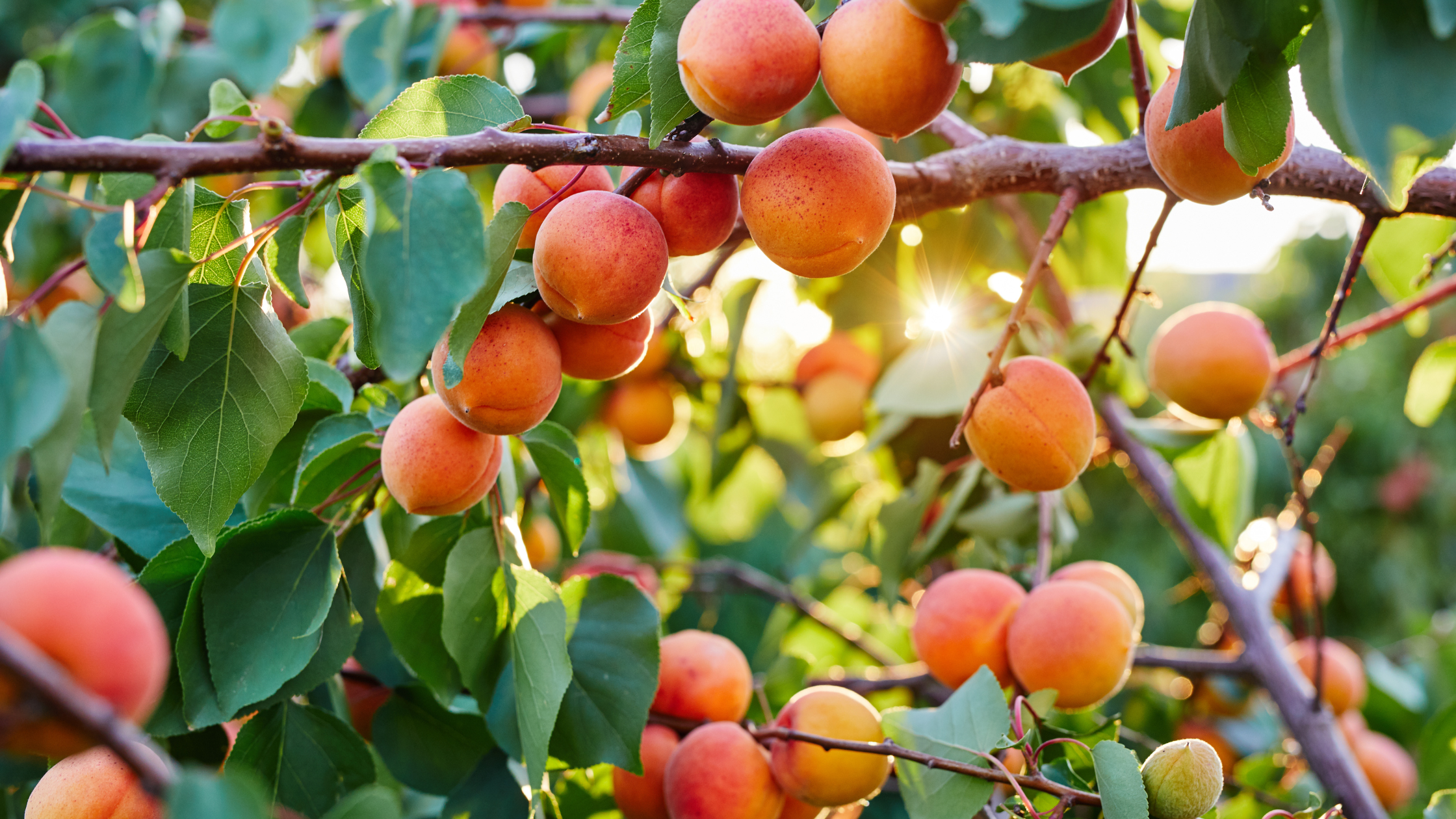
Apricots, with their tantalizingly sweet taste and vibrant color, have long been cherished for their delightful flavor and impressive nutritional profile. These small, golden-orange fruits are not only delicious but also offer a plethora of health benefits, making them a popular choice in both Eastern and Western cuisines. From their intriguing history to their versatile applications, apricots hold a special place in the realm of fruits.
[/et_pb_text][et_pb_heading title=”History” _builder_version=”4.27.4″ _module_preset=”default” title_level=”h2″ title_text_color=”#000000″ custom_margin=”||10px||false|false” global_colors_info=”{}”][/et_pb_heading][et_pb_text _builder_version=”4.27.4″ _module_preset=”default” text_text_color=”#000000″ text_font_size=”17px” global_colors_info=”{}”]The apricot (Prunus armeniaca) is believed to have originated in China, where it has been cultivated for over 4,000 years. From there, it spread to other parts of Asia, including India, Persia (modern-day Iran), and the Mediterranean region. The name “apricot” is derived from the Latin word “praecox,” meaning early, as apricots are among the first fruits to ripen in the spring.
[/et_pb_text][et_pb_heading title=”Health Benefits” _builder_version=”4.27.4″ _module_preset=”default” title_level=”h2″ title_text_color=”#000000″ custom_margin=”||10px||false|false” custom_padding=”||||false|false” global_colors_info=”{}”][/et_pb_heading][et_pb_text _builder_version=”4.27.4″ _module_preset=”default” text_text_color=”#000000″ text_font_size=”17px” global_colors_info=”{}”]Apricots are rich in essential nutrients, including vitamins A and C, potassium, and dietary fiber. Vitamin A supports healthy vision, skin, and immune function, while vitamin C serves as an antioxidant, protecting cells from damage caused by free radicals. Potassium helps regulate blood pressure and muscle function, and fiber promotes digestive health. Apricots are abundant in antioxidants, such as beta-carotene and vitamins A and C, which help protect cells from oxidative stress and lower the risk of chronic diseases. The potassium content in apricots contributes to heart health by regulating blood pressure and reducing the risk of stroke and heart disease. Additionally, the fiber in apricots aids digestion, promotes regular bowel movements, and helps prevent constipation. Vitamin A is crucial for maintaining healthy vision and may reduce the risk of age-related macular degeneration. Furthermore, vitamin C in apricots promotes collagen production, which is vital for maintaining healthy skin, reducing signs of aging, and supporting wound healing.
[/et_pb_text][/et_pb_column][/et_pb_row][/et_pb_section][et_pb_section fb_built=”1″ _builder_version=”4.27.4″ _module_preset=”default” background_color=”#F2F2F2″ custom_padding=”28px||31px||false|false” global_colors_info=”{}”][et_pb_row _builder_version=”4.27.4″ _module_preset=”default” custom_margin=”-26px|auto||auto||” custom_padding=”7px||0px|||” global_colors_info=”{}”][et_pb_column type=”4_4″ _builder_version=”4.27.4″ _module_preset=”default” global_colors_info=”{}”][et_pb_heading title=”Best Preparation Methods ” _builder_version=”4.27.4″ _module_preset=”default” title_level=”h2″ title_text_color=”#000000″ global_colors_info=”{}”][/et_pb_heading][/et_pb_column][/et_pb_row][et_pb_row column_structure=”2_3,1_3″ _builder_version=”4.27.4″ _module_preset=”default” custom_margin=”4px|auto||auto||” custom_padding=”11px|||||” global_colors_info=”{}”][et_pb_column type=”2_3″ _builder_version=”4.27.4″ _module_preset=”default” global_colors_info=”{}”][et_pb_text _builder_version=”4.27.4″ _module_preset=”default” text_text_color=”#000000″ text_font_size=”17px” global_colors_info=”{}”]Depending on your intended use, you can slice apricots in half to remove the pit or leave them whole for certain recipes. Fresh apricots can be enjoyed as a nutritious snack, added to salads for a sweet touch, or blended into smoothies. They are also commonly used in baking, making delicious desserts such as pies, tarts, and crumbles. Additionally, apricots can be dried for long-term storage, allowing them to be used in trail mixes, granola bars, or as a topping for yogurt and cereals. Their sweet and slightly tart flavor, combined with their rich nutrient profile, makes apricots a versatile ingredient in both sweet and savory dishes.
[/et_pb_text][et_pb_image src=”https://www.immortalme.com/wp-content/uploads/2024/12/Apricots-food.png” title_text=”Apricots food” _builder_version=”4.27.4″ _module_preset=”default” border_radii=”on|6px|6px|6px|6px” box_shadow_style=”preset1″ box_shadow_spread=”3px” box_shadow_color=”#84776C” global_colors_info=”{}”][/et_pb_image][/et_pb_column][et_pb_column type=”1_3″ _builder_version=”4.27.4″ _module_preset=”default” global_colors_info=”{}”][et_pb_image src=”https://www.immortalme.com/wp-content/uploads/2024/12/Apricots-1.png” title_text=”Apricots” _builder_version=”4.27.4″ _module_preset=”default” border_radii=”on|6px|6px|6px|6px” box_shadow_style=”preset1″ box_shadow_spread=”3px” box_shadow_color=”#84776C” global_colors_info=”{}”][/et_pb_image][/et_pb_column][/et_pb_row][et_pb_row _builder_version=”4.27.4″ _module_preset=”default” custom_padding=”5px||7px|||” global_colors_info=”{}”][et_pb_column type=”4_4″ _builder_version=”4.27.4″ _module_preset=”default” global_colors_info=”{}”][et_pb_heading title=”Precautions and Possible Side Effects” _builder_version=”4.27.4″ _module_preset=”default” title_level=”h2″ title_text_color=”#000000″ custom_margin=”||10px||false|false” global_colors_info=”{}”][/et_pb_heading][et_pb_text _builder_version=”4.27.4″ _module_preset=”default” text_text_color=”#000000″ text_font_size=”17px” global_colors_info=”{}”]While apricots offer numerous health benefits, individuals with certain health conditions should consume them cautiously. Apricots contain moderate levels of oxalates, which may contribute to kidney stone formation in susceptible individuals. Additionally, individuals allergic to fruits in the Rosaceae family, such as peaches and almonds, may experience allergic reactions to apricots. Generally safe for consumption, excessive intake may lead to digestive discomfort, such as bloating or diarrhea, due to their high fiber content. Additionally, consuming apricot kernels in large quantities can be toxic due to the presence of amygdalin, which can release cyanide when metabolized. Apricots may interact with certain medications, such as potassium-sparing diuretics and ACE inhibitors used to treat hypertension. Individuals taking these medications should consult with their healthcare provider before consuming large amounts of apricots or apricot products.
[/et_pb_text][/et_pb_column][/et_pb_row][/et_pb_section][et_pb_section fb_built=”1″ admin_label=”Post Body” _builder_version=”4.27.4″ background_color=”#F2F2F2″ min_height=”702.2px” custom_padding=”31px||50px|||” locked=”off” global_colors_info=”{}”][et_pb_row _builder_version=”4.27.4″ _module_preset=”default” custom_margin=”-36px|auto||auto||” custom_padding=”7px||0px|||” global_colors_info=”{}”][et_pb_column type=”4_4″ _builder_version=”4.27.4″ _module_preset=”default” global_colors_info=”{}”][et_pb_text _builder_version=”4.27.4″ _module_preset=”default” text_text_color=”#000000″ text_font_size=”17px” header_2_text_color=”#000000″ global_colors_info=”{}”]Eastern and Western Nutrition
[/et_pb_text][/et_pb_column][/et_pb_row][et_pb_row column_structure=”1_2,1_2″ _builder_version=”4.27.4″ custom_margin=”4px|auto||auto||” custom_padding=”11px||11px|||” locked=”off” global_colors_info=”{}”][et_pb_column type=”1_2″ _builder_version=”4.16″ global_colors_info=”{}”][et_pb_text _builder_version=”4.27.4″ _module_preset=”default” text_text_color=”#000000″ text_font_size=”17px” global_colors_info=”{}”]In traditional Chinese medicine (TCM), apricots are revered for their cooling properties and are associated with the Lung and Large Intestine meridians. They are believed to soothe coughs, moisten the lungs, and relieve constipation, making them a popular choice for respiratory and digestive health Ortuño-Hernández et al. (2024). The Lung meridian is particularly significant as it governs respiratory function and skin health, while the Large Intestine meridian is crucial for digestion and elimination. Apricot kernels, known for their medicinal properties, are also utilized in TCM; however, caution is advised due to their potential cyanide content.
In Western nutrition, apricots are celebrated for their sweet flavor and nutritional benefits, being rich in vitamins A and C, dietary fiber, and essential minerals such as potassium and magnesium. They are commonly incorporated into a variety of culinary applications, including desserts, preserves, and savory dishes, and are also used in natural remedies for various health conditions. The antioxidant properties of apricots, attributed to their high content of carotenoids and polyphenols, contribute to their role in reducing oxidative stress and inflammation, thus supporting overall health. Furthermore, dried apricots are a popular snack, providing a concentrated source of nutrients and energy, making them a functional food choice in both Eastern and Western diets.
[/et_pb_text][/et_pb_column][et_pb_column type=”1_2″ _builder_version=”4.16″ global_colors_info=”{}”][et_pb_image src=”https://www.immortalme.com/wp-content/uploads/2025/02/apricots.jpg” title_text=”apricots” _builder_version=”4.27.4″ _module_preset=”default” border_radii=”on|6px|6px|6px|6px” box_shadow_style=”preset2″ global_colors_info=”{}”][/et_pb_image][/et_pb_column][/et_pb_row][/et_pb_section][et_pb_section fb_built=”1″ _builder_version=”4.27.4″ _module_preset=”default” background_color=”#F2F2F2″ min_height=”296.2px” custom_margin=”-35px|||||” custom_padding=”29px||25px|||” global_colors_info=”{}”][et_pb_row _builder_version=”4.27.4″ _module_preset=”default” min_height=”159.2px” custom_margin=”-22px|auto||auto||” custom_padding=”10px||11px|||” global_colors_info=”{}”][et_pb_column type=”4_4″ _builder_version=”4.27.4″ _module_preset=”default” global_colors_info=”{}”][et_pb_heading title=”Final Thoughts” _builder_version=”4.27.4″ _module_preset=”default” title_level=”h2″ title_text_color=”#000000″ custom_margin=”||10px||false|false” global_colors_info=”{}”][/et_pb_heading][et_pb_text _builder_version=”4.27.4″ _module_preset=”default” text_text_color=”#000000″ text_font_size=”17px” global_colors_info=”{}”]Apricots are not only a delicious and versatile fruit but also a nutritional powerhouse, offering an array of health benefits. Whether enjoyed fresh, dried, or cooked, apricots can be a delightful addition to any diet. However, individuals should be mindful of potential allergic reactions, interactions with medications, and the cyanide content in apricot kernels. By incorporating apricots into a balanced diet, one can savor their sweetness while reaping the rewards of their remarkable nutritional value.
[/et_pb_text][/et_pb_column][/et_pb_row][et_pb_row _builder_version=”4.27.4″ _module_preset=”default” custom_padding=”22px||0px|||” global_colors_info=”{}”][et_pb_column type=”4_4″ _builder_version=”4.27.4″ _module_preset=”default” global_colors_info=”{}”][et_pb_divider color=”#84776C” divider_weight=”2px” _builder_version=”4.27.4″ _module_preset=”default” global_colors_info=”{}”][/et_pb_divider][et_pb_toggle title=”References” open_toggle_background_color=”#FFFFFF” closed_toggle_background_color=”#FFFFFF” icon_color=”#84776C” toggle_icon=”||fa||900″ use_icon_font_size=”on” icon_font_size=”25px” open_icon_color=”#E02B20″ open_toggle_icon=”||fa||900″ open_use_icon_font_size=”on” open_icon_font_size=”25px” _builder_version=”4.27.4″ _module_preset=”default” title_text_color=”#000000″ title_font=”Cormorant Garamond||||||||” title_text_align=”left” title_font_size=”20px” text_orientation=”left” custom_margin=”||42px|||” custom_padding=”|||20px|false|false” hover_enabled=”0″ border_radii=”on|6px|6px|6px|6px” box_shadow_style=”preset1″ box_shadow_color=”#84776C” global_colors_info=”{}” sticky_enabled=”0″]Akbaba, M.,et al. (2023). In vitro evaluation of apricot cultivars response to pseudomonas syringae pathovars: image processing as an alternative method. Tarım Bilimleri Dergisi. https://doi.org/10.15832/ankutbd.1217921
Akhone, M., et al.(2022). Apricot kernel: bioactivity, characterization, applications, and health attributes. Foods, 11(15), 2184. https://doi.org/10.3390/foods11152184
Demirel, Bahadır, et al. “Development of a newly designed hydraulic type briquetting machine used in briquetting of apricot (prunus armeniaca) plant residues at different compaction pressures”. Polish Journal of Environmental Studies, vol. 33, no. 1, 2023, p. 591-598. https://doi.org/10.15244/pjoes/171981
Fahmi, A. et al.(2022). Efficacy of prunus armeniaca on oral squamous cell carcinoma cell line: an ex- vivo study.. https://doi.org/10.21203/rs.3.rs-1443289/v1
Franke, A., et al. (2005). Bioavailability and antioxidant effects of orange juice components in humans. Journal of Agricultural and Food Chemistry, 53(13), 5170-5178. https://doi.org/10.1021/jf050054y
Gündoğdu, M. (2019). Effect of rootstocks on phytochemical properties of apricot fruit. Turkish Journal of Agriculture and Forestry, 43(1), 1-10. https://doi.org/10.3906/tar-1803-99
Gupta, S., et al. (2018). Medicinal value of apricot: a review. Indian Journal of Pharmaceutical Sciences, 80(5). https://doi.org/10.4172/pharmaceutical-sciences.1000423
Hussain, T., et al. (2023). Identification of nutritional composition and antioxidant activities of fruit peels as a potential source of nutraceuticals. Frontiers in Nutrition, 9. https://doi.org/10.3389/fnut.2022.1065698
Jaafar, H. (2021). Effects of apricot and apricot kernels on human health and nutrition: a review of recent human research. Technium Biochemmed, 2(2), 139-162. https://doi.org/10.47577/biochemmed.v2i2.4328
Kitić, D., et al. (2022). Anticancer potential and other pharmacological properties of prunus armeniaca l.: an updated overview. Plants, 11(14), 1885. https://doi.org/10.3390/plants11141885
Kopčeková, J., et al. (2017). Effect of short-term consumption bitter apricot seeds on the body composition in healthy population. Potravinarstvo Slovak Journal of Food Sciences, 11(1), 151-155. https://doi.org/10.5219/718
Lee, H., et al. (2014). Chemical composition and antimicrobial activity of the essential oil of apricot seed. Phytotherapy Research, 28(12), 1867-1872. https://doi.org/10.1002/ptr.5219
Manzoor, M., et al. (2012). Physico-chemical characteristics of seed oils extracted from different apricot (<i>prunus armeniaca</i> l.) varieties from pakistan. Grasas Y Aceites, 63(2), 193-201. https://doi.org/10.3989/gya.095011
Melyan, G. and Santrosyan, G. (2024). In vitro propagation of stone fruit rootstock cultivar evrica 99 and its influence on some phytochemical traits of fresh apricot fruit. Functional Foods in Health and Disease, 14(2), 128-142. https://doi.org/10.31989/ffhd.v14i2.1317
Miao, X., et al. (2014). Acute toxicity of refined wild apricot oil in rats. Scienceasia, 40(5), 323. https://doi.org/10.2306/scienceasia1513-1874.2014.40.323
Michalcová, K., et al (2016). Blood plasma levels of anterior pituitary hormones of rabbits after apricot seed exposure in vivo. Journal of Central European Agriculture, 17(4), 1241-1252. https://doi.org/10.5513/jcea01/17.4.1838
Nafis, A., et al. (2020). A comparative study of the in vitro antimicrobial and synergistic effect of essential oils from laurus nobilis l. and prunus armeniaca l. from morocco with antimicrobial drugs: new approach for health promoting products. Antibiotics, 9(4), 140. https://doi.org/10.3390/antibiotics9040140
Sun, J., Zhao, C., Pu, X., Li, T., Shi, X., Wang, B., … & Cheng, W. (2022). Flavor and functional analysis of lactobacillus plantarum fermented apricot juice. Fermentation, 8(10), 533. https://doi.org/10.3390/fermentation8100533
Vehapoğlu, A., Çakır, E., Uzuner, S., Çalım, Ö., & Yazan, H. (2021). A rare presentation of acquired laryngomalacia and tracheomalacia in a child associated with apricot sulfurization. Turkish Archives of Otorhinolaryngology, 58(4), 286-288. https://doi.org/10.5152/tao.2020.5398
Xu, W., et al. (2021). Genome-wide identification and expression analysis of nac transcription factor family genes during fruit and kernel development in siberian apricot. Journal of the American Society for Horticultural Science, 146(4), 276-285. https://doi.org/10.21273/jashs05007-20
MyFoodData. (n.d.). Nutrition facts for food item: WT1. Retrieved December 10, 2024, from https://tools.myfooddata.com/nutrition-facts/171697/wt1/1
[/et_pb_toggle][/et_pb_column][/et_pb_row][/et_pb_section][et_pb_section fb_built=”1″ _builder_version=”4.27.4″ _module_preset=”default” background_color=”#84776C” custom_margin=”||-60px||false|false” custom_padding=”35px||60px||false|false” global_colors_info=”{}”][et_pb_row _builder_version=”4.27.4″ _module_preset=”default” global_colors_info=”{}”][et_pb_column type=”4_4″ _builder_version=”4.27.4″ _module_preset=”default” global_colors_info=”{}”][et_pb_heading title=”More Articles You May Like” _builder_version=”4.27.4″ _module_preset=”default” title_text_color=”#FFFFFF” global_colors_info=”{}”][/et_pb_heading][et_pb_divider color=”#F2F2F2″ divider_weight=”2px” _builder_version=”4.27.4″ _module_preset=”default” global_colors_info=”{}”][/et_pb_divider][et_pb_blog_extras posts_number=”12″ include_categories=”57,19,56″ blog_layout=”slider” slider_layout=”vertical_grid” excerpt_length=”600″ show_author=”off” show_date=”off” category_color=”#2533ab” category_background_color=”RGBA(255,255,255,0)” show_comments=”off” content_color=”#000000″ slider_loop=”on” _builder_version=”4.27.4″ _module_preset=”default” header_text_color=”#000000″ body_text_color=”#000000″ meta_text_color=”#000000″ border_radii=”on|10px|10px|10px|10px” border_width_all=”2px” border_color_all=”rgba(242,242,242,0.32)” box_shadow_style=”preset2″ box_shadow_blur=”28px” box_shadow_color=”rgba(0,0,0,0.53)” global_colors_info=”{}”][/et_pb_blog_extras][/et_pb_column][/et_pb_row][et_pb_row _builder_version=”4.27.4″ _module_preset=”default” background_color=”#FFFFFF” border_radii=”on|6px|6px|6px|6px” global_colors_info=”{}”][et_pb_column type=”4_4″ _builder_version=”4.27.4″ _module_preset=”default” global_colors_info=”{}”][et_pb_text _builder_version=”4.27.4″ _module_preset=”default” text_text_color=”#84776C” text_font_size=”12px” text_line_height=”1.5em” header_font=”|300|||||||” header_font_size=”25px” header_4_font=”–et_global_heading_font||||||||” header_4_text_color=”#84776C” custom_padding=”|17px||17px|false|false” global_colors_info=”{}”]Medical Disclaimer
The information provided in this document is intended for educational and informational purposes only and should not be construed as medical advice, diagnosis, or treatment. It is essential to consult a qualified healthcare professional for any medical concerns or conditions. The content herein does not substitute for professional medical advice, and individuals should not disregard or delay seeking medical advice based on the information provided.
The authors and publishers of this document do not assume any responsibility for any adverse effects or consequences resulting from the use or application of the information contained herein. The reader is encouraged to conduct their own research and consult with healthcare providers to make informed decisions regarding their health and treatment options. Furthermore, the information presented may not reflect the most current research or medical guidelines, as medical knowledge is continually evolving. Therefore, it is imperative to verify the information with up-to-date, peer-reviewed sources and consult with medical professionals for personalized advice.
[/et_pb_text][/et_pb_column][/et_pb_row][/et_pb_section]