Artichokes
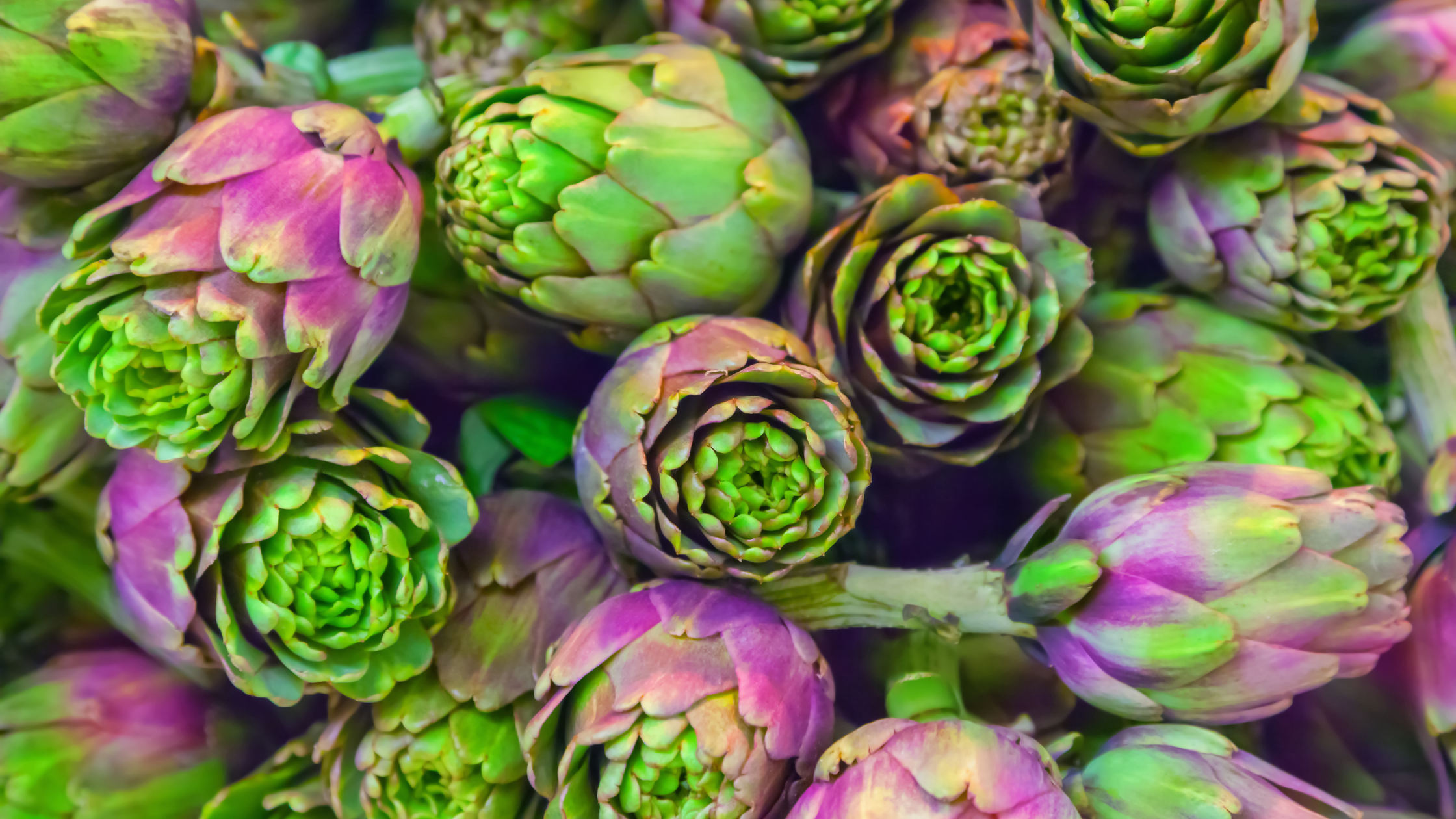
Artichokes, known as Cynara scolymus L., are a perennial herbaceous plant belonging to the Asteraceae. Native to the Mediterranean region, artichokes are widely cultivated worldwide for their large immature inflorescences, called capitula, which consist of fleshy leaves (bracts) and a receptacle that are commonly consumed as a vegetable. Artichokes are renowned for their unique flavor, nutritional profile, and potential health benefits.
[/et_pb_text][et_pb_heading title=”History” _builder_version=”4.27.4″ _module_preset=”default” custom_margin=”-7px||10px||false|false” custom_padding=”8px|||||” hover_enabled=”0″ global_colors_info=”{}” title_level=”h2″ title_text_color=”#000000″ sticky_enabled=”0″][/et_pb_heading][et_pb_text _builder_version=”4.27.4″ _module_preset=”default” text_text_color=”#000000″ text_font_size=”17px” hover_enabled=”0″ global_colors_info=”{}” sticky_enabled=”0″ custom_margin=”||15px|||”]Artichokes have a long and rich history, with records of their cultivation dating back to ancient Greek and Roman. The plant was initially used for medicinal purposes, with ancient scholars such as Pliny the Elder and Dioscorides describing its use in treating liver and digestive disorders. Over time, artichokes became an integral part of the traditional Mediterranean diet, gaining popularity as a culinary delicacy.
[/et_pb_text][et_pb_heading title=”Health Benefits” _builder_version=”4.27.4″ _module_preset=”default” custom_margin=”11px||10px||false|false” custom_padding=”||||false|false” hover_enabled=”0″ global_colors_info=”{}” title_level=”h2″ title_text_color=”#000000″ sticky_enabled=”0″][/et_pb_heading][et_pb_text _builder_version=”4.27.4″ _module_preset=”default” text_text_color=”#000000″ text_font_size=”17px” global_colors_info=”{}”]Artichokes are a rich source of various bioactive compounds, including polyphenols, flavonoids, and caffeoylquinic acids, which contribute to their numerous health benefits. Studies have demonstrated the antioxidant, anti-inflammatory properties of artichoke extracts. Additionally, artichokes have been shown to possess hypoglycemic, hypolipidemic, and cardioprotective effects, making them a valuable addition to a healthy diet.
[/et_pb_text][/et_pb_column][/et_pb_row][/et_pb_section][et_pb_section fb_built=”1″ _builder_version=”4.27.4″ _module_preset=”default” background_color=”#F2F2F2″ custom_padding=”27px||8px||false|false” global_colors_info=”{}”][et_pb_row _builder_version=”4.27.4″ _module_preset=”default” custom_padding=”8px||2px|||” custom_margin=”-32px|auto||auto||”][et_pb_column _builder_version=”4.27.4″ _module_preset=”default” type=”4_4″][et_pb_heading title=”Best Preparation Methods” _builder_version=”4.27.4″ _module_preset=”default” title_level=”h2″ title_text_color=”#000000″ hover_enabled=”0″ sticky_enabled=”0″][/et_pb_heading][/et_pb_column][/et_pb_row][et_pb_row column_structure=”2_3,1_3″ _builder_version=”4.27.4″ _module_preset=”default” custom_padding=”5px||12px|||” global_colors_info=”{}” custom_margin=”4px|auto||auto||”][et_pb_column type=”2_3″ _builder_version=”4.27.4″ _module_preset=”default” global_colors_info=”{}”][et_pb_text _builder_version=”4.27.4″ _module_preset=”default” text_text_color=”#000000″ text_font_size=”17px” global_colors_info=”{}”]Artichokes are prepared by first trimming the tough outer leaves and cutting off the top of the bud to expose the tender inner leaves. The trimmed artichokes can be steamed, boiled, or roasted until they are tender, which typically takes about 30 to 45 minutes depending on the cooking method. Once cooked, the leaves can be pulled off and dipped in sauces such as melted butter or vinaigrette, while the heart can be enjoyed directly. Artichokes are versatile and can be used in a variety of dishes, including salads, pasta, and dips. They can also be blended into soups or pureed for spreads, showcasing their unique flavor and nutritional benefits. Additionally, artichokes can be preserved by pickling or canning, allowing them to be enjoyed year-round. Artichoke leaves can also be used to make tea or extracts, which are available in the form of supplements, tinctures, or powders.
[/et_pb_text][et_pb_image src=”https://www.immortalme.com/wp-content/uploads/2025/02/Screenshot-2025-02-15-171551.png” title_text=”Screenshot 2025-02-15 171551″ _builder_version=”4.27.4″ _module_preset=”default” hover_enabled=”0″ border_radii=”on|6px|6px|6px|6px” box_shadow_style=”preset2″ global_colors_info=”{}” sticky_enabled=”0″][/et_pb_image][/et_pb_column][et_pb_column type=”1_3″ _builder_version=”4.27.4″ _module_preset=”default” global_colors_info=”{}”][et_pb_image src=”https://www.immortalme.com/wp-content/uploads/2024/12/Artichokes-1.png” title_text=”Artichokes” _builder_version=”4.27.4″ _module_preset=”default” hover_enabled=”0″ box_shadow_style=”preset1″ global_colors_info=”{}” border_radii=”on|6px|6px|6px|6px” box_shadow_spread=”3px” box_shadow_color=”#84776C” sticky_enabled=”0″ min_height=”678px” custom_margin=”7px|||||”][/et_pb_image][/et_pb_column][/et_pb_row][/et_pb_section][et_pb_section fb_built=”1″ _builder_version=”4.27.4″ _module_preset=”default” custom_padding=”30px||8px|||” hover_enabled=”0″ global_colors_info=”{}” background_color=”#F2F2F2″ sticky_enabled=”0″ custom_margin=”||-19px|||”][et_pb_row _builder_version=”4.27.4″ _module_preset=”default” custom_padding=”8px||0px|||” global_colors_info=”{}” min_height=”160.2px” custom_margin=”-25px|auto|3px|auto||”][et_pb_column type=”4_4″ _builder_version=”4.27.4″ _module_preset=”default” global_colors_info=”{}”][et_pb_heading title=”Precautions and Possible Side Effects” _builder_version=”4.27.4″ _module_preset=”default” custom_margin=”||10px||false|false” hover_enabled=”0″ global_colors_info=”{}” title_level=”h2″ title_text_color=”#000000″ sticky_enabled=”0″][/et_pb_heading][et_pb_text _builder_version=”4.27.4″ _module_preset=”default” text_text_color=”#000000″ text_font_size=”17px” global_colors_info=”{}”]While artichokes are generally considered safe for consumption, there are a few potential contraindications and medical interactions to be aware of. Individuals with allergies to plants in the Asteraceae family, such as ragweed, may experience cross-reactivity and should exercise caution. Additionally, artichoke extracts may interact with certain medications, such as cholestyramine and statins, by affecting their absorption or metabolism.
[/et_pb_text][et_pb_text _builder_version=”4.27.4″ _module_preset=”default” header_2_text_color=”#000000″ hover_enabled=”0″ sticky_enabled=”0″ text_font_size=”17px” text_text_color=”#000000″ custom_margin=”||5px|||” custom_padding=”||7px|||”]Eastern and Western Nutrition
In traditional Eastern medicine, particularly within the framework of Traditional Chinese Medicine (TCM), artichokes are utilized to address various health conditions, including liver disorders and digestive issues. Their bitter and cooling properties are believed to positively impact the liver and gallbladder, promoting the flow of Qi (vital energy) and enhancing overall organ function.
[/et_pb_text][/et_pb_column][/et_pb_row][et_pb_row column_structure=”1_2,1_2″ _builder_version=”4.27.4″ custom_padding=”10px||0px|||” hover_enabled=”0″ locked=”off” global_colors_info=”{}” custom_margin=”1px|auto||auto||” sticky_enabled=”0″ min_height=”584.2px”][et_pb_column type=”1_2″ _builder_version=”4.16″ global_colors_info=”{}”][et_pb_text _builder_version=”4.27.4″ _module_preset=”default” text_text_color=”#000000″ text_font_size=”17px” hover_enabled=”0″ global_colors_info=”{}” sticky_enabled=”0″ custom_margin=”-3px|||||”]Artichokes are thought to help soothe coughs, moisten the lungs, and relieve constipation, making them a valuable addition to dietary regimens aimed at improving respiratory and digestive health. The association of artichokes with the Liver and Gallbladder meridians underscores their importance in maintaining balance within the body according to TCM principles.
Similarly, in Western herbal medicine, artichokes are recognized for their hepatoprotective, choleretic, and lipid-lowering effects. They are often recommended for their ability to stimulate bile production, which aids in fat digestion and absorption. The presence of bioactive compounds, such as polyphenols and inulin, contributes to artichokes’ health-promoting properties, including their role as prebiotics that support gut health by enhancing the growth of beneficial bacteria like Bifidobacterium spp. Research has shown that the consumption of artichokes can lead to improved digestive function, reduced cholesterol levels, and even protective effects against certain types of cancer. The antioxidant activity of artichokes, attributed to compounds such as chlorogenic acid and cynarin, further supports their role in reducing oxidative stress and inflammation, which are critical factors in chronic disease prevention.
[/et_pb_text][/et_pb_column][et_pb_column type=”1_2″ _builder_version=”4.16″ global_colors_info=”{}”][et_pb_image src=”https://www.immortalme.com/wp-content/uploads/2025/02/Screenshot-2025-02-15-184509.png” title_text=”Screenshot 2025-02-15 184509″ _builder_version=”4.27.4″ _module_preset=”default” hover_enabled=”0″ border_radii=”on|6px|6px|6px|6px” box_shadow_style=”preset2″ global_colors_info=”{}” sticky_enabled=”0″ custom_margin=”-1px|||||”][/et_pb_image][/et_pb_column][/et_pb_row][et_pb_row _builder_version=”4.27.4″ _module_preset=”default” custom_padding=”9px||7px|||” global_colors_info=”{}” custom_margin=”3px|auto||auto||”][et_pb_column type=”4_4″ _builder_version=”4.27.4″ _module_preset=”default” global_colors_info=”{}”][et_pb_heading title=”Final Thoughts” _builder_version=”4.27.4″ _module_preset=”default” custom_margin=”||10px||false|false” hover_enabled=”0″ global_colors_info=”{}” title_level=”h2″ title_text_color=”#000000″ sticky_enabled=”0″][/et_pb_heading][et_pb_text _builder_version=”4.27.4″ _module_preset=”default” text_text_color=”#000000″ text_font_size=”17px” global_colors_info=”{}” custom_margin=”-7px|||||”]Artichokes are a remarkable plant with a rich history, diverse nutritional profile, and a wide range of potential health benefits. Their versatility in the kitchen, as well as their traditional and modern medicinal applications, make them a valuable addition to a healthy and balanced diet. As research continues to uncover the mechanisms behind artichoke’s therapeutic properties, this ancient vegetable may become an increasingly important player in the realm of integrative and preventive healthcare.
[/et_pb_text][/et_pb_column][/et_pb_row][/et_pb_section][et_pb_section fb_built=”1″ _builder_version=”4.27.4″ _module_preset=”default” background_color=”#F2F2F2″ custom_padding=”28px||4px|||” hover_enabled=”0″ global_colors_info=”{}” sticky_enabled=”0″ custom_margin=”-21px|||||”][et_pb_row _builder_version=”4.27.4″ _module_preset=”default” custom_padding=”30px||5px|||” global_colors_info=”{}” theme_builder_area=”post_content”][et_pb_column type=”4_4″ _builder_version=”4.27.4″ _module_preset=”default” global_colors_info=”{}” theme_builder_area=”post_content”][et_pb_divider color=”#84776C” divider_weight=”2px” _builder_version=”4.27.4″ _module_preset=”default” global_colors_info=”{}” theme_builder_area=”post_content”][/et_pb_divider][et_pb_toggle title=”References” open_toggle_background_color=”#FFFFFF” closed_toggle_background_color=”#FFFFFF” icon_color=”#84776C” toggle_icon=”||fa||900″ use_icon_font_size=”on” icon_font_size=”25px” open_icon_color=”#E02B20″ open_toggle_icon=”||fa||900″ open_use_icon_font_size=”on” open_icon_font_size=”25px” _builder_version=”4.27.4″ _module_preset=”default” title_text_color=”#000000″ title_font=”Cormorant Garamond||||||||” title_text_align=”left” title_font_size=”20px” text_orientation=”left” custom_margin=”||36px|||” custom_padding=”|||20px|false|false” hover_enabled=”0″ border_radii=”on|6px|6px|6px|6px” box_shadow_style=”preset1″ box_shadow_color=”#84776C” global_colors_info=”{}” theme_builder_area=”post_content” sticky_enabled=”0″]“Method Development for Simultaneous Quantification of Polyphenol Compounds in Artichoke (Cynara scolymus L.) Leaf Dry Extract by UPLC-PDA.” (2023). The Journal of Natural Products Research, 7(9), 22. https://doi.org/10.26538/tjnpr/v7i9.22
Abadjieva, D., et al.(2021). Polish journal of veterinary sciences.. https://doi.org/10.24425/pjvs.2021.136801
Abbeele, P. V., et al. (2020). “In Vitro Evaluation of Prebiotic Properties of a Commercial Artichoke Inflorescence Extract Revealed Bifidogenic Effects.” Nutrients https://doi.org/10.3390/nu12061552.
Amin, A. M., et al. (2019). “Pro-Apoptotic Activity of Artichoke Leaf Extracts in Human HT-29 and RKO Colon Cancer Cells.” International Journal of Environmental Research and Public Health https://doi.org/10.3390/ijerph18084166.
Atashak, S. (2019). The antioxidant role of artichoke (cynara scolymus l.) extract against exhaustive exercise-induced oxidative stress in young athletes. Journal of Medicinal Plants, 3(71), 37-48. https://doi.org/10.29252/jmp.3.71.37
D’Antuono, L. F., et al. (2015). “Polyphenols from Artichoke Heads (Cynara cardunculus (L.) subsp. scolymus Hayek): In Vitro Bio-accessibility, Intestinal Uptake and Bioavailability.” Food & Function https://doi.org/10.1039/c5fo00137d.
D’Antuono, I., et al. (2018). Artichoke polyphenols produce skin anti-age effects by improving endothelial cell integrity and functionality. Molecules, 23(11), 2729. https://doi.org/10.3390/molecules23112729
Doostkam, A., et al. (2022). Therapeutic effects of milk thistle (silybum marianum l.) and artichoke (cynara scolymus l.) on nonalcoholic fatty liver disease in type 2 diabetic rats. Canadian Journal of Gastroenterology and Hepatology, 2022, 1-8. https://doi.org/10.1155/2022/2868904
Ehsani, J., et al. (2015). Effects of artichoke (cynara scolymus l.) extract addition on microbiological and physico-chemical properties of probiotic yogurt. Journal of Microbiology Biotechnology and Food Sciences, 4(6), 536-541. https://doi.org/10.15414/jmbfs.2015.4.6.536-541
Fantini, N., et al. (2010). Evidence of glycemia‐lowering effect by a cynara scolymus l. extract in normal and obese rats. Phytotherapy Research, 25(3), 463-466. https://doi.org/10.1002/ptr.3285
Grazina, L., et al. (2022). Botanical authentication of globe artichoke-containing foods: differentiation of cynara scolymus by a novel hrm approach. Food Chemistry, 366, 130621. https://doi.org/10.1016/j.foodchem.2021.130621
Jiménez‐Escrig, A., et al. (2003). In vitro antioxidant activities of edible artichoke (cynara scolymus l.) and effect on biomarkers of antioxidants in rats. Journal of Agricultural and Food Chemistry, 51(18), 5540-5545. https://doi.org/10.1021/jf030047e
Kiraz, Z., et al. (2009). Artichoke leaf extract reduces oxidative stress and lipoprotein dyshomeostasis in rats fed on high cholesterol diet. Phytotherapy Research, 24(4), 565-570. https://doi.org/10.1002/ptr.2985
Numan, I., et al. (2017). The possible cardio-protective effects of ethanolic artichoke extract against 5- fluorouracil induced cardiac toxicity in rats. Iraqi Journal of Pharmaceutical Sciences ( P-Issn 1683 – 3597 E-Issn 2521 – 3512), 25(1), 1-5. https://doi.org/10.31351/vol25iss1pp1-5
Porro, C. (2023). Insights into the biological roles of artichoke extracts: implications in intestinal, cardiovascular, and neurodegenerative diseases.. https://doi.org/10.20944/preprints202311.0822.v1
Rangboo, V., et al. (2016). The effect of artichoke leaf extract on alanine aminotransferase and aspartate aminotransferase in the patients with nonalcoholic steatohepatitis. International Journal of Hepatology, 2016, 1-6. https://doi.org/10.1155/2016/4030476
Rocchetti, G., et al. (2020). Phytochemical profile, mineral content, and bioactive compounds in leaves of seed-propagated artichoke hybrid cultivars. Molecules, 25(17), 3795. https://doi.org/10.3390/molecules25173795
Rocchetti, G., et al. (2020). “Polyphenols and Sesquiterpene Lactones from Artichoke Heads: Modulation of Starch Digestion, Gut Bioaccessibility, and Bioavailability Following In Vitro Digestion and Large Intestine Fermentation.” Antioxidants 1https://doi.org/0.3390/antiox9040306.
Salekzamani, S., et al. (2018). The antioxidant activity of artichoke (cynara scolymus): a systematic review and meta‐analysis of animal studies. Phytotherapy Research, 33(1), 55-71. https://doi.org/10.1002/ptr.6213
Salem, M., et al. (2015). Pharmacological studies of artichoke leaf extract and their health benefits. Plant Foods for Human Nutrition, 70(4), 441-453. https://doi.org/10.1007/s11130-015-0503-8
Senousy, A., et al. (2014). Developmental changes in leaf phenolics composition from three artichoke cvs. (cynara scolymus) as determined via uhplc–ms and chemometrics. Phytochemistry, 108, 67-76. https://doi.org/10.1016/j.phytochem.2014.09.004
Todaro, A., et al. (2010). Polyphenol oxidase activity from three sicilian artichoke [cynara cardunculus l. var.scolymusl. (fiori)] cultivars: studies and technological application on minimally processed production. Journal of Agricultural and Food Chemistry, 58(3), 1714-1718. https://doi.org/10.1021/jf903399b
Turkiewicz, Igor P., et al. (2019). “Antidiabetic, anticholinesterase and antioxidant activity vs. terpenoids and phenolic compounds in selected new cultivars and hybrids of artichoke cynara scolymus l.”. Molecules, vol. 24, no. 7, 2019, p. 1222. https://doi.org/10.3390/molecules24071222
Villarini, M., et al. (2021). Pro-apoptotic activity of artichoke leaf extracts in human ht-29 and rko colon cancer cells. International Journal of Environmental Research and Public Health, 18(8), 4166. https://doi.org/10.3390/ijerph18084166
Wang, M., et al. (2003). Analysis of antioxidative phenolic compounds in artichoke (cynara scolymus l.). Journal of Agricultural and Food Chemistry, 51(3), 601-608. https://doi.org/10.1021/jf020792b
Wang, Y., et al. (2023). Physicochemical properties of superfine grinding-microwave modified artichoke soluble dietary fiber and their alleviation of alcoholic fatty liver in mice. Frontiers in Nutrition, 10. https://doi.org/10.3389/fnut.2023.1253963
MyFoodData. (n.d.). Nutrition facts for food item: WT1. Retrieved December 10, 2024, from https://tools.myfooddata.com/nutrition-facts/169205/wt1/1
[/et_pb_toggle][/et_pb_column][/et_pb_row][/et_pb_section][et_pb_section fb_built=”1″ _builder_version=”4.27.4″ _module_preset=”default” background_color=”#84776C” custom_padding=”35px||60px||false|false” hover_enabled=”0″ global_colors_info=”{}” custom_margin=”||-60px||false|false” sticky_enabled=”0″][et_pb_row _builder_version=”4.27.4″ _module_preset=”default” global_colors_info=”{}”][et_pb_column type=”4_4″ _builder_version=”4.27.4″ _module_preset=”default” global_colors_info=”{}”][et_pb_heading title=”More Articles You May Like” _builder_version=”4.27.4″ _module_preset=”default” title_text_color=”#FFFFFF” global_colors_info=”{}”][/et_pb_heading][et_pb_divider color=”#F2F2F2″ divider_weight=”2px” _builder_version=”4.27.4″ _module_preset=”default” global_colors_info=”{}”][/et_pb_divider][et_pb_blog_extras posts_number=”12″ include_categories=”19,56″ blog_layout=”slider” excerpt_length=”600″ show_author=”off” category_color=”#2533ab” category_background_color=”RGBA(255,255,255,0)” show_comments=”off” content_color=”#000000″ _builder_version=”4.27.4″ _module_preset=”default” header_text_color=”#000000″ body_text_color=”#000000″ meta_text_color=”#000000″ hover_enabled=”0″ border_radii=”on|10px|10px|10px|10px” border_width_all=”2px” border_color_all=”rgba(242,242,242,0.32)” box_shadow_style=”preset2″ box_shadow_blur=”28px” box_shadow_color=”rgba(0,0,0,0.53)” global_colors_info=”{}” slider_layout=”vertical_grid” slider_loop=”on” show_date=”off” sticky_enabled=”0″][/et_pb_blog_extras][/et_pb_column][/et_pb_row][et_pb_row _builder_version=”4.27.4″ _module_preset=”default” background_color=”#FFFFFF” border_radii=”on|6px|6px|6px|6px” global_colors_info=”{}” theme_builder_area=”post_content”][et_pb_column type=”4_4″ _builder_version=”4.27.4″ _module_preset=”default” global_colors_info=”{}” theme_builder_area=”post_content”][et_pb_text _builder_version=”4.27.4″ _module_preset=”default” text_text_color=”#84776C” text_font_size=”12px” text_line_height=”1.5em” header_font=”|300|||||||” header_font_size=”25px” header_4_font=”–et_global_heading_font||||||||” header_4_text_color=”#84776C” custom_padding=”|17px||17px|false|false” global_colors_info=”{}” theme_builder_area=”post_content”]
Medical Disclaimer
The information provided in this document is intended for educational and informational purposes only and should not be construed as medical advice, diagnosis, or treatment. It is essential to consult a qualified healthcare professional for any medical concerns or conditions. The content herein does not substitute for professional medical advice, and individuals should not disregard or delay seeking medical advice based on the information provided.
The authors and publishers of this document do not assume any responsibility for any adverse effects or consequences resulting from the use or application of the information contained herein. The reader is encouraged to conduct their own research and consult with healthcare providers to make informed decisions regarding their health and treatment options. Furthermore, the information presented may not reflect the most current research or medical guidelines, as medical knowledge is continually evolving. Therefore, it is imperative to verify the information with up-to-date, peer-reviewed sources and consult with medical professionals for personalized advice.
[/et_pb_text][/et_pb_column][/et_pb_row][/et_pb_section]