Mungbeans
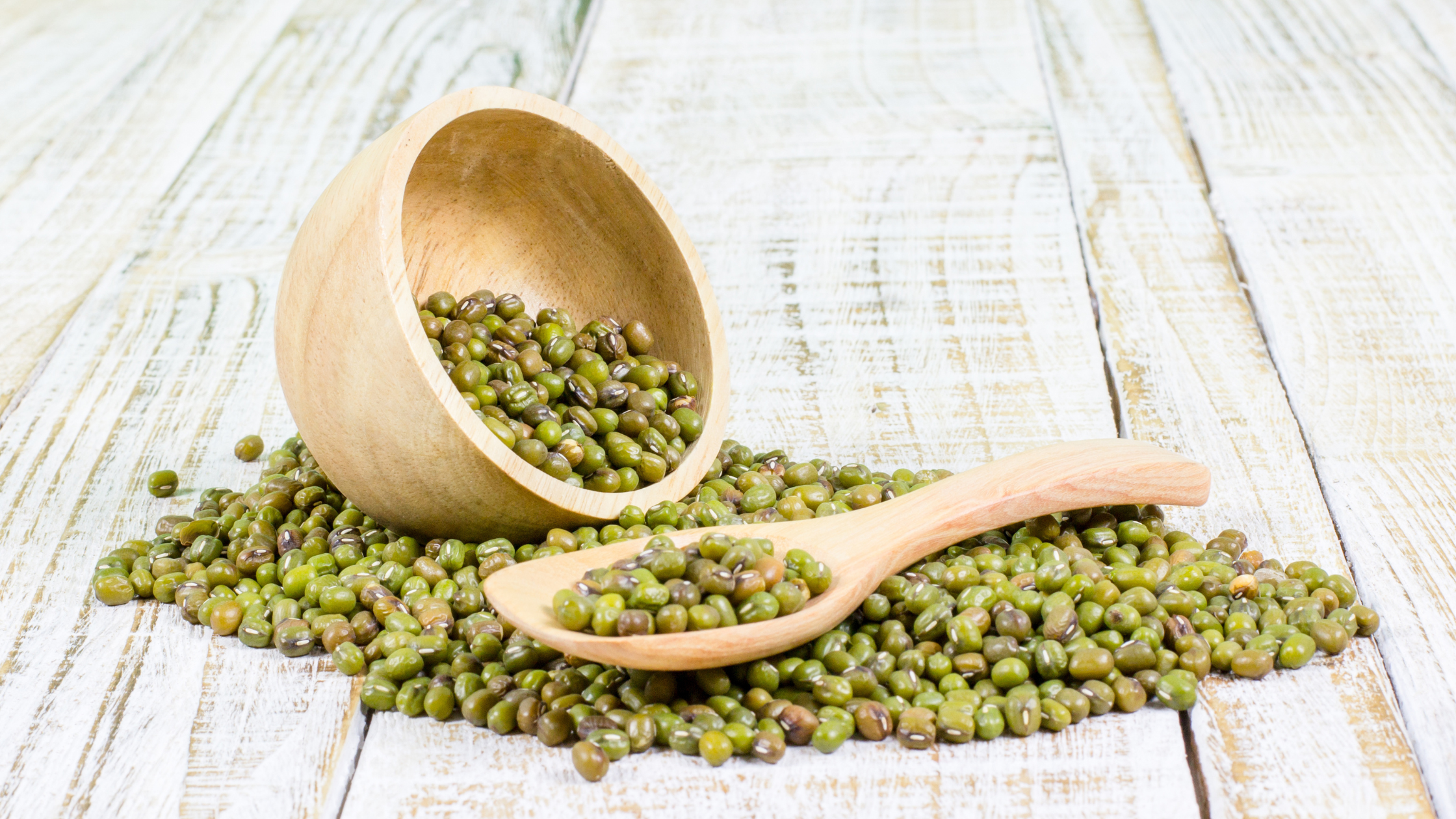
Mungbean, scientifically known as Vigna radiata, is a versatile legume celebrated for its nutritional richness and myriad health benefits. Often referred to as “green gram,” mungbean has been a dietary staple in many cultures for centuries. This humble legume boasts a rich history, spanning across various cuisines and traditional medicinal practices.
History
Mungbean cultivation dates back over 4,000 years, with origins in the Indian subcontinent and Southeast Asia. It was revered as a valuable source of nutrition and sustenance in ancient civilizations such as India, China, and Persia. Over time, its cultivation spread to other regions, including Africa, the Americas, and Europe, contributing to its global significance as a dietary staple.
Health Benefits
The health benefits of mungbeans can be largely attributed to their impressive nutritional profile, which is characterized by high levels of protein, fiber, vitamins, and minerals. As an excellent source of plant-based protein, mungbeans are particularly valuable for vegetarian and vegan diets. Their fiber, potassium, and magnesium content contribute to heart health by helping to lower cholesterol levels and regulate blood pressure. Additionally, the high fiber content supports digestive health by promoting regular bowel movements and preventing constipation. Mungbeans are also low in calories yet high in fiber, making them a filling and satisfying food choice that can aid in weight management. Furthermore, the presence of bioactive compounds such as polyphenols, flavonoids, and antioxidants in mungbeans plays a crucial role in promoting overall health by neutralizing free radicals in the body, thereby reducing the risk of chronic diseases such as cancer and cardiovascular disease.
[/et_pb_text][/et_pb_column][/et_pb_row][/et_pb_section][et_pb_section fb_built=”1″ _builder_version=”4.27.4″ _module_preset=”default” background_color=”#F2F2F2″ custom_padding=”29px||2px||false|false” global_colors_info=”{}”][et_pb_row _builder_version=”4.27.4″ _module_preset=”default” custom_padding=”8px||0px|||” custom_margin=”-16px|auto||auto||”][et_pb_column _builder_version=”4.27.4″ _module_preset=”default” type=”4_4″][et_pb_heading title=”Best Preparation Methods” _builder_version=”4.27.4″ _module_preset=”default” title_level=”h2″ title_text_color=”#000000″ hover_enabled=”0″ sticky_enabled=”0″][/et_pb_heading][/et_pb_column][/et_pb_row][et_pb_row column_structure=”2_3,1_3″ _builder_version=”4.27.4″ _module_preset=”default” custom_padding=”2px||13px|||” global_colors_info=”{}” custom_margin=”3px|auto||auto||”][et_pb_column type=”2_3″ _builder_version=”4.27.4″ _module_preset=”default” global_colors_info=”{}”][et_pb_text _builder_version=”4.27.4″ _module_preset=”default” text_text_color=”#000000″ text_font_size=”17px” global_colors_info=”{}” custom_margin=”||25px|||”]Mung beans can be consumed in various forms, including whole, sprouted, or ground into flour, making them suitable for a wide range of dishes. Mung bean sprouts are a popular ingredient in salads, stir-fries, and soups, known for their crunchy texture and nutritional benefits. Additionally, mung bean flour is often used to make noodles, pancakes, and desserts, providing a gluten-free alternative that is rich in protein and fiber. The starch derived from mung beans is particularly valued for its high amylose content, which contributes to the desirable texture and cooking properties of noodles, making them a staple in many Asian dishes.
[/et_pb_text][et_pb_image src=”https://www.immortalme.com/wp-content/uploads/2025/01/Mung-Bean-Food.png” title_text=”Mung Bean Food” _builder_version=”4.27.4″ _module_preset=”default” hover_enabled=”0″ border_radii=”on|6px|6px|6px|6px” box_shadow_style=”preset1″ global_colors_info=”{}” box_shadow_spread=”3px” box_shadow_color=”#84776C” sticky_enabled=”0″][/et_pb_image][/et_pb_column][et_pb_column type=”1_3″ _builder_version=”4.27.4″ _module_preset=”default” global_colors_info=”{}”][et_pb_image src=”https://www.immortalme.com/wp-content/uploads/2025/01/Mung-Beans.png” title_text=”Mung Beans” _builder_version=”4.27.4″ _module_preset=”default” hover_enabled=”0″ box_shadow_style=”preset1″ global_colors_info=”{}” border_radii=”on|6px|6px|6px|6px” box_shadow_spread=”3px” box_shadow_color=”#84776C” sticky_enabled=”0″][/et_pb_image][/et_pb_column][/et_pb_row][/et_pb_section][et_pb_section fb_built=”1″ _builder_version=”4.27.4″ _module_preset=”default” custom_padding=”29px||3px|||” hover_enabled=”0″ global_colors_info=”{}” background_color=”#F2F2F2″ sticky_enabled=”0″][et_pb_row _builder_version=”4.27.4″ _module_preset=”default” custom_padding=”5px||2px|||” global_colors_info=”{}” custom_margin=”-20px|auto||auto||”][et_pb_column type=”4_4″ _builder_version=”4.27.4″ _module_preset=”default” global_colors_info=”{}”][et_pb_text _builder_version=”4.27.4″ _module_preset=”default” text_text_color=”#000000″ text_font_size=”17px” hover_enabled=”0″ global_colors_info=”{}” header_2_text_color=”#000000″ sticky_enabled=”0″]Precautions and Possible Side Effects
While mungbeans are generally considered safe and offer numerous health benefits, individuals with specific dietary restrictions or allergies should exercise caution. Those with legume allergies should avoid mungbeans to prevent adverse reactions, and individuals with digestive disorders, such as irritable bowel syndrome (IBS), may experience discomfort or bloating after consumption. Although mungbeans can be a nutritious addition to the diet, some people might encounter side effects like bloating, gas, or digestive discomfort, particularly if they consume them in large quantities or if the beans are not properly cooked. Currently, there are no known interactions between mungbeans and medications; however, individuals taking medications for diabetes or hypertension should closely monitor their blood sugar and blood pressure levels when incorporating mungbeans into their diet, as these legumes may influence the efficacy of their medications.
[/et_pb_text][/et_pb_column][/et_pb_row][/et_pb_section][et_pb_section fb_built=”1″ admin_label=”Post Body” _builder_version=”4.27.4″ background_color=”#F2F2F2″ custom_padding=”30px||3px|||” locked=”off” global_colors_info=”{}”][et_pb_row _builder_version=”4.27.4″ _module_preset=”default” custom_padding=”12px||1px|||” custom_margin=”-17px|auto||auto||”][et_pb_column _builder_version=”4.27.4″ _module_preset=”default” type=”4_4″][et_pb_heading title=”Eastern and Western Nutrition” _builder_version=”4.27.4″ _module_preset=”default” title_level=”h2″ title_text_color=”#000000″ hover_enabled=”0″ sticky_enabled=”0″][/et_pb_heading][/et_pb_column][/et_pb_row][et_pb_row column_structure=”1_2,1_2″ _builder_version=”4.27.4″ custom_padding=”4px||7px|||” hover_enabled=”0″ locked=”off” global_colors_info=”{}” sticky_enabled=”0″ custom_margin=”2px|auto||auto||”][et_pb_column type=”1_2″ _builder_version=”4.16″ global_colors_info=”{}”][et_pb_text _builder_version=”4.27.4″ _module_preset=”default” text_text_color=”#000000″ text_font_size=”17px” hover_enabled=”0″ global_colors_info=”{}” sticky_enabled=”0″]In Eastern medicine, particularly within the framework of Traditional Chinese Medicine (TCM), mungbeans are highly regarded for their cooling properties, which are thought to help balance excess heat in the body. They are associated with the stomach, spleen, and pancreas meridians, contributing to digestive health and aiding in blood sugar regulation. This makes mungbeans not only beneficial for overall digestive function but also for maintaining stable blood glucose levels.
In contrast, the Western world appreciates mungbeans for their nutritional density and versatility in various culinary applications, highlighting their role as a valuable ingredient in a balanced diet.
[/et_pb_text][/et_pb_column][et_pb_column type=”1_2″ _builder_version=”4.16″ global_colors_info=”{}”][et_pb_image src=”https://www.immortalme.com/wp-content/uploads/2025/02/Screenshot-2025-02-13-174542.png” title_text=”Screenshot 2025-02-13 174542″ _builder_version=”4.27.4″ _module_preset=”default” hover_enabled=”0″ border_radii=”on|6px|6px|6px|6px” box_shadow_style=”preset1″ global_colors_info=”{}” sticky_enabled=”0″ box_shadow_spread=”3px” box_shadow_color=”#84776C”][/et_pb_image][/et_pb_column][/et_pb_row][/et_pb_section][et_pb_section fb_built=”1″ _builder_version=”4.27.4″ _module_preset=”default” background_color=”#F2F2F2″ custom_padding=”30px||2px|||” hover_enabled=”0″ global_colors_info=”{}” sticky_enabled=”0″][et_pb_row _builder_version=”4.27.4″ _module_preset=”default” custom_padding=”5px||7px|||” global_colors_info=”{}” custom_margin=”-14px|auto||auto||”][et_pb_column type=”4_4″ _builder_version=”4.27.4″ _module_preset=”default” global_colors_info=”{}”][et_pb_text _builder_version=”4.27.4″ _module_preset=”default” text_text_color=”#000000″ text_font_size=”17px” hover_enabled=”0″ global_colors_info=”{}” header_2_text_color=”#000000″ sticky_enabled=”0″]Final Thoughts
In conclusion, mungbeans are a true superfood, offering a plethora of health benefits and culinary possibilities. Whether enjoyed in traditional dishes or innovative recipes, mungbeans are sure to continue their legacy as a beloved dietary staple across cultures and cuisines.
[/et_pb_text][/et_pb_column][/et_pb_row][et_pb_row _builder_version=”4.27.4″ _module_preset=”default” custom_padding=”42px||5px|||” global_colors_info=”{}” theme_builder_area=”post_content”][et_pb_column type=”4_4″ _builder_version=”4.27.4″ _module_preset=”default” global_colors_info=”{}” theme_builder_area=”post_content”][et_pb_divider color=”#84776C” divider_weight=”2px” _builder_version=”4.27.4″ _module_preset=”default” global_colors_info=”{}” theme_builder_area=”post_content”][/et_pb_divider][et_pb_toggle title=”References” open_toggle_background_color=”#FFFFFF” closed_toggle_background_color=”#FFFFFF” icon_color=”#84776C” toggle_icon=”||fa||900″ use_icon_font_size=”on” icon_font_size=”25px” open_icon_color=”#E02B20″ open_toggle_icon=”||fa||900″ open_use_icon_font_size=”on” open_icon_font_size=”25px” _builder_version=”4.27.4″ _module_preset=”default” title_text_color=”#000000″ title_font=”Cormorant Garamond||||||||” title_text_align=”left” title_font_size=”20px” text_orientation=”left” custom_margin=”||42px|||” custom_padding=”|||20px|false|false” hover_enabled=”0″ border_radii=”on|6px|6px|6px|6px” box_shadow_style=”preset1″ box_shadow_color=”#84776C” global_colors_info=”{}” theme_builder_area=”post_content” sticky_enabled=”0″]Azam, M., Sarker, U., Hossain, M., Iqbal, M., Hossain, M., Erċışlı, S., … & Peluso, I. (2022). Genetic analysis in grain legumes [vigna radiata (l.) wilczek] for yield improvement and identifying heterotic hybrids. Plants, 11(13), 1774. https://doi.org/10.3390/plants11131774
Bilal, A. (2017). Nutritional and physicochemical attributes of cowpea and mungbean based weaning foods. The Pakistan Journal of Agricultural Sciences, 54(03), 653-662. https://doi.org/10.21162/pakjas/17.6311
Dhoble, L. and Itankar, P. (2023). High performance liquid chromatography standardisation of the hydroalcoholic extract of phaseolus radiatus beans based on vitexin content. Indian Journal of Natural Products, 36(1), 17-23. https://doi.org/10.5530/ijnp.2022.1.3
Fetriyuna, F., Purwestri, R., Susandy, M., Köhler, R., Jati, I., Wirawan, N., … & Biesalski, H. (2021). Composite flour from indonesian local food resources to develop cereal/tuber nut/bean-based ready-to-use supplementary foods for prevention and rehabilitation of moderate acute malnutrition in children. Foods, 10(12), 3013. https://doi.org/10.3390/foods10123013
Gardea‐Torresdey, J., Rico, C., & White, J. (2014). Trophic transfer, transformation, and impact of engineered nanomaterials in terrestrial environments. Environmental Science & Technology, 48(5), 2526-2540. https://doi.org/10.1021/es4050665
Johnson, J., Mani, J., Skylas, D., Walsh, K., Bhattarai, S., & Naiker, M. (2020). Phenolic profiles and nutritional quality of four new mungbean lines grown in northern australia. Legume Science, 3(2). https://doi.org/10.1002/leg3.70
Kaur, J., Singh, B., Singh, A., & Sharma, S. (2020). Geometric, physical and functional properties of selected pulses and millets for the formulation of complementary food products. International Journal of Chemical Studies, 8(4), 2854-2858. https://doi.org/10.22271/chemi.2020.v8.i4ah.10079
Kavya, N., Kavya, B., Kumar, K., & Venkateshwarlu, G. (2014). Nutritional and therapeutic uses of mudga [vigna radiata (l.) r. wilczek]: a potential interventional dietary component. International Journal of Research in Ayurveda and Pharmacy, 5(2), 238-241. https://doi.org/10.7897/2277-4343.05248
Khan, N. (2023). Mitigating plant and soil health options through climate resilient maize-mungbean based intercropping for rainfed agriculture. Journal of Agriculture and Ecology Research International, 24(6), 59-73. https://doi.org/10.9734/jaeri/2023/v24i6562
Kim, B., Lim, I., & Ha, J. (2023). Metabolic profiling and expression analysis of key genetic factors in the biosynthetic pathways of antioxidant metabolites in mungbean sprouts. Frontiers in Plant Science, 14. https://doi.org/10.3389/fpls.2023.1207940
Manjunatha, P. (2023). Exploring the world of mungbean: uncovering its origins, taxonomy, genetic resources and research approaches. International Journal of Plant & Soil Science, 35(20), 614-635. https://doi.org/10.9734/ijpss/2023/v35i203846
Mishra, G., Dikshit, H., Vinutha, T., Tontang, M., Stobdan, T., Sangwan, S., … & Praveen, S. (2021). Diversity in phytochemical composition, antioxidant capacities, and nutrient contents among mungbean and lentil microgreens when grown at plain-altitude region (delhi) and high-altitude region (leh-ladakh), india. Frontiers in Plant Science, 12. https://doi.org/10.3389/fpls.2021.710812
Noble, T., Young, A., Douglas, C., Williams, B., & Mundree, S. (2019). Diagnosis and management of halo blight in australian mungbeans: a review. Crop and Pasture Science, 70(3), 195. https://doi.org/10.1071/cp18541
Onwurafor, E., Ani, J., Uchegbu, N., & Ziegler, G. (2020). Quality evaluation of fermented maize-based complementary foods as affected by amylase-rich mungbean malt. Journal of Food Stability, 3(1), 26-37. https://doi.org/10.36400/j.food.stab.3.1.2020-0025
Patel, A. (2024). Analyzing the mycoflora associated with the mungbean (vigna radiata l.) seeds under various storage circumstances. International Journal of Plant & Soil Science, 36(5), 412-424. https://doi.org/10.9734/ijpss/2024/v36i54538
Sharma, A. (2024). Abiotic and biotic stresses in green gram (vigna radiata l. wilczek): a comprehensive review. Journal of Advances in Biology & Biotechnology, 27(7), 940-953. https://doi.org/10.9734/jabb/2024/v27i71055
Skylas, D. (2024). Dry fractionation of australian mungbean for sustainable production of value‐added protein concentrate ingredients. Cereal Chemistry, 101(4), 720-738. https://doi.org/10.1002/cche.10774
Skylas, D., Blanchard, C., & Quail, K. (2017). Variation in nutritional composition of australian mungbean varieties. Journal of Agricultural Science, 9(5), 45. https://doi.org/10.5539/jas.v9n5p45
Thapa, M., Majumdar, T., Ghosh, C., Mukherjee, A., & Biswas, P. (2021). Application of zinc sulfide nanoparticles to augment the nutritional status of the mungbean [vigna radiata (l.) r. wilczek] plant. Acs Food Science & Technology, 1(9), 1595-1604. https://doi.org/10.1021/acsfoodscitech.1c00116
Tian, X., Li, S., Liu, Y., & Liu, X. (2016). Transcriptomic profiling reveals metabolic and regulatory pathways in the desiccation tolerance of mungbean (vigna radiata [l.] r. wilczek). Frontiers in Plant Science, 7. https://doi.org/10.3389/fpls.2016.01921
Yulianti, L., Setiaboma, W., Hakim, A., Widowati, E., Afifah, N., & Ekafitri, R. (2022). The effect of beans types and soaking time on the characteristics of indonesian traditional food “instant bose”. Food Science and Technology, 42. https://doi.org/10.1590/fst.19621
Zafar, M., Ahmed, S., Munir, M., Zafar, N., Saqib, M., Sarwar, M., … & Gulnaz, A. (2023). Application of zinc, iron and boron enhances productivity and grain biofortification of mungbean. Phyton, 92(4), 983-999. https://doi.org/10.32604/phyton.2023.025813
Zhang, J., Luo, Y., Feng, S., Sun, W., Li, S., & Kong, L. (2023). Effects of liposoluble components of highland barley spent grains on physiological indexes, intestinal microorganisms, and the liver transcriptome in mice fed a high‐fat diet. Food Science & Nutrition, 11(6), 3096-3110. https://doi.org/10.1002/fsn3.3291
MyFoodData. (n.d.). Nutrition facts for mung beans (Vigna radiata). Retrieved December 4, 2024, from https://tools.myfooddata.com/nutrition-facts/174256/wt1/1
[/et_pb_toggle][/et_pb_column][/et_pb_row][/et_pb_section][et_pb_section fb_built=”1″ _builder_version=”4.27.4″ _module_preset=”default” background_color=”#84776C” hover_enabled=”0″ global_colors_info=”{}” custom_margin=”||-60px||false|false” custom_padding=”35px||60px||false|false” sticky_enabled=”0″][et_pb_row _builder_version=”4.27.4″ _module_preset=”default” global_colors_info=”{}”][et_pb_column type=”4_4″ _builder_version=”4.27.4″ _module_preset=”default” global_colors_info=”{}”][et_pb_heading title=”More Articles You May Like” _builder_version=”4.27.4″ _module_preset=”default” title_text_color=”#FFFFFF” global_colors_info=”{}”][/et_pb_heading][et_pb_divider color=”#F2F2F2″ divider_weight=”2px” _builder_version=”4.27.4″ _module_preset=”default” global_colors_info=”{}”][/et_pb_divider][et_pb_blog_extras posts_number=”12″ include_categories=”57,19,56″ blog_layout=”slider” excerpt_length=”600″ show_author=”off” category_color=”#2533ab” category_background_color=”RGBA(255,255,255,0)” show_comments=”off” content_color=”#000000″ _builder_version=”4.27.4″ _module_preset=”default” header_text_color=”#000000″ body_text_color=”#000000″ meta_text_color=”#000000″ hover_enabled=”0″ border_radii=”on|10px|10px|10px|10px” border_width_all=”2px” border_color_all=”rgba(242,242,242,0.32)” box_shadow_style=”preset2″ box_shadow_blur=”28px” box_shadow_color=”rgba(0,0,0,0.53)” global_colors_info=”{}” slider_layout=”vertical_grid” slider_loop=”on” show_date=”off” sticky_enabled=”0″][/et_pb_blog_extras][/et_pb_column][/et_pb_row][et_pb_row _builder_version=”4.27.4″ _module_preset=”default” background_color=”#FFFFFF” border_radii=”on|6px|6px|6px|6px” global_colors_info=”{}” theme_builder_area=”post_content”][et_pb_column type=”4_4″ _builder_version=”4.27.4″ _module_preset=”default” global_colors_info=”{}” theme_builder_area=”post_content”][et_pb_text _builder_version=”4.27.4″ _module_preset=”default” text_text_color=”#84776C” text_font_size=”12px” text_line_height=”1.5em” header_font=”|300|||||||” header_font_size=”25px” header_4_font=”–et_global_heading_font||||||||” header_4_text_color=”#84776C” custom_padding=”|17px||17px|false|false” global_colors_info=”{}” theme_builder_area=”post_content”]Medical Disclaimer
The information provided in this document is intended for educational and informational purposes only and should not be construed as medical advice, diagnosis, or treatment. It is essential to consult a qualified healthcare professional for any medical concerns or conditions. The content herein does not substitute for professional medical advice, and individuals should not disregard or delay seeking medical advice based on the information provided.
The authors and publishers of this document do not assume any responsibility for any adverse effects or consequences resulting from the use or application of the information contained herein. The reader is encouraged to conduct their own research and consult with healthcare providers to make informed decisions regarding their health and treatment options. Furthermore, the information presented may not reflect the most current research or medical guidelines, as medical knowledge is continually evolving. Therefore, it is imperative to verify the information with up-to-date, peer-reviewed sources and consult with medical professionals for personalized advice.
[/et_pb_text][/et_pb_column][/et_pb_row][/et_pb_section]