Rutabaga
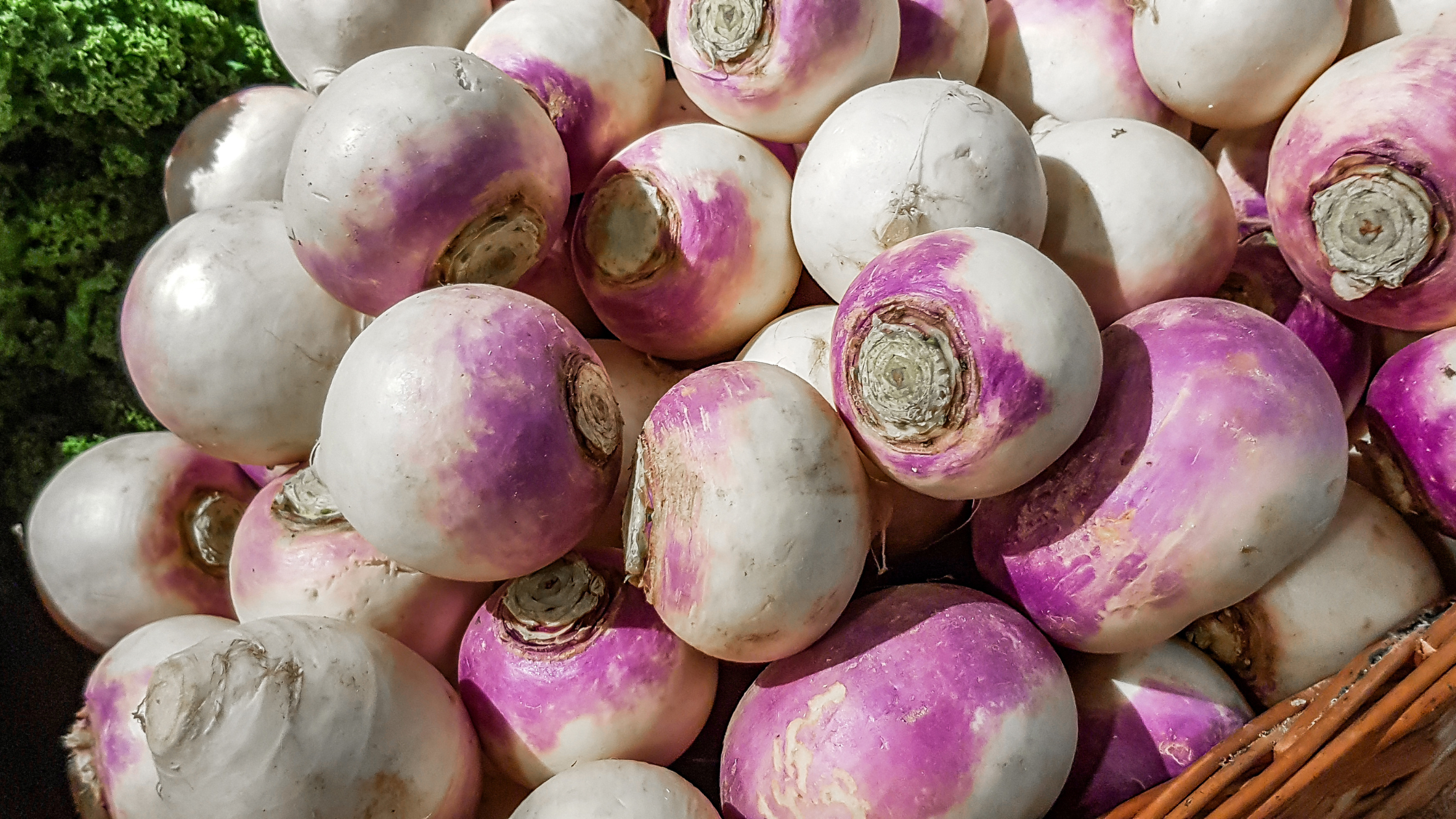
Rutabaga, also known as swede or neep, is a lesser-known root vegetable that belongs to the Brassicaceae family, alongside cabbage, broccoli, and kale. Despite its humble appearance, rutabaga boasts an impressive array of health benefits and has been utilized in culinary and medicinal practices for centuries. From its historical roots to its modern applications, rutabaga continues to captivate the interest of both chefs and health enthusiasts alike.
History
The origins of rutabaga can be traced back to 17th century Scandinavia, where it was believed to have been cultivated through the crossbreeding of turnips and cabbage. From there, it spread across Europe and eventually made its way to North America. Initially used as livestock fodder, rutabaga gained popularity as a staple food during times of scarcity, particularly during the World Wars. Over time, its versatility and nutritional value led to its integration into various cuisines worldwide.
Health Benefits
Rutabaga is a nutrient-dense vegetable that owes its health-promoting properties to a rich composition of vitamins, minerals, antioxidants, and dietary fiber. Specifically, it is abundant in vitamins C and K, potassium, and manganese, all of which are essential for maintaining optimal health. The bioactive compounds found in rutabaga, such as glucosinolates and phenolic compounds, contribute to its antioxidant and anti-inflammatory effects, which may help protect against chronic diseases and promote overall well-being. The antioxidants present in rutabaga play a crucial role in combating oxidative stress, thereby potentially reducing the risk of chronic conditions such as cancer and cardiovascular diseases. A
dditionally, the high fiber content of rutabaga supports digestive health by promoting regular bowel movements and preventing constipation. The vitamin C in rutabaga bolsters immune function, aiding the body in fending off infections and illnesses. Furthermore, the presence of vitamin K in rutabaga is significant for bone health, as it aids in calcium absorption and may reduce the risk of osteoporosis. Overall, rutabaga serves as a valuable addition to a balanced diet, offering a multitude of health benefits.
[/et_pb_text][/et_pb_column][/et_pb_row][/et_pb_section][et_pb_section fb_built=”1″ _builder_version=”4.27.4″ _module_preset=”default” background_color=”#F2F2F2″ custom_padding=”30px||3px||false|false” global_colors_info=”{}”][et_pb_row _builder_version=”4.27.4″ _module_preset=”default” custom_margin=”-29px|auto||auto||” custom_padding=”10px||5px|||” global_colors_info=”{}”][et_pb_column type=”4_4″ _builder_version=”4.27.4″ _module_preset=”default” global_colors_info=”{}”][et_pb_text _builder_version=”4.27.4″ _module_preset=”default” text_text_color=”#000000″ text_font_size=”17px” header_2_text_color=”#000000″ custom_margin=”||-4px|||” custom_padding=”||1px|||” global_colors_info=”{}”]Best Preparation Methods
Traditionally, rutabaga can be prepared in several ways, including boiling, roasting, and mashing, which enhances its natural sweetness and earthy flavor. The cooking process not only improves its palatability but also affects its nutritional content; for instance, studies
[/et_pb_text][/et_pb_column][/et_pb_row][et_pb_row column_structure=”2_3,1_3″ _builder_version=”4.27.4″ _module_preset=”default” min_height=”697.5px” custom_margin=”-4px|auto||auto||” custom_padding=”11px||13px|||” global_colors_info=”{}”][et_pb_column type=”2_3″ _builder_version=”4.27.4″ _module_preset=”default” global_colors_info=”{}”][et_pb_text _builder_version=”4.27.4″ _module_preset=”default” text_text_color=”#000000″ text_font_size=”17px” custom_margin=”-8px|||||” global_colors_info=”{}”]have shown that methods such as blanching and boiling can significantly reduce glucosinolate levels, which are naturally occurring compounds that may impart a bitter taste when raw. This reduction in glucosinolates can make rutabaga more appealing in dishes, allowing it to be incorporated into soups, stews, and casseroles, where it can serve as a hearty ingredient that complements meats and other vegetables. Furthermore, the vegetable’s high fiber content and rich array of vitamins and minerals make it a nutritious addition to a balanced diet.
[/et_pb_text][et_pb_image src=”https://www.immortalme.com/wp-content/uploads/2025/02/Screenshot-2025-02-11-192310.png” title_text=”Screenshot 2025-02-11 192310″ _builder_version=”4.27.4″ _module_preset=”default” border_radii=”on|6px|6px|6px|6px” box_shadow_style=”preset2″ global_colors_info=”{}”][/et_pb_image][/et_pb_column][et_pb_column type=”1_3″ _builder_version=”4.27.4″ _module_preset=”default” global_colors_info=”{}”][et_pb_image src=”https://www.immortalme.com/wp-content/uploads/2025/01/Rutabaga.png” title_text=”Rutabaga” _builder_version=”4.27.4″ _module_preset=”default” custom_margin=”2px|||||” box_shadow_style=”preset2″ global_colors_info=”{}”][/et_pb_image][/et_pb_column][/et_pb_row][/et_pb_section][et_pb_section fb_built=”1″ _builder_version=”4.27.4″ _module_preset=”default” background_color=”#F2F2F2″ min_height=”191px” custom_margin=”||||false|false” custom_padding=”31px||0px||false|false” global_colors_info=”{}”][et_pb_row _builder_version=”4.27.4″ _module_preset=”default” custom_margin=”-19px|auto||auto||” custom_padding=”0px||6px|||” global_colors_info=”{}”][et_pb_column type=”4_4″ _builder_version=”4.27.4″ _module_preset=”default” global_colors_info=”{}”][et_pb_heading title=”Precautions and Possible Side Effects” _builder_version=”4.27.4″ _module_preset=”default” custom_margin=”||10px||false|false” global_colors_info=”{}”][/et_pb_heading][et_pb_text _builder_version=”4.27.4″ _module_preset=”default” text_text_color=”#000000″ text_font_size=”17px” global_colors_info=”{}”]Rutabaga is generally safe for consumption; however, individuals with allergies to Brassica vegetables should exercise caution when including it in their diet. Additionally, those who are prone to kidney stones may need to limit their intake due to the vegetable’s oxalate content. While rutabaga is suitable for most people, excessive consumption can lead to flatulence or digestive discomfort, primarily due to its high fiber content. Furthermore, interactions with certain medications, particularly blood thinners, may arise because of rutabaga’s vitamin K content, which necessitates moderation in its consumption to avoid potential complications.
[/et_pb_text][/et_pb_column][/et_pb_row][/et_pb_section][et_pb_section fb_built=”1″ admin_label=”Post Body” _builder_version=”4.27.4″ background_color=”#F2F2F2″ custom_padding=”28px||2px|||” locked=”off” global_colors_info=”{}”][et_pb_row column_structure=”1_2,1_2″ _builder_version=”4.27.4″ min_height=”361px” custom_margin=”-4px|auto||auto||” custom_padding=”3px||0px|||” locked=”off” global_colors_info=”{}”][et_pb_column type=”1_2″ _builder_version=”4.16″ global_colors_info=”{}”][et_pb_heading title=”Eastern and Western Nutrition” _builder_version=”4.27.4″ _module_preset=”default” custom_margin=”||10px||false|false” global_colors_info=”{}”][/et_pb_heading][et_pb_text _builder_version=”4.27.4″ _module_preset=”default” text_text_color=”#000000″ text_font_size=”17px” global_colors_info=”{}”]In Eastern traditional medicine, rutabaga is regarded as a cooling food that nourishes the lungs and supports respiratory health, aligning with its associations in Traditional Chinese Medicine (TCM) where it is linked to the Lung and Stomach meridians, believed to enhance respiratory function and aid digestion.
Conversely, in Western cuisine, rutabaga is appreciated for its versatility in savory dishes and serves as a nutritious alternative to traditional starches such as potatoes. This dual appreciation highlights rutabaga’s role not only as a functional food in promoting health but also as a valuable ingredient in diverse culinary applications.
[/et_pb_text][/et_pb_column][et_pb_column type=”1_2″ _builder_version=”4.16″ global_colors_info=”{}”][et_pb_image src=”https://www.immortalme.com/wp-content/uploads/2025/02/Screenshot-2025-02-11-194334.png” title_text=”Screenshot 2025-02-11 194334″ _builder_version=”4.27.4″ _module_preset=”default” custom_margin=”|||-3px||” border_radii=”on|6px|6px|6px|6px” box_shadow_style=”preset1″ box_shadow_spread=”3px” box_shadow_color=”#84776C” global_colors_info=”{}”][/et_pb_image][/et_pb_column][/et_pb_row][/et_pb_section][et_pb_section fb_built=”1″ _builder_version=”4.27.4″ _module_preset=”default” background_color=”#F2F2F2″ custom_padding=”29px||5px|||” global_colors_info=”{}”][et_pb_row _builder_version=”4.27.4″ _module_preset=”default” custom_margin=”-5px|auto||auto||” custom_padding=”2px|||||” global_colors_info=”{}”][et_pb_column type=”4_4″ _builder_version=”4.27.4″ _module_preset=”default” global_colors_info=”{}”][et_pb_text _builder_version=”4.27.4″ _module_preset=”default” text_text_color=”#000000″ text_font_size=”17px” header_2_text_color=”#000000″ global_colors_info=”{}”]Final Thoughts
From its humble beginnings to its modern-day acclaim, rutabaga stands as a testament to the nutritional and medicinal potential of root vegetables. With its diverse array of health benefits, culinary versatility, and historical significance, rutabaga continues to carve out a place for itself in both traditional and contemporary wellness practices.
[/et_pb_text][/et_pb_column][/et_pb_row][et_pb_row _builder_version=”4.27.4″ _module_preset=”default” min_height=”204.1px” custom_margin=”-14px|auto||auto||” custom_padding=”35px||0px|||” global_colors_info=”{}”][et_pb_column type=”4_4″ _builder_version=”4.27.4″ _module_preset=”default” global_colors_info=”{}”][et_pb_divider color=”#84776C” divider_weight=”2px” _builder_version=”4.27.4″ _module_preset=”default” global_colors_info=”{}”][/et_pb_divider][et_pb_toggle title=”References” open_toggle_background_color=”#FFFFFF” closed_toggle_background_color=”#FFFFFF” icon_color=”#84776C” toggle_icon=”||fa||900″ use_icon_font_size=”on” icon_font_size=”25px” open_icon_color=”#E02B20″ open_toggle_icon=”||fa||900″ open_use_icon_font_size=”on” open_icon_font_size=”25px” _builder_version=”4.27.4″ _module_preset=”default” title_text_color=”#000000″ title_font=”Cormorant Garamond||||||||” title_text_align=”left” title_font_size=”20px” text_orientation=”left” custom_margin=”||36px|||” custom_padding=”|||20px|false|false” border_radii=”on|6px|6px|6px|6px” box_shadow_style=”preset1″ box_shadow_color=”#84776C” global_colors_info=”{}”]Ayadi, J. (2023). The phytochemical screening and biological properties of brassica napus l. var. napobrassica (rutabaga) seeds. Molecules, 28(17), 6250. https://doi.org/10.3390/molecules28176250
Baenas, N., Moreno, D., & García‐Viguera, C. (2012). Selecting sprouts of brassicaceae for optimum phytochemical composition. Journal of Agricultural and Food Chemistry, 60(45), 11409-11420. https://doi.org/10.1021/jf302863c
Bashir, R., Tabassum, S., Rashid, A., Rehman, S., Adnan, A., & Ghaffar, R. (2023). Bioactive components of root vegetables.. https://doi.org/10.5772/intechopen.105961
Bhaskar, B., Rammohan, A., Babu, T., Zheng, G., Chen, W., Rajendra, W., … & Gu, W. (2021). Molecular insight into isoform specific inhibition of pi3k-α and pkc-η with dietary agents through an ensemble pharmacophore and docking studies. Scientific Reports, 11(1). https://doi.org/10.1038/s41598-021-90287-3
Huang, Z., Wang, B., Eaves, D., Shikany, J., & Pace, R. (2009). Total phenolics and antioxidant capacity of indigenous vegetables in the southeast united states: alabama collaboration for cardiovascular equality project. International Journal of Food Sciences and Nutrition, 60(2), 100-108. https://doi.org/10.1080/09637480701605715
Kapusta‐Duch, J., Florkiewicz, A., Leszczyńska, T., & Borczak, B. (2021). Directions of changes in the content of selected macro- and micronutrients of kale, rutabaga, green and purple cauliflower due to hydrothermal treatment. Applied Sciences, 11(8), 3452. https://doi.org/10.3390/app11083452
Stefanucci, A., Zengin, G., Llorent‐Martínez, E., Dimmito, M., Valle, A., Pieretti, S., … & Mollica, A. (2020). Chemical characterization, antioxidant properties and enzyme inhibition of rutabaga root’s pulp and peel (brassica napus l.). Arabian Journal of Chemistry, 13(9), 7078-7086. https://doi.org/10.1016/j.arabjc.2020.07.013
Urugo, M. and Tringo, T. (2023). Naturally occurring plant food toxicants and the role of food processing methods in their detoxification. International Journal of Food Science, 2023, 1-16. https://doi.org/10.1155/2023/9947841
Yu, Z., Fredua-Agyeman, R., Hwang, S., & Strelkov, S. (2021). Molecular genetic diversity and population structure analyses of rutabaga accessions from nordic countries as revealed by single nucleotide polymorphism markers. BMC Genomics, 22(1). https://doi.org/10.1186/s12864-021-07762-4
Zhao, H., Xia, J., Zhang, X., He, X., Li, L., Tang, R., … & Li, D. (2018). Diet affects muscle quality and growth traits of grass carp (ctenopharyngodon idellus): a comparison between grass and artificial feed. Frontiers in Physiology, 9. https://doi.org/10.3389/fphys.2018.00283
Zujko, M., Terlikowska, K., Zujko, K., Paruk, A., & Witkowska, A. (2016). Sprouts as potential sources of dietary antioxidants in human nutrition. Progress in Health Sciences, 6(2), 77-83. https://doi.org/10.5604/01.3001.0009.5052Top of Form
MyFoodData. (n.d.). *Nutrition facts for food item 2709804*. MyFoodData. https://tools.myfooddata.com/nutrition-facts/2709804/wt2/1
[/et_pb_toggle][/et_pb_column][/et_pb_row][/et_pb_section][et_pb_section fb_built=”1″ _builder_version=”4.27.4″ _module_preset=”default” background_color=”#84776C” hover_enabled=”0″ global_colors_info=”{}” custom_margin=”||-60px||false|false” custom_padding=”||60px||false|false” sticky_enabled=”0″][et_pb_row _builder_version=”4.27.4″ _module_preset=”default” custom_padding=”13px|||||” global_colors_info=”{}”][et_pb_column type=”4_4″ _builder_version=”4.27.4″ _module_preset=”default” global_colors_info=”{}”][et_pb_heading title=”More Articles You May Like” _builder_version=”4.27.4″ _module_preset=”default” title_text_color=”#FFFFFF” global_colors_info=”{}”][/et_pb_heading][et_pb_divider color=”#F2F2F2″ divider_weight=”2px” _builder_version=”4.27.4″ _module_preset=”default” global_colors_info=”{}”][/et_pb_divider][et_pb_blog_extras posts_number=”12″ include_categories=”57,19,56″ blog_layout=”slider” slider_layout=”vertical_grid” excerpt_length=”600″ show_author=”off” show_date=”off” category_color=”#2533ab” category_background_color=”RGBA(255,255,255,0)” show_comments=”off” content_color=”#000000″ slider_loop=”on” _builder_version=”4.27.4″ _module_preset=”default” header_text_color=”#000000″ body_text_color=”#000000″ meta_text_color=”#000000″ border_radii=”on|10px|10px|10px|10px” border_width_all=”2px” border_color_all=”rgba(242,242,242,0.32)” box_shadow_style=”preset2″ box_shadow_blur=”28px” box_shadow_color=”rgba(0,0,0,0.53)” global_colors_info=”{}”][/et_pb_blog_extras][/et_pb_column][/et_pb_row][et_pb_row _builder_version=”4.27.4″ _module_preset=”default” background_color=”#FFFFFF” border_radii=”on|6px|6px|6px|6px” global_colors_info=”{}” theme_builder_area=”post_content”][et_pb_column type=”4_4″ _builder_version=”4.27.4″ _module_preset=”default” global_colors_info=”{}” theme_builder_area=”post_content”][et_pb_text _builder_version=”4.27.4″ _module_preset=”default” text_text_color=”#84776C” text_font_size=”12px” text_line_height=”1.5em” header_font=”|300|||||||” header_font_size=”25px” header_4_font=”–et_global_heading_font||||||||” header_4_text_color=”#84776C” custom_padding=”|17px||17px|false|false” global_colors_info=”{}” theme_builder_area=”post_content”]Medical Disclaimer
The information provided in this document is intended for educational and informational purposes only and should not be construed as medical advice, diagnosis, or treatment. It is essential to consult a qualified healthcare professional for any medical concerns or conditions. The content herein does not substitute for professional medical advice, and individuals should not disregard or delay seeking medical advice based on the information provided.
The authors and publishers of this document do not assume any responsibility for any adverse effects or consequences resulting from the use or application of the information contained herein. The reader is encouraged to conduct their own research and consult with healthcare providers to make informed decisions regarding their health and treatment options. Furthermore, the information presented may not reflect the most current research or medical guidelines, as medical knowledge is continually evolving. Therefore, it is imperative to verify the information with up-to-date, peer-reviewed sources and consult with medical professionals for personalized advice.
[/et_pb_text][/et_pb_column][/et_pb_row][/et_pb_section]